





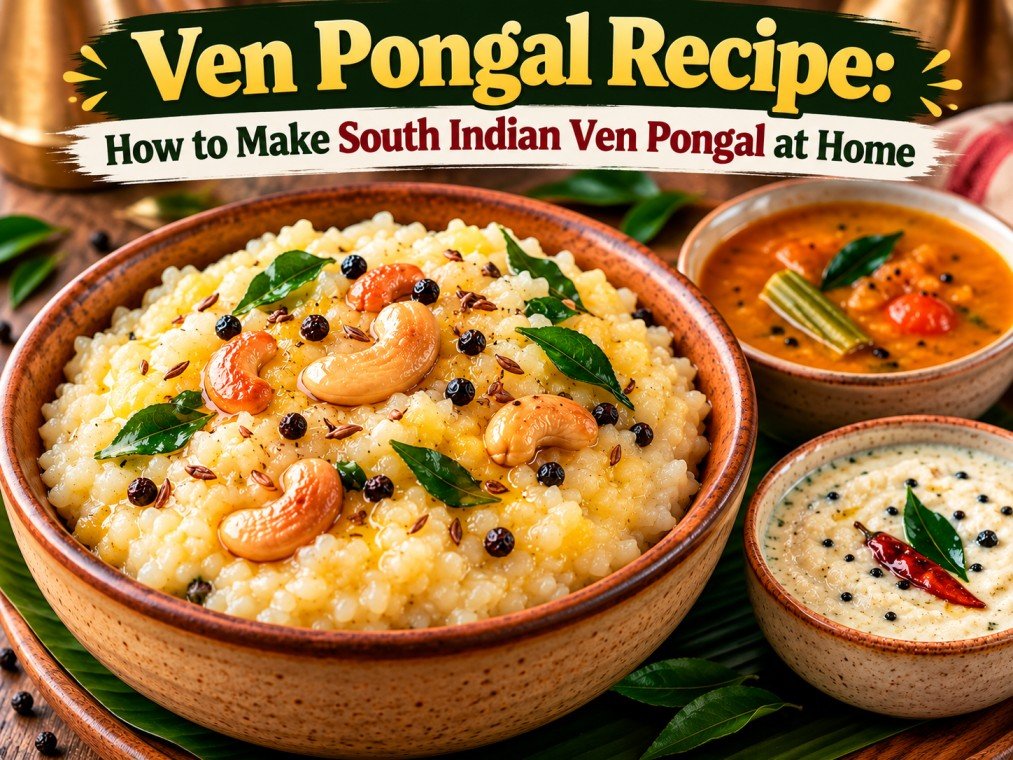
Ven Pongal is a comforting South Indian breakfast made with rice, yellow moong dal, ghee, black pepper, cumin, ginger, and curry leaves. Soft, creamy, mildly spiced, and aromatic, it is especially popular as a traditional breakfast in South India.
This easy Ven Pongal Recipe shows you how to make restaurant-style South Indian Pongal at home using simple ingredients. The rice and moong dal are cooked until soft and creamy, then tempered with ghee, pepper, cumin, cashews, ginger, and curry leaves.
Serve hot Ven Pongal with coconut chutney and sambar for a delicious and satisfying South Indian breakfast.
What Is Ven Pongal?
Ven Pongal, also called Khara Pongal, is a savory South Indian dish prepared using rice and yellow moong dal.
The word “Ven” refers to the savory version of Pongal. It is different from Sakkarai Pongal, which is a sweet preparation made with rice, jaggery, and milk.
Traditional Ven Pongal has a soft, almost porridge-like consistency. Ghee, black pepper, cumin, ginger, curry leaves, and cashews give it its characteristic aroma and flavor.
Why You’ll Love This Ven Pongal Recipe
- Soft, creamy, and comforting
- Easy one-pot South Indian breakfast
- Made with simple pantry ingredients
- Naturally flavorful from ghee and spices
- Perfect for busy mornings
- Delicious with coconut chutney and sambar
- Easy to customize for your preferred consistency
- Suitable for breakfast, brunch, or a light dinner
Ingredients for Ven Pongal
Main Ingredients
- 1 cup rice
- ½ cup yellow moong dal
- 4–5 cups water
- ½ teaspoon turmeric powder
- Salt to taste
For Tempering
- 2–3 tablespoons ghee
- 1 teaspoon cumin seeds
- 1 teaspoon black peppercorns, lightly crushed
- 1-inch piece ginger, finely chopped
- 10–12 curry leaves
- 8–10 cashews
- 1–2 green chilies, optional
- A small pinch of asafoetida
The amount of water can be adjusted depending on whether you prefer a thick or soft, porridge-like Ven Pongal.
How to Make Ven Pongal at Home
Step 1: Wash the Rice and Moong Dal
Combine rice and yellow moong dal in a bowl.
Wash them thoroughly 2–3 times until the water becomes relatively clear.
Drain the excess water.
Step 2: Lightly Roast the Moong Dal
Heat a pan over low to medium heat.
Add the moong dal and dry roast it for 2–3 minutes until it gives off a light nutty aroma.
Do not brown the dal.
This step is optional, but lightly roasting the dal can add extra aroma to the finished Pongal.
Step 3: Cook the Rice and Dal
Transfer the washed rice and moong dal to a pressure cooker or suitable pot.
Add water, turmeric powder, and salt.
For a soft traditional consistency, use enough water to allow the rice and dal to cook until very tender.
Pressure cook until both the rice and dal are completely soft.
If using a stovetop pot, cover and cook until the grains become very soft and begin to break down.
Step 4: Mash the Cooked Mixture
Once cooked, open the cooker after the pressure has released naturally.
Stir the rice and dal thoroughly.
Mash lightly with the back of a spoon if necessary.
The mixture should be soft and creamy rather than dry.
If it looks too thick, add a little hot water and mix well.
Step 5: Prepare the Tempering
Heat ghee in a small pan.
Add cumin seeds and allow them to crackle.
Add lightly crushed black pepper, chopped ginger, curry leaves, green chili, and cashews.
Add a small pinch of asafoetida.
Fry until the cashews become lightly golden and the spices become aromatic.
Step 6: Add the Tempering
Pour the hot ghee tempering over the cooked rice and dal mixture.
Mix thoroughly so the ghee, spices, ginger, and curry leaves are evenly distributed.
Step 7: Adjust the Consistency
Ven Pongal tends to become thicker as it cools.
If necessary, add a little hot water and mix until you reach your preferred consistency.
For traditional soft Pongal, keep it moist and creamy.
Step 8: Serve Hot
Transfer the Ven Pongal to serving bowls.
Add a small drizzle of ghee on top if desired.
Serve immediately with coconut chutney and sambar.
Ven Pongal Recipe Card
Recipe: Ven Pongal
Cuisine: South Indian
Course: Breakfast
Prep Time: 10 minutes
Cooking Time: 25 minutes
Total Time: 35 minutes
Servings: 4
Difficulty: Easy
Ingredients
- 1 cup rice
- ½ cup yellow moong dal
- 4–5 cups water
- ½ teaspoon turmeric
- Salt to taste
- 2–3 tablespoons ghee
- 1 teaspoon cumin
- 1 teaspoon crushed black pepper
- 1-inch ginger
- 10–12 curry leaves
- 8–10 cashews
- A pinch of asafoetida
Instructions
- Wash rice and moong dal thoroughly.
- Lightly roast the moong dal if desired.
- Cook rice and dal with water, turmeric, and salt until very soft.
- Mash the cooked mixture gently.
- Heat ghee in a separate pan.
- Add cumin, black pepper, ginger, curry leaves, cashews, and asafoetida.
- Cook until aromatic and lightly golden.
- Add the tempering to the rice-dal mixture.
- Mix thoroughly.
- Adjust the consistency with hot water if needed.
- Serve hot with chutney and sambar.
How to Make Soft and Creamy Ven Pongal
The consistency is one of the most important parts of a good Ven Pongal.
Use Enough Water
Rice and moong dal should be cooked until very soft. If there is not enough water, the grains can remain firm and the Pongal may become dry.
Cook Until Very Soft
Unlike pulao or fried rice, Ven Pongal should not have separate grains. The rice and dal should blend together into a soft mixture.
Add Hot Water If Needed
If your Pongal becomes thick after cooking, simply add a little hot water and stir.
Finish With Ghee
Ghee provides much of the traditional aroma and richness. Add enough to coat the cooked mixture without making it excessively greasy.
How to Make Restaurant-Style Ven Pongal
For a richer restaurant-style result, focus on three things: soft consistency, fresh tempering, and ghee.
Cook the rice and dal until very soft. Prepare the tempering separately so the cumin, pepper, ginger, curry leaves, and cashews become aromatic.
Finally, mix everything while hot and finish with a small spoonful of ghee.
Freshly prepared tempering makes a noticeable difference in the flavor.
Best Rice-to-Dal Ratio for Pongal
A commonly used starting point is approximately 2 parts rice to 1 part moong dal.
This produces a balanced rice-and-dal flavor while keeping the Pongal soft.
You can adjust the ratio according to your preference. More dal creates a more dal-forward flavor, while more rice produces a milder taste.
What to Serve With Ven Pongal
Coconut Chutney
Creamy coconut chutney is one of the easiest and most popular accompaniments for Ven Pongal.
Try pairing it with our Coconut Chutney Recipe for a complete South Indian breakfast.
Sambar
Hot vegetable sambar adds tanginess and spice to the mild, creamy Pongal.
Our Sambar Recipe is another natural pairing for this dish.
Ginger Chutney
Spicy ginger chutney provides a strong contrast to the soft and buttery Pongal.
Papad
For extra texture, serve Pongal with a crispy papad on the side.
Ven Pongal vs Sakkarai Pongal
| Feature | Ven Pongal | Sakkarai Pongal |
|---|---|---|
| Flavor | Savory | Sweet |
| Main ingredients | Rice and moong dal | Rice and moong dal |
| Sweetener | None | Jaggery |
| Main seasoning | Pepper, cumin, ginger | Cardamom, jaggery, nuts |
| Ghee | Yes | Yes |
| Typical use | Breakfast / savory meal | Dessert / festive dish |
Both preparations use rice and dal, but their flavors and seasonings are completely different.
Common Mistakes to Avoid
Pongal Becomes Too Dry
This usually happens when too little water is used or the cooked Pongal sits for too long.
Fix: Add hot water and mix thoroughly.
Rice and Dal Are Still Firm
The cooking time or water may not have been sufficient.
Fix: Continue cooking with additional water until both become completely soft.
Pepper Tastes Too Strong
Whole black pepper can provide intense bursts of heat.
Fix: Lightly crush the pepper or reduce the quantity according to your preference.
Cashews Burn
Cashews cook quickly in hot ghee.
Fix: Fry them over medium heat and remove them once lightly golden.
Pongal Becomes Too Ghee-Heavy
Ghee is important for flavor, but too much can make the dish unnecessarily greasy.
Fix: Start with a moderate amount and add more at the end only if needed.
Can Ven Pongal Be Made Without a Pressure Cooker?
Yes.
You can prepare Ven Pongal in a heavy-bottomed pot or saucepan.
Cook the rice and moong dal over medium-low heat with enough water until both become very soft. Stir occasionally to prevent the mixture from sticking to the bottom.
A pressure cooker simply reduces the cooking time.
Can You Make Ven Pongal in an Instant Pot?
Yes. Rice and moong dal can be pressure-cooked in an electric pressure cooker or Instant Pot until very soft.
The exact cooking time can vary depending on the appliance, rice variety, and preferred consistency.
After pressure cooking, stir well and adjust the consistency with hot water before adding the tempering.
Can Ven Pongal Be Made Ahead?
Yes, but freshly prepared Pongal generally has the best texture.
As it cools, the rice and dal absorb more moisture and the mixture becomes thicker.
When reheating, add a little hot water and stir thoroughly. Finish with a small amount of ghee if desired.
Frequently Asked Questions
What is Ven Pongal made of?
Ven Pongal is primarily made with rice and yellow moong dal. It is flavored with ghee, cumin, black pepper, ginger, curry leaves, cashews, and other seasonings.
Is Ven Pongal the same as Khara Pongal?
Ven Pongal and Khara Pongal commonly refer to the savory version of Pongal. Naming and preparation can vary across South Indian regions and households.
Does Ven Pongal need fermentation?
No. Ven Pongal does not require fermentation. Rice and moong dal are cooked directly until soft and then combined with a flavorful tempering.
Why does my Pongal become hard after cooling?
Rice and dal continue absorbing liquid as they cool, which naturally makes Pongal thicker.
Add hot water while reheating to restore a soft consistency.
Can I make Pongal without ghee?
Yes. You can use cooking oil instead, although ghee provides the characteristic richness and aroma associated with traditional Ven Pongal.
Can I add vegetables to Ven Pongal?
Yes. Vegetables such as carrots, peas, and beans can be added for a variation, although traditional Ven Pongal is generally made without a large quantity of vegetables.
Is Ven Pongal suitable for breakfast?
Yes. Ven Pongal is traditionally enjoyed as a South Indian breakfast and is commonly served with chutney and sambar.
Can I use brown rice for Pongal?
You can experiment with brown rice, but it may require different cooking time and more water. Traditional Ven Pongal is generally prepared with white rice.
Final Thoughts
This easy Ven Pongal Recipe is a comforting South Indian breakfast that combines soft rice, creamy moong dal, aromatic spices, crunchy cashews, and fragrant ghee.
The secret to delicious Pongal is simple: cook the rice and dal until very soft, prepare a fresh tempering, and serve it hot.
Pair it with coconut chutney and sambar for a traditional South Indian breakfast, or enjoy it with ginger chutney when you want a stronger, spicier flavor.
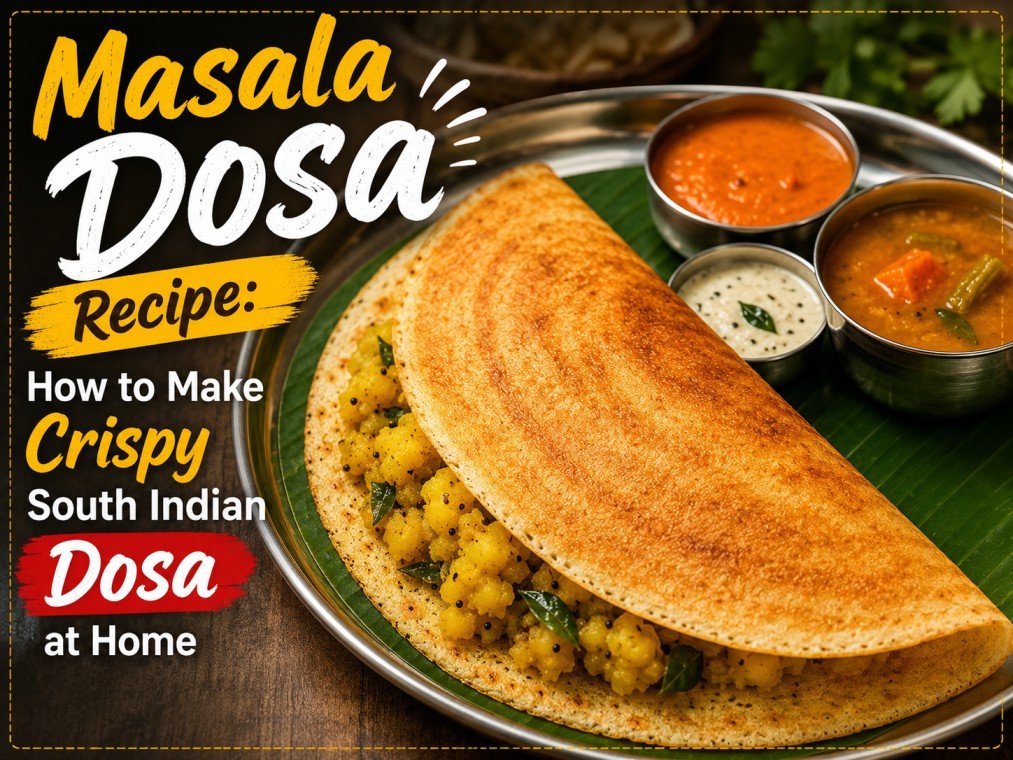
If you are building a South Indian breakfast collection, also explore our Masala Dosa, Idli, Sambar, Coconut Chutney, Medu Vada, Uttapam, and Pesarattu recipes.
Related Recipes on Desi Chori Rashoi
- Masala Dosa Recipe
- Idli Recipe
- Sambar Recipe
- Coconut Chutney Recipe
- Medu Vada Recipe
- Uttapam Recipe
- Pesarattu Recipe
- South Indian Recipes
- Indian Breakfast Recipes