






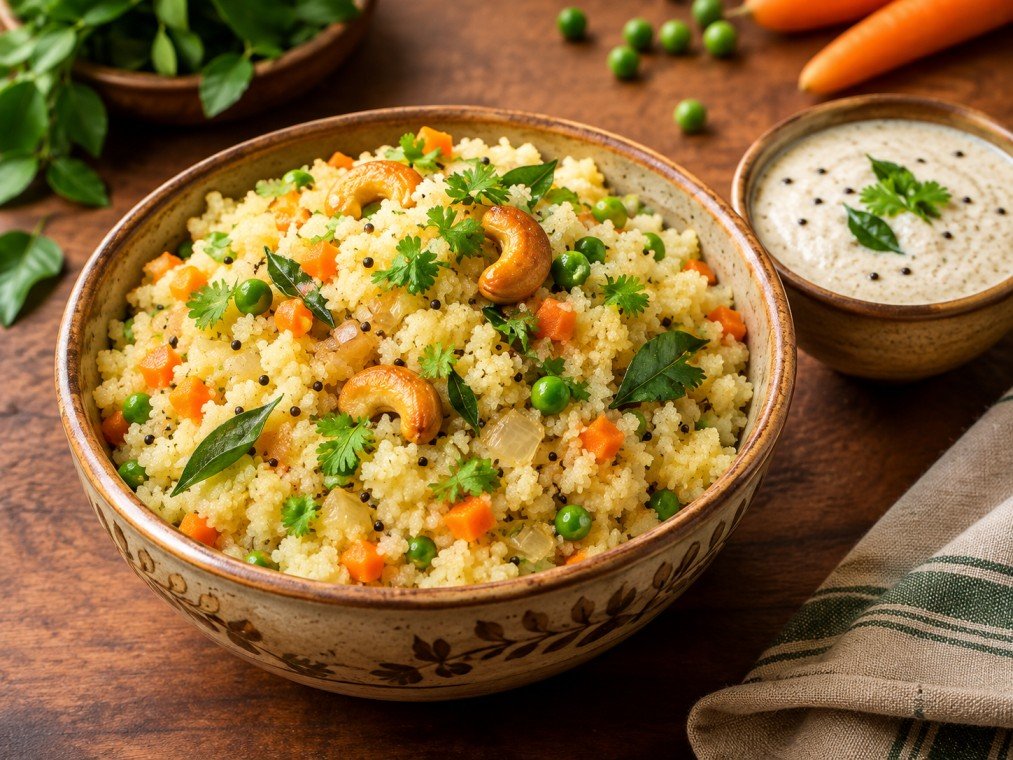
Upma is a popular South Indian breakfast made with roasted semolina, commonly known as rava or sooji. Cooked with aromatic spices, curry leaves, mustard seeds, vegetables, and water, this simple dish is known for its soft texture and comforting flavor.
This easy Upma Recipe shows you how to make soft, fluffy, and flavorful South Indian rava upma at home using everyday kitchen ingredients. With the right roasting technique and water ratio, you can prepare delicious upma without making it sticky or lumpy.
Whether you need a quick weekday breakfast, a light evening snack, or a simple vegetarian meal, homemade rava upma is an excellent option.
What Is Upma?
Upma is a savory Indian dish prepared by cooking roasted semolina in seasoned hot water. It is especially popular in South India, where it is commonly served for breakfast with coconut chutney, pickle, or a cup of hot tea.
Traditional South Indian rava upma is prepared with mustard seeds, urad dal, chana dal, green chilies, ginger, curry leaves, and onions. Vegetables such as carrots, peas, and beans can also be added.
The key to good upma is the correct proportion of water and semolina, along with properly roasted rava.
Why You’ll Love This Upma Recipe
- Ready in approximately 25 minutes.
- Made with simple pantry ingredients.
- Easy to customize with vegetables.
- Soft, fluffy, and satisfying.
- Perfect for breakfast or an evening snack.
- Suitable for beginner home cooks.
- Delicious with coconut chutney or pickle.
- An easy vegetarian meal for busy days.
Ingredients for Rava Upma
Main Ingredients
- 1 cup semolina (rava or sooji)
- 2½ cups water
- 1 medium onion, finely chopped
- 1 green chili, finely chopped
- 1 teaspoon grated ginger
- 1 tablespoon cooking oil or ghee
- Salt to taste
For Tempering
- 1 teaspoon mustard seeds
- 1 teaspoon urad dal
- 1 teaspoon chana dal
- 10–12 curry leaves
- A pinch of asafoetida
- 8–10 cashews, optional
Optional Vegetables
- ¼ cup finely chopped carrots
- ¼ cup green peas
- ¼ cup chopped green beans
- 2 tablespoons chopped coriander
- 1 teaspoon lemon juice
For Garnishing
- Fresh coriander leaves
- 1 teaspoon ghee, optional
- A few drops of lemon juice, optional
How to Make Upma at Home
Step 1: Roast the Rava
Heat a heavy-bottomed pan over low to medium heat.
Add the semolina and dry-roast it for 4–5 minutes, stirring continuously.
Roast until the rava becomes aromatic and feels light. Avoid browning it too much.
Transfer the roasted rava to a plate and keep it aside.
If you are using pre-roasted rava, you can skip this step.
Step 2: Prepare the Tempering
Heat oil or ghee in the same pan.
Add mustard seeds and allow them to crackle.
Add urad dal, chana dal, and cashews. Sauté until the dals turn lightly golden and the cashews become aromatic.
Add curry leaves, chopped green chili, grated ginger, and asafoetida.
Stir for a few seconds to release the aroma.
Step 3: Cook the Onions
Add finely chopped onion to the tempering.
Sauté over medium heat until the onions become soft and translucent.
Avoid browning them heavily, as the traditional flavor of upma is usually mild and aromatic.
Step 4: Add the Vegetables
Add carrots, beans, and green peas if using.
Stir and cook for 2–3 minutes.
For harder vegetables, add a splash of water and cover briefly to help them soften.
Step 5: Add Water and Salt
Pour 2½ cups of water into the pan.
Add salt and mix well.
Bring the water to a rolling boil.
Taste the seasoned water and adjust the salt before adding the rava.
Step 6: Add the Rava Gradually
Reduce the heat to low.
Slowly add the roasted rava in a steady stream while stirring continuously with a spoon or whisk.
This step is important because adding the rava gradually helps prevent lumps.
Continue stirring until the semolina absorbs most of the water.
Step 7: Cover and Cook
Cover the pan with a lid and cook on low heat for 2–3 minutes.
The rava should absorb the remaining moisture and become soft.
Avoid cooking for too long, as excess heat can make the upma dry.
Step 8: Fluff the Upma
Turn off the heat.
Let the upma rest for 1–2 minutes.
Gently fluff it with a fork or spoon to separate the cooked semolina and create a light texture.
Step 9: Garnish and Serve
Add fresh coriander leaves and a little lemon juice if desired.
Finish with a teaspoon of ghee for extra aroma.
Serve hot with coconut chutney, pickle, or your favorite breakfast accompaniment.
Upma Recipe Card
Recipe: South Indian Rava Upma
Cuisine: South Indian
Course: Breakfast / Snack
Prep Time: 10 minutes
Cooking Time: 15 minutes
Total Time: 25 minutes
Servings: 2–3
Difficulty: Easy
Ingredients
- 1 cup rava or sooji
- 2½ cups water
- 1 onion, chopped
- 1 green chili
- 1 teaspoon grated ginger
- 1 teaspoon mustard seeds
- 1 teaspoon urad dal
- 1 teaspoon chana dal
- 10–12 curry leaves
- 1 tablespoon oil or ghee
- Salt to taste
- Vegetables and coriander, optional
Instructions
- Dry-roast the rava until aromatic and set aside.
- Heat oil or ghee in a pan.
- Add mustard seeds and allow them to crackle.
- Add urad dal, chana dal, and cashews.
- Add curry leaves, green chili, ginger, and asafoetida.
- Add chopped onions and sauté until soft.
- Add vegetables if desired and cook briefly.
- Pour in water and add salt.
- Bring the water to a boil.
- Gradually add the roasted rava while stirring continuously.
- Cover and cook on low heat until soft.
- Rest briefly, fluff, garnish, and serve hot.
Tips for Soft and Fluffy Upma
Use the Correct Water Ratio
The amount of water affects the final texture.
For a soft, fluffy upma, begin with approximately 2½ cups of water for 1 cup of regular semolina. The exact amount may vary depending on the type and thickness of rava.
Roast the Rava Properly
Roasting removes excess moisture and helps the grains cook more evenly.
Stir continuously over low to medium heat and stop when the rava smells nutty and aromatic.
Add Rava Slowly
Pouring all the semolina into the water at once can create lumps.
Add it gradually while stirring to keep the texture smooth.
Stir Continuously at First
Stirring while adding the rava helps distribute moisture evenly.
Once the mixture thickens, lower the heat and cover the pan.
Let It Rest Before Serving
A short resting period allows the remaining moisture to distribute throughout the semolina.
Fluff gently before serving.
How to Make Restaurant-Style Upma
Restaurant-style upma is often soft, aromatic, and rich without being greasy.
To achieve a similar result:
- Roast the rava until fragrant.
- Use fresh curry leaves and ginger.
- Prepare the tempering carefully.
- Add water gradually according to the rava variety.
- Finish with a small amount of ghee.
- Avoid overcooking the semolina.
For a richer variation, add roasted cashews and finely chopped vegetables.
Popular Types of Upma
Vegetable Upma
Vegetable upma includes carrots, peas, beans, and sometimes capsicum. It adds color, texture, and variety to the basic recipe.
Rava Upma
Rava upma is the classic version made with semolina, onions, chilies, ginger, curry leaves, and tempering.
Bread Upma
Bread upma is made by cooking bread pieces with onions, tomatoes, spices, and curry leaves. It is a useful way to use leftover bread.
Oats Upma
Oats upma uses oats instead of semolina. It can be prepared with vegetables and similar tempering ingredients.
Vermicelli Upma
Vermicelli upma is made using roasted vermicelli, vegetables, and spices. It has a different texture but follows a similar cooking method.
Upma vs Poha: What Is the Difference?
| Feature | Upma | Poha |
|---|---|---|
| Main ingredient | Semolina | Flattened rice |
| Texture | Soft and fluffy | Light and slightly chewy |
| Cooking method | Cooked in seasoned water | Usually softened and sautéed |
| Common seasoning | Mustard seeds, dals, curry leaves | Mustard seeds, turmeric, curry leaves |
| Preparation time | Around 20–25 minutes | Around 15–20 minutes |
| Common accompaniments | Coconut chutney, pickle | Lemon, sev, coriander |
Both dishes are popular Indian breakfast choices, but their main ingredients and textures are different.
What to Serve With Upma
Coconut Chutney
Coconut chutney is a refreshing accompaniment that balances the savory flavor of upma.
Try our Coconut Chutney Recipe for a classic South Indian combination.
Sambar
A bowl of hot sambar can turn upma into a more substantial breakfast.
Pair it with our Sambar Recipe for a traditional South Indian meal.
Lemon Pickle
A small serving of lemon pickle adds a tangy and spicy contrast to mild upma.
Filter Coffee or Tea
A cup of hot South Indian filter coffee or masala tea makes a comforting breakfast combination.
Common Upma Mistakes to Avoid
Upma Becomes Sticky
Sticky upma can result from excess water, insufficient roasting, or overcooking.
Solution: Roast the rava properly and adjust the water ratio according to the semolina type.
Upma Has Too Many Lumps
Lumps often form when semolina is added too quickly.
Solution: Add the rava gradually while stirring continuously.
Upma Tastes Raw
Undercooked semolina may have a grainy or raw taste.
Solution: Cover and cook over low heat until the rava has absorbed the water and softened completely.
Upma Becomes Too Dry
Too little water or excessive cooking can make upma dry.
Solution: Add a little hot water, mix gently, and cook briefly with the lid on.
The Tempering Tastes Burnt
Overheated oil or burnt dals can create a bitter flavor.
Solution: Use medium heat and add ingredients in stages according to their cooking time.
Can You Make Upma Without Onion?
Yes. You can make a simple onion-free upma using roasted rava, mustard seeds, curry leaves, ginger, green chili, and other preferred seasonings.
You can also add vegetables or cashews for extra texture.
Can Upma Be Made Ahead?
Upma is best served freshly prepared because semolina continues absorbing moisture as it cools.
If you need to prepare it ahead, keep it covered and reheat gently with a splash of water.
Fluff it before serving and add a little ghee if desired.
Frequently Asked Questions
What is the correct water ratio for upma?
A useful starting point is 2½ cups of water for 1 cup of regular semolina. The exact ratio depends on the rava variety and the texture you prefer.
Why is my upma sticky?
Upma may become sticky because of excess water, inadequate roasting, or overcooking. Adjust the water and roast the rava until aromatic before cooking.
Is upma healthy for breakfast?
Upma can be part of a balanced breakfast. Adding vegetables, using moderate amounts of oil, and pairing it with other nutritious foods can make it more varied and satisfying.
Can I make upma without roasting rava?
Roasting is recommended because it improves aroma and texture. Some pre-roasted varieties can be used directly, but follow the package instructions.
Which rava is best for upma?
Regular medium-grain semolina, commonly sold as rava or sooji, works well for traditional upma. Very fine semolina may produce a denser texture.
Can I make upma in a pressure cooker?
Yes. Upma can be prepared in a pressure cooker, but the water ratio and cooking time need care to avoid a mushy result. The open-pan method offers easier control for beginners.
How can I make upma more flavorful?
Use fresh ginger, curry leaves, green chili, mustard seeds, and a well-prepared tempering. Roasted cashews and a small amount of ghee can add extra flavor.
Can I add peanuts to upma?
Yes. Roasted peanuts can add a crunchy texture and nutty flavor. Add them during the tempering or sprinkle them over the finished dish.
Final Thoughts
This easy Upma Recipe is a simple way to prepare a classic South Indian breakfast at home. With roasted rava, aromatic tempering, fresh curry leaves, and the right amount of water, you can make soft and fluffy upma in about 25 minutes.
Customize it with vegetables, cashews, or a little lemon juice according to your taste. Serve it hot with coconut chutney, pickle, or a cup of filter coffee for a comforting meal.
For more breakfast inspiration, explore our Idli, Masala Dosa, Uttapam, Pesarattu, Ven Pongal, and Medu Vada recipes on Desi Chori Rashoi.
Related Recipes on Desi Chori Rashoi
- Masala Dosa Recipe
- Idli Recipe
- Sambar Recipe
- Coconut Chutney Recipe
- Medu Vada Recipe
- Uttapam Recipe
- Pesarattu Recipe
- Ven Pongal Recipe
- Indian Breakfast Recipes
- South Indian Recipes