






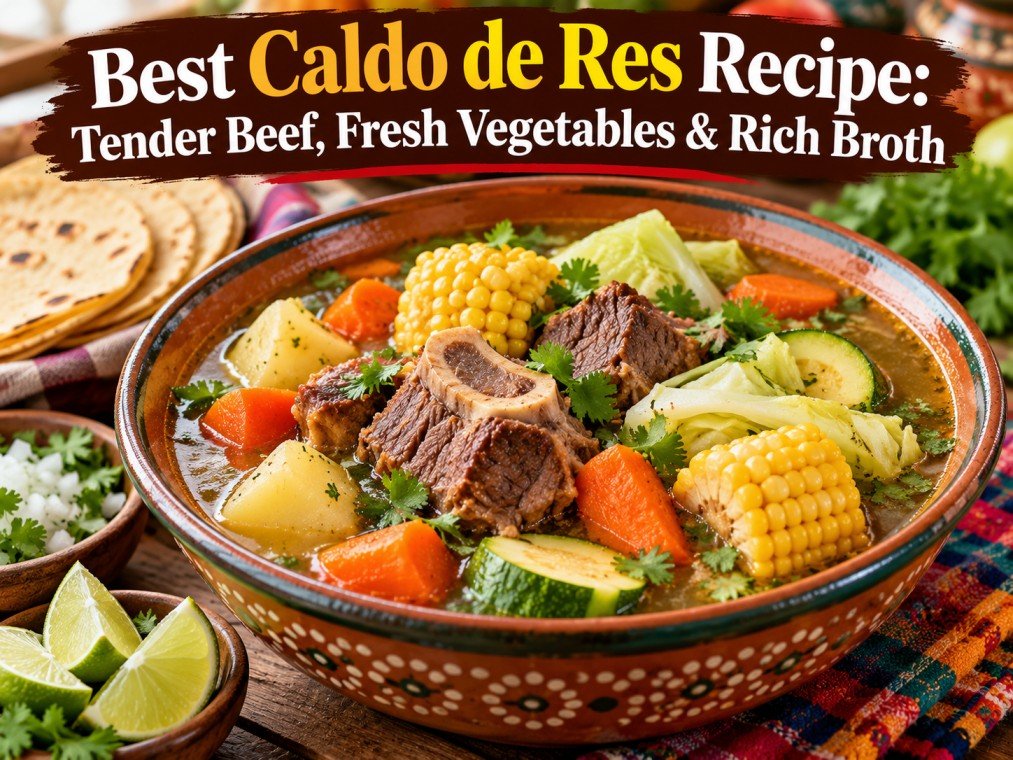
If you love comforting homemade soups packed with tender beef, fresh vegetables, and flavorful broth, this caldo de res recipe is a must-try. This traditional Mexican beef soup is known for its rich taste, hearty ingredients, and simple cooking method. Made with beef shank, corn on the cob, carrots, potatoes, cabbage, and zucchini, it is a satisfying meal that brings warmth to the dinner table.
Caldo de res is especially popular in Mexican households, where families enjoy it as a nourishing lunch or dinner. The secret to a delicious bowl is allowing the beef to simmer slowly until tender while building a flavorful broth with vegetables, garlic, onion, and fresh herbs.
The best part is that you do not need complicated ingredients or advanced cooking skills to prepare it at home. With a little patience and the right cooking technique, you can make a delicious pot of authentic Mexican beef soup from scratch.
In this guide, you will learn how to make the best caldo de res recipe, which ingredients to use, how long to cook the beef, and how to get a rich, flavorful broth every time.
What Is Caldo de Res?
Caldo de res is a traditional Mexican beef soup made by simmering beef in water with aromatic ingredients and adding a variety of vegetables. The Spanish name translates roughly to “beef broth” or “beef soup.”
Many traditional versions use bone-in beef shank because it contains meat, connective tissue, and bone that contribute flavor and body to the broth during slow cooking.
Common vegetables include corn on the cob, carrots, potatoes, cabbage, chayote, and zucchini. Garlic, onion, cilantro, and lime are often used to enhance the flavor.
Unlike thick stews, caldo de res has a broth-based consistency. The ingredients remain distinct, allowing the tender beef, sweet corn, and vegetables to shine.
Although recipes vary between Mexican families and regions, the central idea remains the same: slowly cooked beef, a flavorful broth, and generous portions of vegetables.
Why You Will Love This Caldo de Res Recipe
This homemade caldo de res recipe is perfect for anyone who enjoys traditional comfort food.
- Tender, flavorful beef: Slow simmering helps beef shank become tender and delicious.
- Rich homemade broth: Beef bones, onion, garlic, and herbs build a satisfying flavor.
- Fresh vegetables: Corn, carrots, potatoes, cabbage, and zucchini make the soup hearty.
- Simple preparation: Most of the cooking time involves gently simmering the soup.
- Customizable ingredients: You can adjust the vegetables according to your preferences.
- A complete family meal: Serve it hot with warm tortillas, rice, or lime wedges.
Ingredients for the Best Caldo de Res Recipe
This recipe serves approximately 6 people.
For the Beef Broth
- 2½ pounds (about 1.1 kg) bone-in beef shank, cut into pieces
- 10 cups (2.4 liters) water, plus more if needed
- ½ medium white onion
- 4 garlic cloves, peeled
- 1 teaspoon salt, plus more to taste
- ½ teaspoon black pepper
- 2 bay leaves
- ½ cup fresh cilantro, including tender stems
For the Vegetables
- 2 ears of corn, cut into 3–4 pieces each
- 3 medium carrots, peeled and cut into thick chunks
- 2 medium potatoes, peeled and quartered
- 2 medium zucchini, cut into thick pieces
- ½ small green cabbage, cut into wedges
- 1 chayote, peeled and cut into chunks (optional)
- 2 celery stalks, cut into large pieces (optional)
For Serving
- Fresh lime wedges
- Chopped fresh cilantro
- Finely chopped white onion
- Warm corn tortillas
- Salsa or sliced jalapeños, if desired
Ingredient tip: Bone-in beef shank is an excellent choice for traditional caldo de res. If it is unavailable, you can use another suitable bone-in beef cut intended for slow cooking. Avoid very lean cuts that may become dry before producing the desired broth.
How to Make Caldo de Res Step by Step
The key to making delicious caldo de res is cooking the beef first and adding vegetables according to how long they need to become tender.
Step 1: Prepare the Beef
Rinse or trim the beef according to your usual food-handling preferences, then pat it dry with paper towels if necessary. Cut the vegetables into large, fairly uniform pieces so they cook evenly.
Place the beef shank in a large, heavy-bottomed stockpot. Add the water, onion, garlic, bay leaves, salt, and black pepper.
Make sure the beef is mostly submerged. Add a little extra water if necessary, allowing enough space in the pot for the vegetables that will be added later.
Step 2: Bring the Broth to a Gentle Boil
Place the pot over medium-high heat and bring the liquid to a boil.
As the water heats, foam may rise to the surface. Skim it off with a spoon or ladle to keep the broth looking clearer.
Once the liquid begins boiling, reduce the heat to low. The broth should simmer gently rather than boil vigorously.
Cover the pot partially and cook the beef for approximately 1½ to 2 hours, checking occasionally. The exact cooking time depends on the size and thickness of the beef pieces.
Step 3: Check Whether the Beef Is Tender
After the initial simmer, test a piece of beef with a fork.
The meat should be becoming tender, but it may need additional cooking before it is ready. Continue simmering if it remains tough.
Bone-in beef shank often needs around 2–2½ hours in total, sometimes longer, to become fork-tender.
If the liquid level drops significantly, add hot water to keep the beef sufficiently submerged.
Step 4: Add the Corn, Carrots, and Chayote
Once the beef has begun to soften, add the corn, carrots, and optional chayote.
These vegetables generally need more time to cook than zucchini or cabbage.
Continue simmering for approximately 15 minutes, or until the vegetables begin to soften.
Keep the heat low enough to maintain a gentle simmer. This helps the beef become tender without breaking the vegetables apart too quickly.
Step 5: Add the Potatoes and Celery
Add the potatoes and optional celery to the pot.
Cook for another 10–15 minutes, depending on the size of the pieces. The potatoes should become tender when pierced with a fork but should still hold their shape.
Taste the broth and adjust the salt if necessary.
Step 6: Add the Zucchini and Cabbage
Add the zucchini and cabbage wedges during the final 8–12 minutes of cooking.
These vegetables soften more quickly than beef, so adding them later helps prevent them from becoming mushy.
Continue simmering until the zucchini is tender, the cabbage has softened, and the beef is fork-tender.
If the beef is still tough, remove the vegetables once they are cooked and continue simmering the beef separately in the broth until tender.
Step 7: Finish with Fresh Cilantro
Remove the bay leaves and add the fresh cilantro.
Taste the broth one final time and adjust the seasoning as needed. If the soup tastes too concentrated, add a little hot water. If it needs more flavor, a small amount of additional salt and fresh lime juice at serving time can help balance it.
Let the soup rest for a few minutes before serving.
Step 8: Serve the Caldo de Res Hot
Ladle the broth, beef, corn, and vegetables into large bowls.
Serve with fresh lime wedges, chopped cilantro, and diced onion. Warm corn tortillas make an excellent accompaniment, and some people enjoy the soup with Mexican rice or salsa.
For the best experience, make sure every bowl contains a generous combination of tender beef, vegetables, and broth.
Tips for Making Authentic Caldo de Res
A few practical techniques can make a noticeable difference in the flavor and texture of your soup.
Choose the Right Beef Cut
Bone-in beef shank is a traditional choice because the meat becomes tender during slow cooking and the bones contribute flavor to the broth.
Beef short ribs or other suitable slow-cooking cuts can also work, although they may change the richness and texture of the finished soup.
Simmer Slowly
A gentle simmer is better than a rolling boil. Vigorous boiling can break apart vegetables and make the broth cloudier.
Keep the temperature low enough that small bubbles rise steadily to the surface.
Add Vegetables in Stages
Different vegetables require different cooking times. Corn, carrots, and chayote can go in earlier, while potatoes follow and delicate vegetables such as zucchini and cabbage are added later.
This approach helps each ingredient retain its texture.
Do Not Rush the Beef
If the beef is tough, it usually needs more time rather than higher heat. Continue simmering until it becomes fork-tender.
The exact cooking time varies depending on the cut, thickness, and age of the animal.
Season Gradually
Salt the broth at the beginning, then taste it again near the end. As the liquid reduces, its flavor becomes more concentrated.
Fresh lime juice added to individual servings provides brightness without overpowering the broth.
Common Caldo de Res Problems and How to Fix Them
Why Is My Beef Tough?
Beef shank contains connective tissue that needs time to soften during cooking.
Solution: Continue simmering gently and check the meat periodically. If the beef is still tough, it likely needs more time.
Why Is My Caldo de Res Broth Bland?
A bland broth may result from insufficient seasoning, too little simmering time, or using a cut with limited flavor.
Solution: Allow the beef to cook thoroughly, taste the broth, and adjust the salt. Fresh cilantro, onion, garlic, and lime can also improve the flavor.
Why Are My Vegetables Mushy?
Vegetables become mushy when they cook for too long, especially zucchini and cabbage.
Solution: Add vegetables in stages according to their cooking times. Remove any vegetables that are ready while the beef finishes cooking.
Why Is My Broth Too Greasy?
Some beef cuts release more fat than others.
Solution: Skim excess fat from the surface while the soup simmers. You can also refrigerate the cooled soup and remove the solidified fat from the top before reheating.
Can I Make Caldo de Res in a Pressure Cooker?
Yes. A pressure cooker can reduce the time needed to tenderize beef shank. However, cooking times depend on the pressure cooker model, the size of the beef pieces, and the recipe.
For best results, pressure-cook the beef and broth first, release pressure according to the manufacturer’s instructions, and then add the vegetables in stages using a suitable method. This helps prevent the vegetables from becoming overcooked.
What to Serve with Caldo de Res
Caldo de res is a complete, satisfying meal, but a few accompaniments can make it even better.
- Warm corn tortillas: Perfect for enjoying alongside the broth and beef.
- Mexican rice: A popular side dish that adds texture and makes the meal more filling.
- Fresh lime wedges: Add acidity and brighten the rich broth.
- Chopped cilantro and onion: Provide a fresh finish.
- Salsa or sliced jalapeños: Add heat for those who prefer a spicier soup.
You can also serve it with warm flour tortillas or crusty bread if you prefer.
How to Store and Reheat Caldo de Res
Proper storage helps preserve the flavor and quality of homemade beef soup.
Refrigerator Storage
Allow the soup to cool promptly and transfer it to shallow, airtight containers. Refrigerate within two hours of cooking, or within one hour if the ambient temperature is above 90°F (32°C).
Store the soup in the refrigerator for 3–4 days.
Freezer Storage
For longer storage, freeze caldo de res in freezer-safe containers, leaving a little space for expansion. For best quality, use it within approximately 2–3 months.
The vegetables may become softer after freezing and thawing, but the broth and beef should remain enjoyable.
Reheating Instructions
Reheat the soup on the stovetop over medium heat until it reaches a safe internal temperature of 165°F (74°C), stirring occasionally.
If the broth has thickened during storage, add a little water. Avoid repeatedly cooling and reheating the entire pot; reheat only the portion you plan to eat.
Frequently Asked Questions About Caldo de Res
1. What is caldo de res made of?
Caldo de res is traditionally made with beef, water or broth, and vegetables such as corn, carrots, potatoes, cabbage, and zucchini. Onion, garlic, cilantro, and seasonings add flavor.
2. What is the best meat for caldo de res?
Bone-in beef shank is one of the most traditional choices. It provides meat for the soup and contributes flavor to the broth during slow cooking.
3. How long does caldo de res take to cook?
Plan for approximately 2½–3 hours on the stovetop, including the time needed to tenderize the beef and cook the vegetables. Larger or tougher beef pieces may take longer.
4. Can I make caldo de res without corn?
Yes. Corn is a common ingredient, but it is not essential. You can omit it or replace it with additional potatoes, carrots, chayote, or other vegetables.
5. Is caldo de res spicy?
Traditional caldo de res is generally a mild soup. You can make it spicy by serving it with salsa, jalapeños, or a hot sauce of your choice.
6. What is the difference between caldo de res and beef stew?
Caldo de res is a broth-based Mexican soup with beef and vegetables. Beef stew is often thicker, with a more concentrated gravy-like consistency. The two dishes may share ingredients but have different textures and cooking traditions.
7. Can I make caldo de res ahead of time?
Yes. Caldo de res can be prepared ahead and refrigerated. The flavors may develop further as it rests. If possible, cook the vegetables until just tender so they are less likely to become mushy when reheated.
8. What vegetables go into authentic caldo de res?
Common choices include corn, carrots, potatoes, cabbage, zucchini, and chayote. The exact combination varies between households and regional recipes.
9. Can I use frozen vegetables in caldo de res?
Yes, although fresh vegetables are common in traditional preparations. Frozen vegetables can be convenient, but they may cook faster and become softer. Add them toward the end of cooking and follow the package guidance where appropriate.
10. How do I make the broth more flavorful?
Use a suitable bone-in beef cut, simmer it gently with onion and garlic, skim excess foam, and season the broth to taste. Fresh cilantro and lime juice at serving time add brightness.
Conclusion
This caldo de res recipe is a comforting way to enjoy traditional Mexican home cooking. Tender beef shank, sweet corn, carrots, potatoes, cabbage, and zucchini come together in a flavorful broth that is perfect for lunch or dinner.
The most important techniques are choosing a suitable beef cut, simmering it until fork-tender, and adding the vegetables at the right time. These simple steps help you create a hearty soup with tender meat, well-cooked vegetables, and a satisfying broth.
Serve your homemade caldo de res with warm tortillas, fresh cilantro, chopped onion, and lime wedges for a delicious meal the whole family can enjoy. Once you master the basic recipe, you can customize the vegetables and seasonings to suit your taste while keeping the traditional spirit of this classic Mexican soup.