







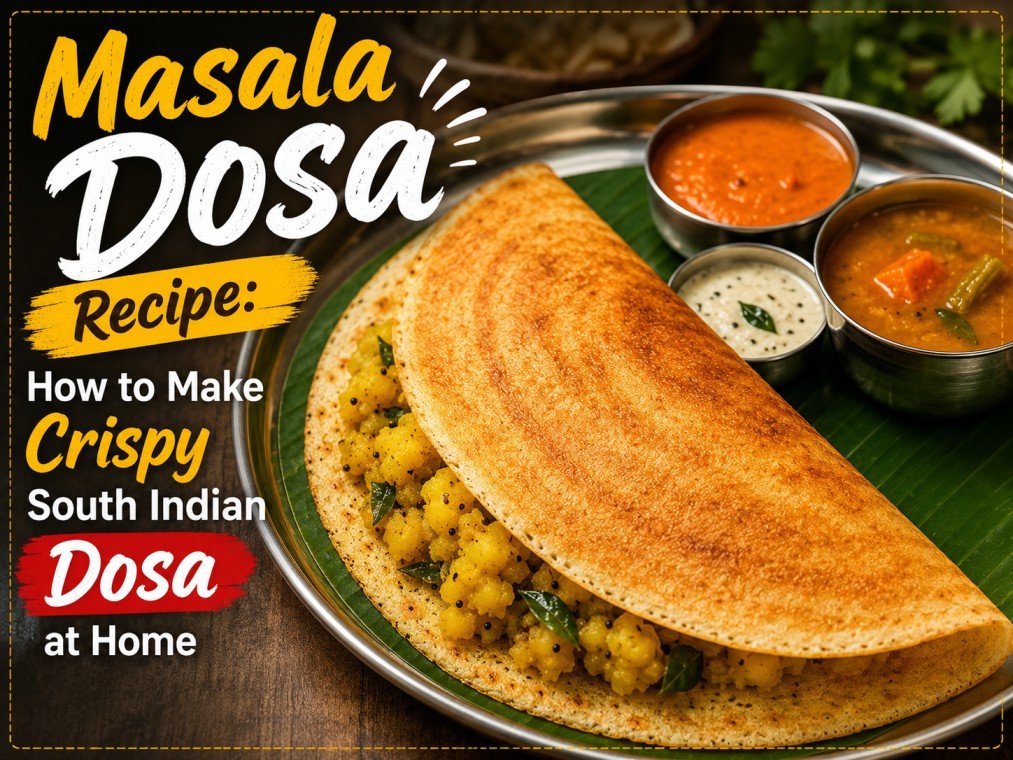
Masala dosa is one of India’s most popular South Indian dishes. It combines a thin, crispy fermented rice-and-lentil dosa with a flavorful potato filling and is traditionally served with sambar and coconut chutney.
The secret to a great masala dosa is a well-fermented batter and a properly heated tawa. Once you get these two things right, making restaurant-style dosa at home becomes much easier.
This recipe explains how to prepare the dosa batter, potato masala and crispy dosa, along with practical tips for getting the texture right.
What Is Masala Dosa?
Masala dosa is a thin South Indian crepe made from fermented batter prepared primarily with rice and urad dal.
The dosa is cooked on a hot tawa until crisp and golden, then filled with spiced potato masala.
A traditional serving usually includes:
- Masala dosa
- Sambar
- Coconut chutney
- Tomato chutney
Ingredients
For Dosa Batter
- 2 cups rice
- ½ cup urad dal
- 1 tablespoon poha
- ½ teaspoon fenugreek seeds
- Salt to taste
- Water as required
For Potato Masala
- 4 medium potatoes
- 1 onion, sliced
- 2 green chillies
- 1 teaspoon mustard seeds
- ½ teaspoon cumin seeds
- 8–10 curry leaves
- ¼ teaspoon turmeric
- 1 tablespoon oil
- Fresh coriander
- Salt to taste
For Cooking
- Oil or ghee
How to Make Dosa Batter
Step 1: Soak the Ingredients
Wash the rice and urad dal separately.
Soak them in water for approximately 4–6 hours.
Add fenugreek seeds to the urad dal while soaking.
Poha can be soaked for a shorter period before grinding.
Step 2: Grind the Batter
Drain the soaked ingredients.
Grind the urad dal until light and smooth.
Grind the rice separately until you get a slightly fine texture.
Combine everything in a large bowl.
Add water gradually to achieve a pourable batter.
Step 3: Ferment the Batter
Cover the bowl and leave the batter in a warm place.
Depending on the temperature, fermentation can take approximately 8–12 hours.
The fermented batter should become slightly bubbly and increase in volume.
Add salt and mix gently.
How to Make Potato Masala
Step 1: Boil the Potatoes
Boil the potatoes until tender.
Peel and roughly mash them.
Step 2: Prepare the Tempering
Heat oil in a pan.
Add mustard seeds.
Once they begin to crackle, add cumin seeds, curry leaves and green chillies.
Add sliced onions.
Cook until the onions become soft.
Step 3: Add Potatoes
Add turmeric and salt.
Add the mashed potatoes.
Mix everything thoroughly.
Cook for a few minutes.
Finish with fresh coriander.
Keep the potato masala aside.
How to Make Crispy Masala Dosa
Step 1: Heat the Tawa
Place a flat tawa over medium-high heat.
The tawa should be hot but not smoking excessively.
Step 2: Spread the Batter
Pour a ladleful of dosa batter in the center.
Using the back of the ladle, spread the batter in circular movements from the center outward.
Spread it as thinly as possible without creating holes.
Step 3: Add Oil
Drizzle a small amount of oil around the edges.
You can also use ghee for a richer flavor.
Step 4: Cook Until Crisp
Allow the dosa to cook until the surface becomes dry and the bottom turns golden.
Avoid flipping a traditional thin dosa.
Step 5: Add Potato Filling
Place a portion of potato masala in the center.
Fold the dosa into half or roll it.
Serve immediately.
How to Make Extra Crispy Masala Dosa
Use Properly Fermented Batter
Fermentation affects both flavor and texture.
Heat the Tawa Correctly
A tawa that is too cold can produce a thick dosa.
A tawa that is excessively hot can make the batter difficult to spread.
Don’t Make the Batter Too Thick
Thin, pourable batter is generally easier to spread for crispy dosa.
Spread Quickly
Spread the batter immediately after pouring.
Use a Light Layer of Oil
Too much oil can interfere with spreading and crisping.
Why Is My Dosa Not Crispy?
There can be several reasons.
Batter Is Too Thick
Add a little water and adjust the consistency.
Batter Has Not Fermented Properly
Fermentation is important for traditional dosa texture.
Tawa Is Too Cold
Allow the tawa to heat properly before spreading.
Tawa Is Too Hot
If the batter instantly sticks and cooks before spreading, reduce the heat slightly.
Too Much Oil
Excess oil can make spreading difficult.
How to Prevent Dosa From Sticking
A properly seasoned and heated tawa can make a major difference.
If you’re using a cast-iron tawa:
- Heat it.
- Lightly grease it.
- Wipe away excess oil.
- Allow it to heat again.
- Spread the batter.
For a non-stick tawa, avoid using metal utensils that can scratch the surface.
What to Serve With Masala Dosa
Masala dosa is traditionally served with:
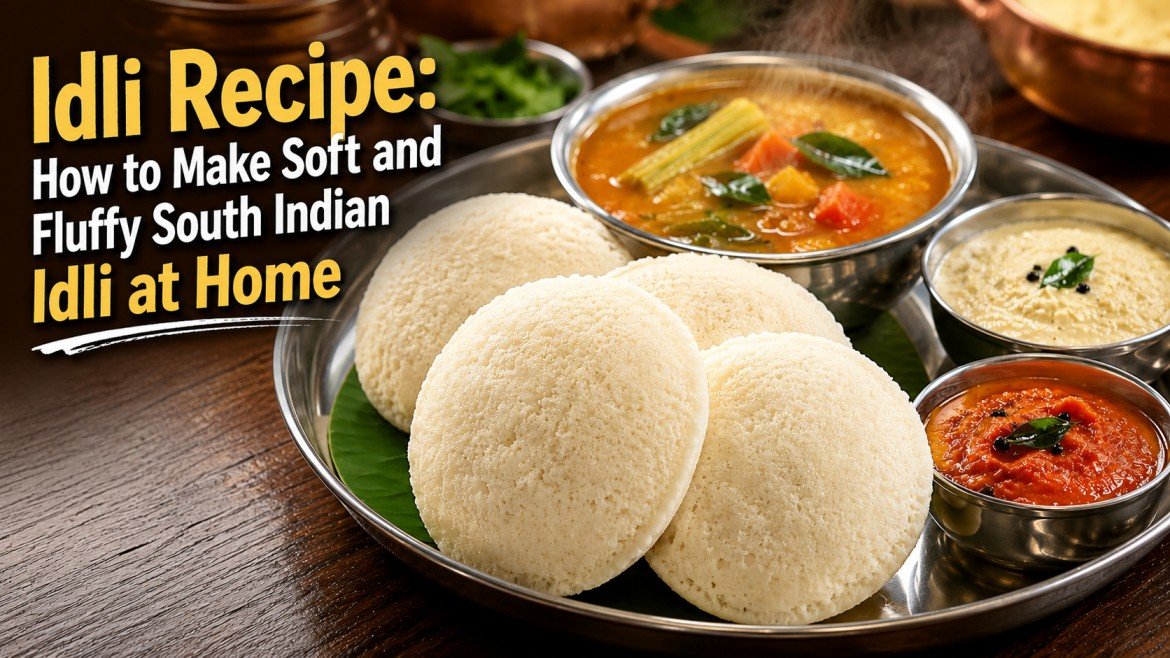
Sambar
A lentil-based vegetable stew with spices and tamarind.
Coconut Chutney
Fresh coconut blended with green chilli and other ingredients.
Tomato Chutney
A tangy and spicy chutney made primarily with tomatoes.
Peanut Chutney
A creamy alternative with roasted peanuts and spices.
Masala Dosa Variations
Mysore Masala Dosa
A spicy red chutney is spread inside the dosa before adding the potato masala.
Cheese Masala Dosa
Cheese is added to the potato filling for a modern variation.
Paneer Dosa
Spiced paneer can be used as a filling.
Onion Dosa
Thinly sliced onions are added while cooking the dosa.
Plain Dosa
Skip the potato filling and serve the crispy dosa with chutney and sambar.
Frequently Asked Questions
What is masala dosa made from?
Traditional dosa batter is primarily made from rice and urad dal. Masala dosa is filled with spiced potato masala.
How long should dosa batter ferment?
Fermentation commonly takes around 8–12 hours, although the exact time depends on room temperature and other conditions.
Why is my dosa sticking to the tawa?
The tawa may not be seasoned properly, the temperature may be unsuitable, or the batter consistency may need adjustment.
How do I make dosa crispy?
Use properly fermented batter, maintain the right tawa temperature and spread the batter into a thin layer.
Can I make dosa without fermentation?
Instant dosa versions are possible, but traditional South Indian dosa gets its characteristic flavor and texture from fermentation.
Can I use a non-stick pan for dosa?
Yes. A good-quality non-stick pan can make dosa at home, especially if you’re still learning the spreading technique.
What is the best filling for masala dosa?
Spiced potato masala is the classic filling, but paneer, onion and cheese variations are also popular.
Is masala dosa vegetarian?
Traditional masala dosa with potato filling, sambar and coconut chutney is vegetarian.

4 thoughts on “Masala Dosa Recipe: How to Make Crispy South Indian Dosa at Home”