







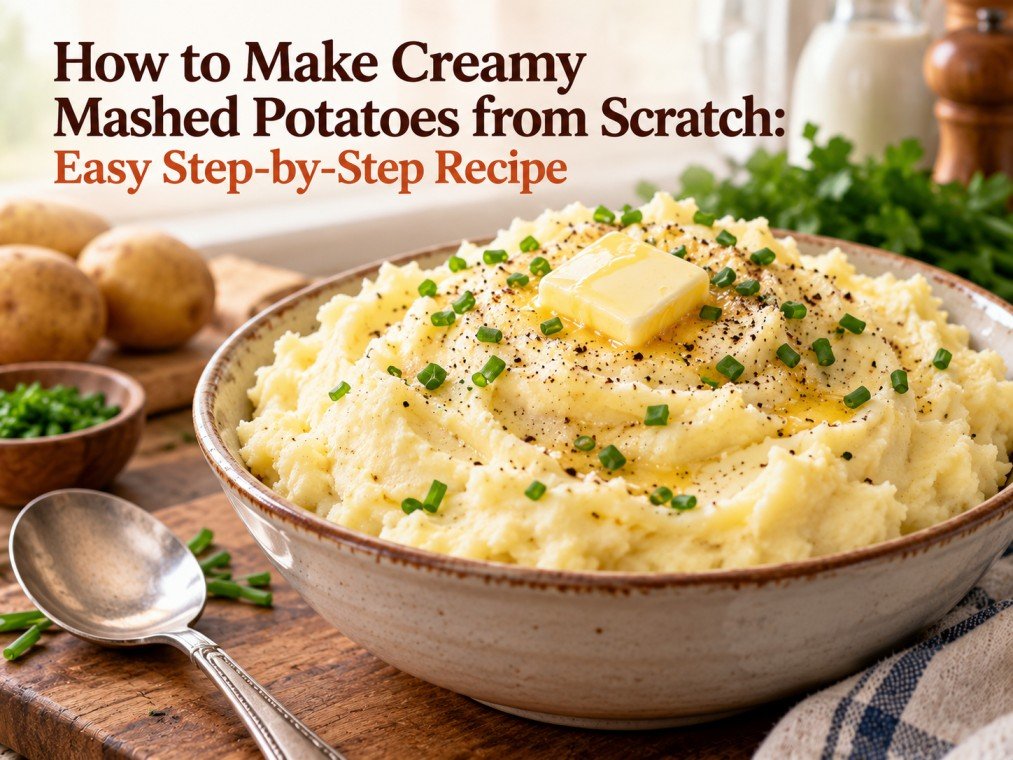
Creamy mashed potatoes are one of the most comforting homemade side dishes. Made with tender potatoes, rich butter, warm milk, and a little salt and pepper, this easy mashed potatoes recipe delivers a smooth, fluffy texture with delicious buttery flavor. It pairs perfectly with roasted chicken, steak, meatloaf, gravy, and holiday dinners.
The secret to making the best mashed potatoes from scratch is choosing the right potatoes, cooking them until fork-tender, draining them thoroughly, and adding warm butter and milk gradually. With a few simple techniques, you can make restaurant-style mashed potatoes at home without ending up with a watery or gluey texture.
In this guide, you will learn how to make creamy mashed potatoes step by step, which potatoes work best, how much butter and milk to use, and how to store and reheat leftovers.
Why You Will Love This Mashed Potatoes Recipe
- Easy to make: You need only a handful of everyday ingredients.
- Rich and buttery: Butter and warm milk create a comforting, creamy flavor.
- Fluffy texture: Simple preparation techniques help prevent gummy potatoes.
- Perfect side dish: Serve them with gravy, roasted meat, vegetables, or your favorite main course.
- Easy to customize: Add roasted garlic, sour cream, cream cheese, or fresh herbs.
- Great for holidays: This recipe is ideal for Thanksgiving, Christmas, family dinners, and special occasions.
Ingredients for Creamy Mashed Potatoes
You only need six basic ingredients to make delicious homemade mashed potatoes.
Main Ingredients
- 2 pounds (900 g) Yukon Gold or Russet potatoes
- 4 tablespoons (56 g) unsalted butter
- ½ cup (120 ml) whole milk, warmed
- ½ teaspoon salt, plus more for the cooking water
- ¼ teaspoon freshly ground black pepper
- 2 tablespoons chopped fresh chives or parsley, optional
Ingredient tip: Yukon Gold potatoes create naturally creamy, buttery mashed potatoes, while Russet potatoes produce a lighter, fluffier texture. You can also combine the two varieties.
How to Make Creamy Mashed Potatoes from Scratch
Follow these simple steps for smooth, flavorful mashed potatoes every time.
Step 1: Choose and Prepare the Potatoes
Peel the potatoes and rinse them under cool running water. Cut them into evenly sized chunks, approximately 1½ to 2 inches wide.
Cutting the potatoes into similar-sized pieces helps them cook evenly. If some pieces are much smaller than others, they may become waterlogged before the larger pieces are tender.
Step 2: Boil the Potatoes Until Tender
Place the potato chunks in a large pot and cover them with cold water by about 1 inch. Add a generous pinch of salt to the water.
Bring the water to a boil, then reduce the heat to maintain a gentle simmer. Cook for approximately 15–20 minutes, depending on the size of the chunks.
Check for doneness by inserting a fork or knife into a potato piece. It should slide in easily without resistance.
Avoid undercooking the potatoes because firm centers can create lumpy mashed potatoes.
Step 3: Drain and Dry the Potatoes
Drain the potatoes thoroughly in a colander. Return them to the warm pot and let them sit over low heat for about 1–2 minutes, gently shaking the pot occasionally.
This step allows excess moisture to evaporate, helping the potatoes absorb butter and milk without becoming watery.
Do not leave the potatoes over high heat, as they may scorch.
Step 4: Warm the Butter and Milk
In a small saucepan or microwave-safe container, warm the milk and butter until the butter melts and the mixture is hot but not boiling.
Warm dairy ingredients blend more easily with hot potatoes than cold milk and butter. This helps preserve the potatoes’ temperature and creates a smoother consistency.
Step 5: Mash the Potatoes
Use a potato masher or potato ricer to mash the drained potatoes while they are still hot.
Gradually add the melted butter and warm milk, mixing gently until the potatoes reach your preferred consistency.
Start with about three-quarters of the milk mixture and add more as needed. Different potato varieties absorb different amounts of liquid.
Important: Avoid using a blender or food processor. High-speed processing releases too much starch and can make mashed potatoes sticky, stretchy, or gluey.
Step 6: Season and Serve
Add the salt and black pepper. Taste the potatoes and adjust the seasoning if necessary.
For extra flavor, stir in chopped chives, parsley, or a small amount of roasted garlic.
Transfer the mashed potatoes to a serving bowl. Add a small pat of butter on top and sprinkle with fresh herbs if desired.
Serve immediately while warm and creamy.
What Are the Best Potatoes for Mashed Potatoes?
Choosing the right potato makes a noticeable difference in the final texture.
Yukon Gold Potatoes
Yukon Gold potatoes have a naturally buttery flavor and a medium-starchy texture. They produce rich, creamy mashed potatoes without requiring excessive butter or milk.
They are an excellent choice for a smooth, flavorful side dish.
Russet Potatoes
Russet potatoes contain more starch and produce a light, fluffy texture when mashed correctly.
They are ideal if you prefer traditional fluffy mashed potatoes that absorb butter, milk, and gravy well.
Can You Use Red Potatoes?
Yes. Red potatoes can be mashed, but they have a waxier texture and tend to hold their shape. They work best for rustic mashed potatoes with a slightly chunky consistency.
For the creamiest results, choose Yukon Gold potatoes or a combination of Yukon Gold and Russet potatoes.
Tips for the Best Homemade Mashed Potatoes
Start with Cold Water
Place the potatoes in cold water before heating. This allows the pieces to cook more evenly from the outside to the center.
Salt the Cooking Water
Seasoning the water helps flavor the potatoes throughout the cooking process. You can adjust the final seasoning after adding the butter and milk.
Dry the Potatoes After Boiling
Excess water dilutes the flavor and can make the finished dish watery. A brief drying step helps the potatoes absorb the dairy more effectively.
Always Use Warm Milk
Cold milk can cool the potatoes and may make it harder to achieve a smooth consistency. Warm the milk and butter before mixing them into the potatoes.
Add Liquid Gradually
Start with less milk than you think you need. You can always add more, but it is difficult to correct mashed potatoes that have become too thin.
Avoid Overmixing
Mash the potatoes until they are smooth or slightly chunky, depending on your preference. Stop once the desired texture is reached to avoid releasing too much starch.
How to Make Garlic Mashed Potatoes
If you love garlic, you can easily transform this basic recipe into creamy garlic mashed potatoes.
Add 3–4 peeled garlic cloves to the pot while the potatoes boil. Once the potatoes and garlic are tender, drain them together and mash them as directed.
For a sweeter, deeper flavor, use roasted garlic instead. Mash 3–4 roasted garlic cloves into the potatoes before adding the warm milk and butter.
Taste and adjust the seasoning before serving.
How to Make Mashed Potatoes Without Milk
You can make mashed potatoes without milk if you prefer a dairy-free version or have run out of milk.
Replace the milk with one of the following:
- Unsweetened, unflavored plant-based milk
- Warm vegetable broth
- Warm chicken broth, if suitable for your diet
- Reserved potato cooking water
For a dairy-free recipe, replace the butter with a plant-based alternative or olive oil. Add the liquid gradually to avoid making the potatoes too thin.
The flavor and texture will vary depending on the substitute you choose.
What to Serve with Mashed Potatoes
Creamy mashed potatoes complement many main dishes because their buttery flavor pairs well with savory sauces and roasted foods.
- Roast chicken: Serve with pan gravy and roasted vegetables.
- Steak: Pair with sautéed mushrooms, green beans, or pepper sauce.
- Meatloaf: A classic combination with brown gravy.
- Roasted turkey: Perfect for a holiday dinner with cranberry sauce and stuffing.
- Grilled vegetables: A simple vegetarian option with roasted carrots, broccoli, or mushrooms.
- Sausages and gravy: A comforting meal with rich onion gravy.
For a classic comfort-food dinner, serve mashed potatoes with gravy and roasted chicken or meatloaf.
How to Store Mashed Potatoes
Proper storage helps maintain the flavor and quality of leftover mashed potatoes.
In the Refrigerator
Allow the potatoes to cool slightly, then transfer them to an airtight container. Refrigerate within 2 hours of cooking and use within 3–4 days.
Avoid leaving cooked potatoes at room temperature for extended periods.
In the Freezer
Mashed potatoes containing butter and milk can generally be frozen for about 1–2 months for best quality.
Let them cool, portion them into freezer-safe containers, and seal tightly. Thaw them in the refrigerator before reheating when possible.
The texture may change slightly after freezing, but gentle reheating with a little warm milk or butter can help restore creaminess.
How to Reheat Mashed Potatoes
On the stovetop: Place the potatoes in a saucepan over low heat. Add a splash of milk and stir gently until heated through.
In the microwave: Transfer a portion to a microwave-safe bowl, cover loosely, and heat in short intervals. Stir between intervals and add a little milk if the potatoes seem dry.
In the oven: Place the potatoes in an oven-safe dish, cover, and heat at 325°F (165°C) until thoroughly hot. Stir in a little warm milk or butter if needed.
Reheat leftovers until they reach 165°F (74°C), stirring where practical to distribute the heat evenly.
Frequently Asked Questions
How long should you boil potatoes for mashed potatoes?
Potato chunks generally take 15–20 minutes to become tender when simmered in water. The exact time depends on the size of the pieces and the potato variety. They are ready when a fork slides through easily.
What is the secret to creamy mashed potatoes?
Use a suitable potato variety, drain the cooked potatoes thoroughly, allow excess moisture to evaporate, and add warm butter and milk gradually. Mash gently rather than blending at high speed.
How much butter and milk should you add to mashed potatoes?
For 2 pounds (900 g) of potatoes, start with 4 tablespoons of butter and ½ cup of warm milk. Adjust the milk gradually to achieve your preferred consistency.
Why are my mashed potatoes gluey?
Gluey mashed potatoes usually result from overmixing or processing the potatoes at high speed. Excessive mixing releases starch, producing a sticky texture. Use a hand masher or potato ricer and stop once the potatoes are combined.
Should you peel potatoes before boiling them?
Peeling the potatoes before boiling makes it easier to mash them smoothly. You can also boil them with their skins on and peel them after cooking, but they will be hot to handle.
Can you make mashed potatoes ahead of time?
Yes. Prepare the potatoes, transfer them to an airtight container, and refrigerate for up to 24 hours before reheating for best results. Add a little warm milk or butter while reheating to restore the creamy consistency.
Can you make mashed potatoes without butter?
Yes. You can replace butter with olive oil or a plant-based butter alternative. The flavor will be different, but the potatoes can still be smooth and delicious.
Why are my mashed potatoes watery?
Watery mashed potatoes may result from excess cooking water or too much milk. Drain the potatoes thoroughly, let steam escape for a minute or two, and add the warm milk gradually rather than all at once.
Final Thoughts
Making creamy mashed potatoes from scratch is simple when you use the right ingredients and techniques. Tender potatoes, rich butter, warm milk, and proper seasoning create a smooth, fluffy side dish that complements almost any dinner.
For the best results, choose Yukon Gold or Russet potatoes, dry them well after boiling, and avoid overmixing. Adjust the butter and milk to suit your preferred texture, then serve the potatoes warm with gravy, roasted meat, or vegetables.
Once you master this basic mashed potatoes recipe, you can easily customize it with garlic, fresh herbs, sour cream, or cheese.
Recipe Card: Creamy Homemade Mashed Potatoes
Prep Time: 10 minutes
Cook Time: 20 minutes
Total Time: 30 minutes
Servings: 4–6
Course: Side Dish
Cuisine: American
Cooking Method: Boiling and mashing
Ingredients
- 2 pounds (900 g) Yukon Gold or Russet potatoes
- 4 tablespoons (56 g) unsalted butter
- ½ cup (120 ml) whole milk, warmed
- ½ teaspoon salt, plus more for the water
- ¼ teaspoon black pepper
- 2 tablespoons chopped chives or parsley, optional
Instructions
- Peel the potatoes and cut them into evenly sized chunks.
- Place them in a pot, cover with cold water, and season the water with salt.
- Bring to a boil, reduce to a simmer, and cook for 15–20 minutes until fork-tender.
- Drain thoroughly and return the potatoes to the warm pot for 1–2 minutes to release excess moisture.
- Warm the butter and milk together until the butter melts.
- Mash the potatoes and gradually mix in the warm butter and milk.
- Season with salt and black pepper, adjusting to taste.
- Garnish with fresh herbs if desired and serve warm.
Recipe Notes: Add milk gradually because potatoes absorb different amounts of liquid. For a fluffy texture, avoid using a blender or food processor.