






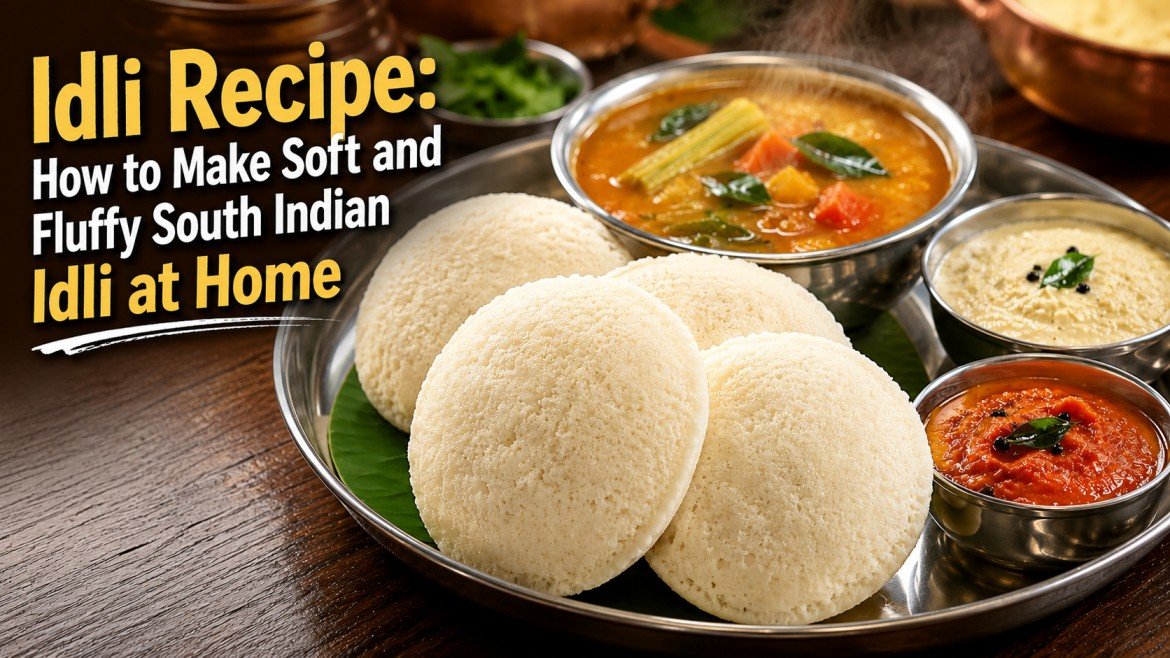
Idli is one of the most popular South Indian breakfast dishes. These soft, steamed rice cakes are made from a fermented batter of rice and urad dal and are traditionally served with sambar and coconut chutney.
A perfectly prepared idli should be soft, light, fluffy and spongy. The key to achieving this texture is properly soaking, grinding and fermenting the batter.
This easy homemade idli recipe explains each step, from preparing the batter to steaming the idlis, along with practical tips for getting soft idlis every time.
What Is Idli?
Idli is a steamed South Indian breakfast made from fermented rice and urad dal batter.
Unlike dosa, which is cooked on a hot tawa, idli is steamed in specially designed idli moulds.
Traditional idli is:
- Soft
- Steamed
- Naturally fermented
- Mild in flavor
- Easy to pair with chutney and sambar
Ingredients
For Idli Batter
- 2 cups idli rice or regular rice
- ½ cup urad dal
- 1 tablespoon poha, optional
- ½ teaspoon fenugreek seeds
- Salt to taste
- Water as required
For Steaming
- Water
- A little oil for greasing the moulds
How to Make Idli Batter
Step 1: Wash the Rice and Urad Dal
Wash the rice several times until the water becomes relatively clear.
Wash the urad dal separately.
Step 2: Soak the Ingredients
Soak the rice in enough water for approximately 4–6 hours.
Soak urad dal separately for the same amount of time.
Add fenugreek seeds to the urad dal while soaking.
If using poha, soak it shortly before grinding.
Step 3: Grind the Urad Dal
Drain the urad dal.
Grind it with a small amount of water until it becomes smooth and fluffy.
Avoid adding too much water at once.
Step 4: Grind the Rice
Drain the rice.
Grind it into a smooth or slightly grainy batter.
Combine the rice and urad dal batter in a large bowl.
Step 5: Adjust the Batter
Mix the batter gently.
The consistency should be thick but pourable.
It should not be watery.
Step 6: Ferment the Batter
Cover the bowl loosely.
Keep it in a warm location for approximately 8–12 hours, depending on the room temperature.
Properly fermented batter should increase in volume and appear slightly bubbly.
Add salt and mix gently.
How to Steam Idli
Step 1: Prepare the Idli Steamer
Add enough water to the steamer.
Bring it to a gentle boil.
Step 2: Grease the Moulds
Lightly grease the idli moulds with oil.
This helps the steamed idlis release easily.
Step 3: Fill the Moulds
Pour the fermented batter into each mould.
Don’t fill them completely because the idlis will expand while steaming.
Step 4: Steam
Place the moulds inside the steamer.
Cover and steam for approximately 10–12 minutes.
Avoid opening the lid repeatedly.
Step 5: Check for Doneness
Insert a toothpick or thin skewer into an idli.
If it comes out clean, the idlis are ready.
Remove the moulds and allow them to cool for a minute or two.
Use a spoon to gently remove the idlis.
How to Make Soft Idlis
Ferment the Batter Properly
Good fermentation is one of the most important factors in soft idlis.
Don’t Make the Batter Too Thin
Very watery batter can result in flat or dense idlis.
Grind Urad Dal Well
A light and fluffy urad dal batter helps create a better texture.
Don’t Overmix After Fermentation
Mix gently to avoid losing too much air from the batter.
Don’t Oversteam
Overcooking can make idlis dry and rubbery.
Why Are My Idlis Hard?
Hard idlis can happen for several reasons.
Poor Fermentation
If the batter doesn’t ferment properly, the idlis may become dense.
Too Much Rice
An incorrect rice-to-dal ratio can affect softness.
Batter Too Thick
Very thick batter may produce dense idlis.
Oversteaming
Cooking for too long can make the texture rubbery.
Old Batter
Batter that has been stored too long may lose its ideal texture.
How to Make Idli Batter in Cold Weather
Fermentation can take longer when the kitchen is cold.
You can place the covered batter in a warm location.
Some people also use:
- A switched-off oven with the light on
- A warm corner of the kitchen
- An insulated container
The goal is to provide a warm environment without directly heating or cooking the batter.
What to Serve With Idli
Idli is traditionally served with several accompaniments.
Sambar
A flavorful lentil and vegetable preparation makes an excellent pairing.
Coconut Chutney
Creamy coconut chutney adds freshness and mild spice.
Tomato Chutney
Tangy tomato chutney gives the meal a stronger flavor.
Peanut Chutney
Roasted peanut chutney is another delicious option.
Podi
South Indian idli podi mixed with oil or ghee is a simple and flavorful accompaniment.
Idli Variations
Rava Idli
Rava idli uses semolina instead of the traditional rice-based batter.
Kanchipuram Idli
This traditional variation is seasoned with spices and often served in a larger shape.
Vegetable Idli
Finely chopped vegetables can be added to the batter.
Mini Idli
Small bite-sized idlis are especially popular with children and are often served with sambar.
Podi Idli
Steamed idlis are tossed with podi and oil or ghee.
Idli vs Dosa
| Feature | Idli | Dosa |
|---|---|---|
| Cooking method | Steamed | Tawa-cooked |
| Texture | Soft & fluffy | Crispy or soft |
| Batter | Fermented | Fermented |
| Oil | Very little | Usually some |
| Popular serving | Sambar & chutney | Sambar & chutney |
| Meal style | Breakfast | Breakfast / meal |
Both use similar fermented rice-and-urad dal batters, but their preparation methods produce very different textures.
Frequently Asked Questions
How long should idli batter ferment?
Idli batter generally takes around 8–12 hours to ferment, but the exact time depends on the temperature.
Why are my idlis not fluffy?
Insufficient fermentation, incorrect batter consistency, poor urad dal grinding or oversteaming can result in dense idlis.
Can I make idli without fermentation?
Yes, instant idli recipes are possible using ingredients such as semolina or other quick-rise methods, but traditional idli relies on fermentation.
Can I use regular rice instead of idli rice?
Yes. Regular rice can be used, although the final texture may differ slightly.
How long should idlis be steamed?
Idlis commonly take around 10–12 minutes to steam, depending on the steamer and mould size.
How do I know when idli is cooked?
Insert a toothpick into the center. If it comes out clean, the idli is generally ready.
Can idli batter be refrigerated?
Yes. Once fermented, batter can be refrigerated and used over the following days, although its texture and flavor may change over time.
What is the best chutney for idli?
Coconut chutney is a classic choice, but tomato, peanut and mint chutneys also pair well with idli.
Is idli healthy?
Steamed idli is a relatively light breakfast option. Its nutritional value depends on the ingredients, serving size and accompaniments.
Recipe Card
Recipe: Soft South Indian Idli
Cuisine: South Indian
Prep Time: 20 minutes
Soaking Time: 4–6 hours
Fermentation: 8–12 hours
Steaming Time: 10–12 minutes
Servings: 4
Difficulty: Easy to Medium
Best Served With: Sambar and coconut chutney