







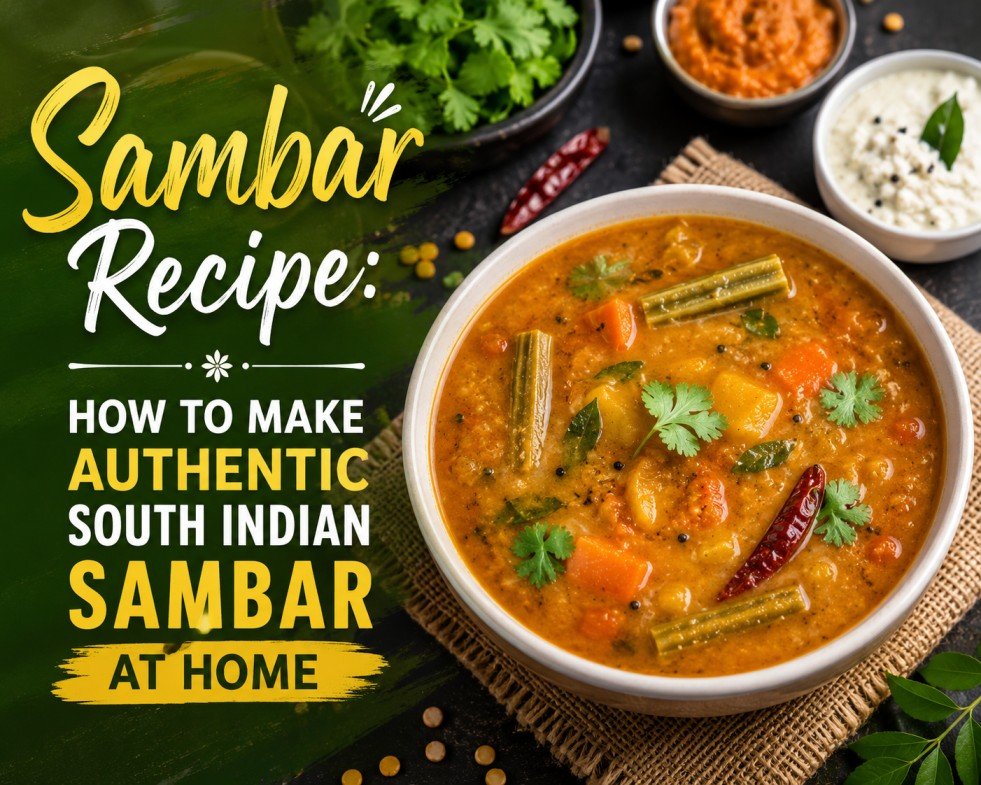
Sambar is one of the most popular dishes in South Indian cuisine. Made with lentils, vegetables, tamarind and a flavorful spice blend, this comforting dish is commonly served with idli, dosa, vada and rice.
A good sambar should have a balanced combination of spicy, tangy and mildly sweet flavors, with vegetables that are cooked until tender without becoming completely mushy.
The best part is that homemade sambar is easy to customize. You can use different vegetables, adjust the consistency and control the level of spice according to your preference.
In this guide, you’ll learn how to make authentic South Indian sambar at home, including the dal, vegetable preparation, tempering and serving suggestions.
What Is Sambar?
Sambar is a South Indian lentil-based vegetable stew prepared with:
- Toor dal
- Vegetables
- Tamarind
- Sambar powder
- Spices
- Curry leaves
- Mustard seeds
It can be served as a breakfast accompaniment or as a main meal with rice.
Ingredients
For the Dal
- 1 cup toor dal
- 2½–3 cups water
- ¼ teaspoon turmeric
- Salt to taste
For the Vegetables
You can use a combination of:
- 1 carrot
- 1 tomato
- 1 small onion
- ½ cup pumpkin
- ½ cup drumstick pieces
- ½ cup eggplant
- ½ cup bottle gourd
You don’t need to use every vegetable. Choose what you have available.
For the Sambar
- 2 tablespoons sambar powder
- 1 small lemon-sized piece of tamarind
- ½ teaspoon red chilli powder, optional
- Salt to taste
- 1–2 cups water
For Tempering
- 1 tablespoon oil or ghee
- 1 teaspoon mustard seeds
- ½ teaspoon cumin seeds
- 1–2 dried red chillies
- 8–10 curry leaves
- A pinch of asafoetida
For Garnishing
- Fresh coriander leaves
How to Make Sambar
Step 1: Soak the Tamarind
Place the tamarind in warm water for around 15–20 minutes.
Squeeze it well and strain the liquid.
Set the tamarind water aside.
Step 2: Cook the Dal
Wash the toor dal thoroughly.
Add dal, turmeric and water to a pressure cooker or suitable pot.
Cook until the dal becomes soft.
Mash it until smooth.
Keep it aside.
Step 3: Cook the Vegetables
Cut the vegetables into medium-sized pieces.
Add them to a pot with water and a little salt.
Cook until the vegetables become tender but still hold their shape.
Step 4: Add the Sambar Powder
Add sambar powder and, if desired, a little red chilli powder.
Mix well.
Cook for a few minutes so the spices blend with the vegetables.
Step 5: Add Tamarind
Pour in the prepared tamarind water.
Bring the mixture to a gentle boil.
Allow it to simmer for several minutes to reduce the raw tamarind flavor.
Step 6: Add Cooked Dal
Add the mashed dal.
Mix thoroughly.
Adjust the consistency with water.
Sambar should generally be pourable rather than extremely thick.
Step 7: Simmer
Let the sambar simmer for approximately 8–10 minutes.
Taste and adjust:
- Salt
- Tamarind
- Spice
- Water
Step 8: Prepare the Tempering
Heat oil or ghee in a small pan.
Add mustard seeds.
When they crackle, add cumin seeds, dried red chillies, curry leaves and asafoetida.
Pour the tempering over the hot sambar.
Finish with fresh coriander.
How to Make Restaurant-Style Sambar
The flavor of sambar depends on balance rather than simply adding more spices.
Cook the Dal Properly
The dal should be soft enough to blend smoothly into the broth.
Don’t Overcook the Vegetables
Vegetables should remain recognizable and retain some texture.
Cook the Tamarind
Allowing the tamarind to simmer removes its raw taste.
Use Fresh Sambar Powder
Freshly opened spice powder usually provides better aroma.
Finish With Tempering
A final tempering of mustard seeds, curry leaves and dried chillies gives the sambar its characteristic aroma.
Best Vegetables for Sambar
Different combinations create different flavors.
Drumstick
A classic choice with a distinctive flavor.
Pumpkin
Adds mild sweetness.
Eggplant
Absorbs the spices well.
Carrot
Adds color and subtle sweetness.
Bottle Gourd
Creates a lighter version.
Onion
Small onions or regular onions work well.
You can combine several vegetables instead of relying on just one.
What to Serve With Sambar
Sambar is incredibly versatile.
Sambar With Idli
Soft steamed idli absorbs the flavorful sambar beautifully.
Sambar With Dosa
Crispy masala dosa served with hot sambar is a classic combination.
Sambar With Vada
Medu vada soaked in sambar makes a popular South Indian breakfast.
Sambar With Rice
Sambar rice is a comforting everyday meal.
Sambar With Uttapam
Thick vegetable uttapam also pairs well with sambar.
Sambar vs Rasam
Sambar and rasam are both popular South Indian preparations, but they are different.
| Feature | Sambar | Rasam |
|---|---|---|
| Main base | Dal + vegetables | Spiced broth |
| Texture | Thicker | More liquid |
| Tamarind | Common | Common |
| Vegetables | Usually several | Often limited |
| Served with | Idli, dosa, rice | Rice, sometimes meals |
Sambar is generally more substantial, while rasam is lighter and thinner.
How to Fix Sambar
Too Thick
Add hot water gradually and simmer briefly.
Too Thin
Simmer uncovered to reduce it, or add a little more cooked dal.
Too Sour
Balance it with additional dal, water and seasoning.
Too Spicy
Increase the quantity of dal or vegetables and adjust the seasoning.
Too Bland
Check salt and add a small amount of sambar powder if necessary.
Frequently Asked Questions
What is sambar made of?
Traditional sambar is made with toor dal, vegetables, tamarind, sambar powder and spices.
Which dal is best for sambar?
Toor dal is the most commonly used dal for traditional South Indian sambar.
What vegetables can I add to sambar?
Drumstick, pumpkin, eggplant, carrot, bottle gourd and onion are popular choices.
Can I make sambar without tamarind?
Yes, although tamarind provides the characteristic tangy flavor. Other souring ingredients can be used for variations.
How do I make sambar for idli?
Make a slightly pourable sambar with well-cooked dal and vegetables. It should be easy to spoon over or dip idli into.
Can I make sambar without onion?
Yes. You can simply omit onion and adjust the seasoning.
How long does homemade sambar last?
Store cooled sambar in an airtight container in the refrigerator and consume it within a few days. Reheat thoroughly before serving.
Why is my sambar too watery?
It may contain too much water relative to the dal and vegetables. Simmer it uncovered to reduce the liquid.
What is the best sambar for dosa?
A moderately thin, flavorful vegetable sambar works particularly well with dosa because it can be used for dipping.
Is sambar vegetarian?
Traditional vegetable sambar is vegetarian.
Recipe Card
Recipe: South Indian Sambar
Cuisine: South Indian
Prep Time: 20 minutes
Cooking Time: 35 minutes
Total Time: 55 minutes
Servings: 5–6
Difficulty: Easy
Best Served With: Idli, dosa, vada, uttapam or rice