






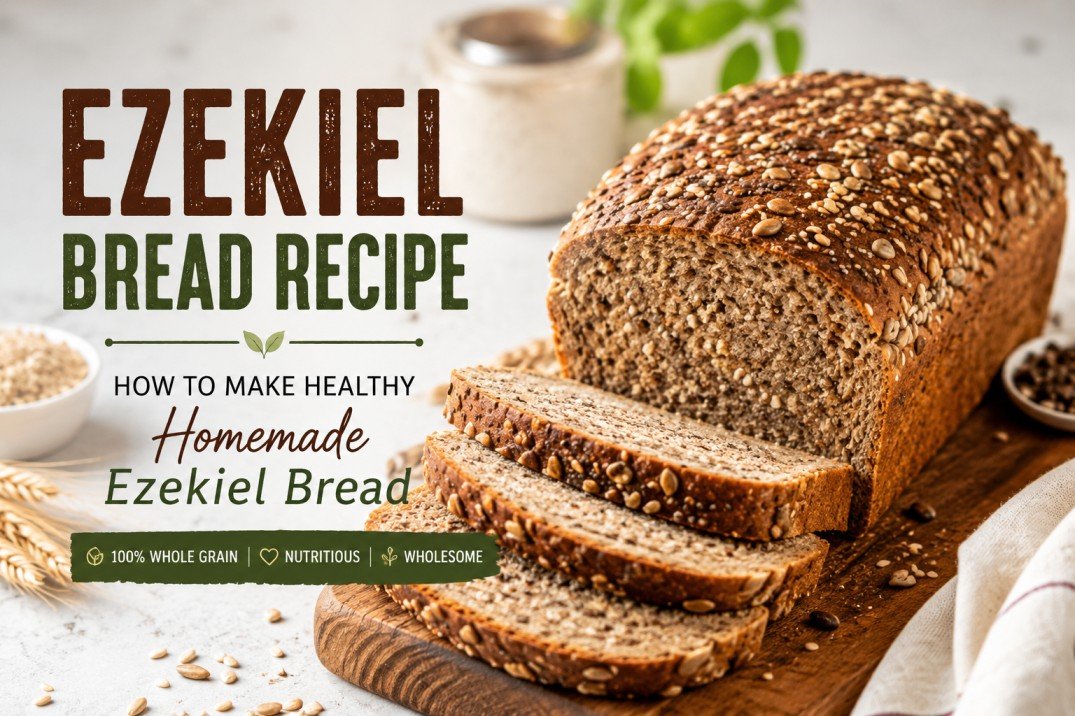
Ezekiel bread is a hearty, nutrient-rich style of bread made with a combination of whole grains and legumes. Unlike traditional white bread, which is usually made from refined wheat flour, Ezekiel-style bread combines ingredients such as wheat, barley, millet, lentils, beans, and other whole grains to create a dense, earthy loaf with a distinctive flavor.
This homemade Ezekiel bread recipe is a great option if you enjoy wholesome, homemade bread and want to experiment with freshly milled grains or a combination of whole grains and legumes. You can make it using an oven or adapt the process for a bread machine, depending on the ingredients and equipment you have available.
What Is Ezekiel Bread?
Ezekiel bread is inspired by the ingredients mentioned in the biblical Book of Ezekiel. The traditional combination includes several grains and legumes, which are ground or processed and then used to make bread.
A typical Ezekiel-style bread may contain:
- Whole wheat
- Barley
- Millet
- Spelt
- Lentils
- Kidney beans
- Pinto beans
- Soybeans
The exact ingredients vary between recipes. Some versions use sprouted grains, while others use whole grains that are freshly milled into flour.
The result is generally a dense, hearty bread with a slightly nutty and earthy flavor.
Why Make Ezekiel Bread at Home?
Making Ezekiel bread at home gives you control over the ingredients and preparation method. You can choose high-quality whole grains, adjust the grain-to-legume ratio, and experiment with freshly milled flour.
Homemade bread also allows you to avoid unnecessary additives that may be present in some commercial bread products.
One important thing to remember is that homemade Ezekiel bread can be denser than conventional sandwich bread. This is part of its characteristic texture and comes from the use of whole grains and legumes.
Ezekiel Bread Ingredients
The following ingredients create a flavorful, hearty loaf.
Whole Grains
You can use a combination of:
- Whole wheat berries
- Barley
- Millet
- Spelt
Freshly milled grains can provide a particularly rich flavor, although commercially prepared whole-grain flours can also be used.
Legumes
Common options include:
- Lentils
- Pinto beans
- Kidney beans
- Soybeans
If using dried legumes, make sure they are suitable for grinding or processing according to your chosen recipe method. Do not use raw beans directly in a finished loaf without appropriate preparation.
Yeast
Active dry yeast or instant yeast helps the dough rise. Follow the instructions on your yeast package for the best results.
Water
Water hydrates the flour and helps activate the yeast. The exact amount may vary depending on how finely the grains are milled and how absorbent the flour is.
Sweetener
A small amount of honey or another suitable sweetener can help balance the earthy flavor and support yeast activity.
Salt
Salt enhances the overall flavor of the bread and helps control fermentation.
Oil
A small amount of neutral oil can improve the dough’s texture and help produce a softer crumb.
How to Make Ezekiel Bread
Step 1: Prepare the Grains and Legumes
If you are using whole grains and dried legumes, measure them carefully according to your preferred ingredient combination.
For a freshly milled version, grind the grains and suitable legumes into a fine or medium-fine flour using a grain mill or powerful grinder designed for the ingredients.
If your recipe uses cooked or sprouted ingredients instead, prepare them according to the specific method before adding them to the dough.
Step 2: Combine the Dry Ingredients
Add the prepared flour mixture to a large mixing bowl.
Stir in the salt and any additional dry ingredients called for in your recipe.
Mix everything thoroughly so the different grains and legumes are evenly distributed.
Step 3: Activate the Yeast
If using active dry yeast, combine it with warm water and the honey or sweetener.
Allow it to sit for several minutes until the mixture becomes slightly foamy.
If using instant yeast, you can generally add it directly to the dry ingredients according to the manufacturer’s instructions.
Avoid using water that is too hot because excessive heat can damage the yeast.
Step 4: Make the Dough
Gradually add the liquid ingredients to the flour mixture.
Stir until a rough dough forms.
The dough may feel heavier and stickier than conventional white-bread dough because whole grains and legumes absorb a significant amount of liquid.
If the dough appears extremely dry, add a small amount of water at a time. If it is excessively wet, add a little more flour.
Step 5: Knead the Dough
Transfer the dough to a lightly floured surface and knead it until it becomes more cohesive.
You can also use a stand mixer fitted with a dough hook.
Because this type of dough contains whole grains and legumes, it may not develop the same smooth elasticity as a traditional white-flour dough. The goal is to achieve a well-combined, workable dough rather than an exceptionally stretchy texture.
Step 6: Let the Dough Rise
Place the dough in a lightly oiled bowl and cover it with a clean kitchen towel or plastic wrap.
Allow it to rise in a warm, draft-free area until it has noticeably increased in volume.
The rising time can vary depending on the room temperature, yeast activity, and the ingredients used.
Whole-grain dough may rise more slowly than dough made with refined flour.
Step 7: Shape the Loaf
Once the dough has risen, gently press it down to release excess air.
Shape it into a loaf and place it in a greased loaf pan.
Cover it again and allow it to rise for a second time.
Step 8: Bake the Ezekiel Bread
Preheat your oven according to your chosen recipe.
Bake the loaf until it is fully cooked and has developed a firm, browned crust.
Because whole-grain bread can brown before the center is completely baked, check the loaf carefully toward the end of the baking time.
Allow the bread to cool completely before slicing.
This step is important because slicing homemade bread while it is still very hot can result in a gummy or compressed interior.
Easy Ezekiel Bread Recipe
Ingredients
- 2 cups whole wheat flour or freshly milled wheat
- ½ cup barley flour
- ½ cup millet flour
- ½ cup spelt flour
- ¼ cup lentil flour
- ¼ cup bean flour
- 2 teaspoons active dry yeast
- 1½ to 2 cups warm water, as needed
- 1 tablespoon honey
- 1½ teaspoons salt
- 1 tablespoon neutral oil
Instructions
- Combine the whole-grain and legume flours in a large bowl.
- Add the salt and mix well.
- In a separate container, combine warm water, honey, and yeast.
- Let the yeast mixture stand briefly until activated if using active dry yeast.
- Pour the liquid mixture into the dry ingredients.
- Add the oil and stir until a dough forms.
- Knead the dough until the ingredients are evenly combined and the dough becomes workable.
- Place the dough in an oiled bowl and cover.
- Let it rise in a warm location until noticeably expanded.
- Gently deflate the dough and shape it into a loaf.
- Place the dough in a greased loaf pan.
- Cover and let it rise again.
- Bake in a preheated oven until the loaf is browned and cooked through.
- Cool completely before slicing.
How to Make Ezekiel Bread in a Bread Machine
Ezekiel-style bread can also be prepared in a bread machine, although the exact process depends on the machine and the recipe.
For a bread-machine version, add the ingredients according to your machine manufacturer’s recommended order. Many machines recommend adding liquids first, followed by dry ingredients, with yeast added last.
Select a whole-wheat or appropriate custom cycle if available.
Keep an eye on the dough during the initial mixing stage. Whole-grain and legume-based doughs can behave differently from standard bread dough, so you may need to adjust the hydration slightly.
If the dough appears too dry, add water one tablespoon at a time. If it looks excessively wet, add a small amount of flour.
The final loaf may be dense and hearty rather than light and fluffy.
Fresh-Milled Ezekiel Bread vs. Regular Flour
Freshly milling your own grains can give homemade bread a deeper flavor and aroma.
When grains are milled immediately before baking, the resulting flour contains all parts of the grain, including the bran and germ. This can make the dough more absorbent and may influence the final texture.
Fresh-milled flour also tends to produce a more rustic loaf, especially when combined with legumes.
If you do not own a grain mill, you can use commercially available whole-grain flours instead.
Should You Use Sprouted Grains?
Some Ezekiel-style bread recipes use sprouted grains, while others use grains that are simply milled into flour.
Sprouting involves allowing grains to begin germinating under controlled conditions before they are used in the recipe.
Sprouted-grain bread has a different texture and flavor from bread made with dry, milled grains. It is important to follow food-safety practices when preparing sprouted ingredients at home.
If you prefer a simpler baking process, a freshly milled or whole-grain flour version may be easier to prepare.
Tips for Making Better Ezekiel Bread
Use Fresh Ingredients
Whole grains and legumes can lose quality over time. Store them properly in a cool, dry place and use fresh ingredients whenever possible.
Adjust the Water Gradually
Different grains absorb different amounts of water. Start with less liquid and add more gradually if needed.
Don’t Expect a White-Bread Texture
Ezekiel-style bread is naturally hearty and dense. It may not have the soft, airy texture of commercially produced white sandwich bread.
Let It Cool Completely
Allow the loaf to cool before slicing. This helps the crumb set and makes it easier to cut clean slices.
Use a Serrated Bread Knife
A serrated knife works best for slicing dense homemade bread without crushing the loaf.
Freeze Extra Bread
If you cannot eat the entire loaf within a few days, slice it and freeze the pieces in an airtight freezer-safe bag or container.
You can then remove individual slices as needed.
How to Store Ezekiel Bread
Homemade Ezekiel bread generally does not contain the same preservatives as many commercially produced breads.
Store the cooled loaf in an airtight container or bread bag and keep it in a cool, dry place for short-term storage.
For longer storage, freezing is usually a better option. Slice the bread before freezing so you can take out only what you need.
Is Ezekiel Bread Gluten-Free?
No. Traditional Ezekiel bread recipes commonly contain wheat, barley, spelt, or other gluten-containing grains.
Therefore, traditional Ezekiel bread should not be considered gluten-free.
Anyone with celiac disease, a diagnosed gluten allergy, or a medical reason to avoid gluten should not assume that Ezekiel bread is safe.
Is Ezekiel Bread Healthy?
Ezekiel-style bread is made with whole grains and legumes, which can contribute nutrients such as fiber, plant-based protein, vitamins, and minerals.
However, the nutritional value depends on the exact ingredients and quantities used.
It is also important to distinguish homemade Ezekiel-style bread from commercial products. Nutritional profiles can vary significantly between recipes and brands.
For a balanced diet, consider Ezekiel bread as one food that can fit into an overall eating pattern rather than viewing it as a miracle or cure-all food.
What Does Ezekiel Bread Taste Like?
Ezekiel bread typically has a nutty, earthy, and slightly sweet flavor.
Because it contains whole grains and legumes, its flavor is usually stronger than ordinary white bread.
The texture is also generally denser and chewier.
If you prefer a milder taste, you can experiment with the ratio of grains and legumes or add ingredients such as seeds, depending on your recipe.
How to Serve Homemade Ezekiel Bread
Ezekiel bread can be used in many of the same ways as other whole-grain breads.
Try serving it with:
- Avocado
- Peanut butter
- Hummus
- Eggs
- Fresh vegetables
- Turkey or chicken
- Cheese
- Soup
- Salad
It also makes a hearty base for toast and open-faced sandwiches.
Frequently Asked Questions
What is Ezekiel bread made from?
Traditional Ezekiel-style bread is made from a combination of whole grains and legumes. Common ingredients include wheat, barley, millet, spelt, lentils, beans, and soybeans, although recipes vary.
Is homemade Ezekiel bread difficult to make?
It can be slightly more involved than ordinary bread because the dough contains whole grains and legumes. However, with properly prepared ingredients and careful hydration, it can be made at home using a mixer, by hand, or sometimes in a bread machine.
Can I make Ezekiel bread without a grain mill?
Yes. You can use commercially prepared whole-grain flours if you do not have a grain mill.
Can I make Ezekiel bread in a bread machine?
Yes, many Ezekiel-style recipes can be adapted for bread machines. However, you should use a recipe designed for your machine or adjust the liquid and flour carefully because this dough behaves differently from standard white-bread dough.
Why is my Ezekiel bread so dense?
The use of whole grains and legumes naturally produces a denser loaf. Too little water, insufficient fermentation, inactive yeast, or overbaking can also contribute to a dense texture.
Does Ezekiel bread contain gluten?
Traditional Ezekiel bread contains gluten because it commonly includes wheat, barley, or spelt.
How should I store homemade Ezekiel bread?
Keep it in an airtight container for short-term storage. For longer storage, slice and freeze the bread in a freezer-safe container or bag.
Can I freeze Ezekiel bread?
Yes. Freezing is a convenient way to preserve homemade Ezekiel bread. Slicing the loaf before freezing makes it easier to thaw individual portions.
Final Thoughts
Homemade Ezekiel bread is a unique way to combine whole grains and legumes into one hearty loaf. Its earthy flavor, dense texture, and versatile ingredients make it an interesting alternative to conventional bread.
Whether you choose to freshly mill your grains, use prepared whole-grain flours, bake the loaf in an oven, or experiment with a bread machine, the key is to understand that this type of bread behaves differently from traditional wheat bread.
Start with a reliable ingredient ratio, adjust the hydration as needed, give the dough enough time to rise, and allow the finished loaf to cool completely before slicing. With a little practice, you can create a flavorful homemade Ezekiel-style bread that works beautifully for toast, sandwiches, and everyday meals.
Recipe Disclaimer
This recipe is provided for general informational and culinary purposes. Ingredient quantities, baking times, and results can vary depending on the type of flour, grains, legumes, yeast, equipment, altitude, and environmental conditions. Always follow safe food-preparation practices and consult a qualified healthcare professional or registered dietitian for individualized dietary advice.