







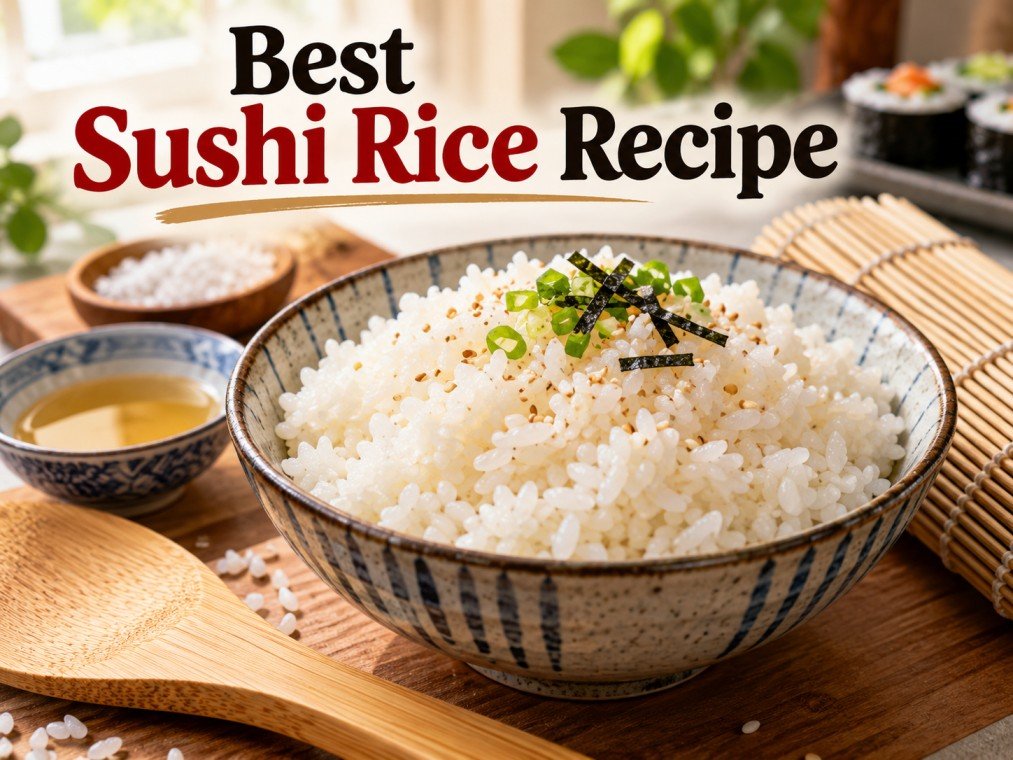
Making sushi at home starts with one essential ingredient: perfectly cooked sushi rice. The best sushi rice recipe produces rice that is tender, slightly sticky, gently seasoned, and easy to shape into sushi rolls, nigiri, and other Japanese dishes.
The good news is that you do not need to be a professional chef to make delicious sushi rice. With the right type of rice, the correct water ratio, and a simple vinegar seasoning, you can prepare restaurant-style sushi rice in your own kitchen.
In this guide from Desi Chori Rashoi, you will learn how to make sushi rice step by step, including the ingredients, cooking instructions, seasoning tips, and common mistakes to avoid.
What Is Sushi Rice?
Sushi rice is short-grain Japanese rice cooked until tender and seasoned with a mixture of rice vinegar, sugar, and salt. It has a slightly glossy appearance and a sticky texture that helps sushi ingredients hold together.
Unlike ordinary steamed rice, traditional sushi rice is seasoned after cooking. This gives it the mild tangy and slightly sweet flavor commonly associated with sushi.
Quick answer: To make sushi rice, rinse 2 cups of Japanese short-grain rice until the water runs mostly clear, cook it with approximately 2 cups of water according to the rice and cooking method, and gently mix it with rice vinegar, sugar, and salt while the rice is warm.
Best Sushi Rice Recipe at a Glance
- Preparation time: 10–15 minutes
- Cooking time: 15–20 minutes, depending on the method
- Resting time: 10 minutes
- Total time: Approximately 35–45 minutes
- Servings: 4
- Cuisine: Japanese
- Difficulty: Easy
Ingredients for the Best Sushi Rice Recipe
You only need a few simple ingredients to make flavorful homemade sushi rice.
Ingredients
- 2 cups Japanese short-grain white rice
- 2 cups water, as a starting ratio for many Japanese short-grain rice varieties
- ¼ cup unseasoned rice vinegar
- 2 tablespoons granulated sugar
- 1 teaspoon salt
Important: Check the rice package instructions because the required amount of water can vary by rice variety, cooking method, and whether the rice has been soaked.
Which Rice Is Best for Sushi?
Japanese short-grain rice is generally the best choice for sushi because it becomes tender and sticky after cooking. Look for rice specifically labeled Japanese sushi rice or short-grain Japanese rice.
Medium-grain rice may work as an alternative, although the texture can differ. Long-grain rice, such as basmati, is usually not suitable for traditional sushi because it does not develop the same cohesive texture.
How to Make Sushi Rice Step by Step
Follow these simple instructions to prepare perfectly seasoned sushi rice at home.
Step 1: Rinse the Rice
Measure 2 cups of Japanese short-grain rice into a bowl. Add cold water and gently swirl the rice with your hand. Drain the cloudy water and repeat several times until the water runs mostly clear.
Rinsing removes excess surface starch and helps produce a more balanced texture. Avoid rubbing the grains too aggressively, as they can break.
Step 2: Cook the Rice
Transfer the rinsed rice to a saucepan or rice cooker. Add the appropriate amount of water based on the rice package instructions.
For the stovetop method:
- Bring the rice and water to a gentle boil with the lid on.
- Reduce the heat to low and cook for approximately 12–15 minutes, or according to the rice instructions.
- Turn off the heat and let the rice rest, covered, for about 10 minutes.
Avoid lifting the lid frequently because escaping steam can affect the cooking process.
Step 3: Prepare the Sushi Vinegar
While the rice cooks, combine the rice vinegar, sugar, and salt in a small bowl.
Stir until the sugar and salt dissolve. If necessary, warm the mixture gently to help the ingredients dissolve, but do not boil it.
This seasoning creates the characteristic sweet, tangy flavor of sushi rice.
Step 4: Season the Warm Rice
Transfer the cooked rice to a wide, shallow bowl. Pour the vinegar mixture evenly over the rice.
Using a rice paddle or spatula, gently cut and fold the rice to distribute the seasoning. Avoid stirring vigorously or crushing the grains.
Traditional sushi rice is often cooled while being gently fanned. This helps create a glossy finish and brings the rice closer to room temperature.
Step 5: Let the Rice Cool
Allow the seasoned rice to cool until it reaches approximately room temperature. Keep it covered with a clean, slightly damp cloth while you prepare the other sushi ingredients.
Your homemade sushi rice is now ready to use for sushi rolls, nigiri, and rice bowls.
Tips for Perfect Sushi Rice Every Time
Small details can make a significant difference in the final texture and flavor.
- Choose the right rice: Japanese short-grain rice gives sushi its characteristic sticky texture.
- Rinse thoroughly: Remove excess surface starch without damaging the grains.
- Measure water carefully: Follow the rice package instructions instead of assuming every variety needs the same amount.
- Do not overcook: Mushy rice can make sushi difficult to shape.
- Season while warm: Warm rice absorbs the vinegar mixture more evenly.
- Fold gently: Use a cutting and folding motion rather than mashing the rice.
- Avoid refrigeration before serving: Refrigerated rice becomes firm and loses its ideal sushi texture.
Common Sushi Rice Mistakes to Avoid
Using the Wrong Type of Rice
Long-grain rice often remains too separate to hold sushi rolls together properly. Choose Japanese short-grain rice whenever possible.
Adding Too Much Water
Excess water can make the rice wet and mushy. Adjust the quantity according to the rice variety and cooking method.
Mixing the Rice Too Aggressively
Vigorous stirring breaks the grains and releases more starch. Fold the seasoning through the rice gently.
Adding Vinegar Before Cooking
The vinegar seasoning should generally be added after cooking. Cooking the rice with the seasoning can change the flavor and texture.
Using Too Much Seasoning
An overly strong vinegar flavor can overpower the other sushi ingredients. Start with the recommended measurements and adjust slightly to your preference.
What Can You Make with Sushi Rice?
Once your sushi rice is ready, you can use it in a variety of dishes.
- California rolls: Sushi rolls with ingredients such as avocado, cucumber, and imitation crab.
- Vegetable sushi rolls: A vegetarian option with cucumber, avocado, carrot, or other vegetables.
- Nigiri sushi: Small portions of seasoned rice topped with fish or suitable alternatives.
- Temaki: Hand-rolled sushi cones filled with rice and your favorite ingredients.
- Sushi bowls: Seasoned rice served with vegetables, protein, and flavorful toppings.
You can also use sushi rice as the base for a homemade Japanese-inspired rice bowl.
How to Store Sushi Rice Safely
Sushi rice is best enjoyed fresh, while its texture is still soft and slightly sticky.
If you need to store leftovers, transfer the rice to a clean, shallow container and refrigerate it promptly. Do not leave cooked rice at room temperature for extended periods because Bacillus cereus, a foodborne illness risk associated with rice, can grow under unsuitable storage conditions.
For food safety, refrigerate cooked rice within two hours, or within one hour when the surrounding temperature is above 32°C (90°F). Keep the refrigerator at 4°C (40°F) or below and use refrigerated leftovers within 3–4 days. Reheat leftovers thoroughly until steaming hot.
Keep sushi rice separate from raw fish and other perishable sushi ingredients until you are ready to assemble the dish. Traditional seasoned sushi rice is often served at room temperature, but that does not mean it can safely be left out indefinitely.
Frequently Asked Questions About Sushi Rice
1. What is the best rice for sushi?
Japanese short-grain white rice is generally the best option because it becomes tender, cohesive, and sticky enough to hold sushi together.
2. What is the correct water-to-rice ratio for sushi rice?
A 1:1 ratio by volume is a useful starting point for many Japanese short-grain rice varieties, but the ideal ratio depends on the brand, soaking time, and cooking method. Always check the package instructions.
3. Can I make sushi rice without rice vinegar?
Rice vinegar is recommended for traditional sushi rice because it provides the characteristic tangy flavor. If you do not have it, a mild alternative vinegar can work, but the flavor will be different.
4. Why is my sushi rice too mushy?
Sushi rice may become mushy because of excess water, overcooking, insufficient draining after rinsing, or excessive stirring. Measure the water carefully and follow the cooking instructions for your rice.
5. Should sushi rice be hot or cold?
Sushi rice should generally be cooled to approximately room temperature before assembling sushi. It should not be ice-cold or freshly steaming hot when used for traditional sushi preparation.
6. Can I use basmati rice for sushi?
Basmati rice is not recommended for traditional sushi because its long grains remain relatively separate. Japanese short-grain rice provides a more suitable texture.
7. How much sushi rice does 2 cups of uncooked rice make?
Two cups of uncooked Japanese short-grain rice typically produce approximately 4–6 cups of cooked rice, depending on the variety and cooking method. This amount can be enough for several sushi rolls or multiple servings.
8. Can I prepare sushi rice ahead of time?
Yes, but it is best prepared shortly before serving. For longer storage, refrigerate it promptly in a covered container and handle leftovers safely. Refrigeration can make the texture firmer.
Final Thoughts
The best sushi rice recipe combines the right rice variety, careful cooking, and balanced vinegar seasoning. By rinsing the rice properly, measuring the water accurately, and folding in the seasoning gently, you can make delicious sushi rice at home without complicated equipment.
Try this simple recipe from Desi Chori Rashoi and use your freshly prepared rice to create homemade sushi rolls, vegetable sushi, or Japanese-inspired rice bowls.
Whether you are making sushi for the first time or improving your cooking skills, mastering sushi rice is an excellent place to start.