





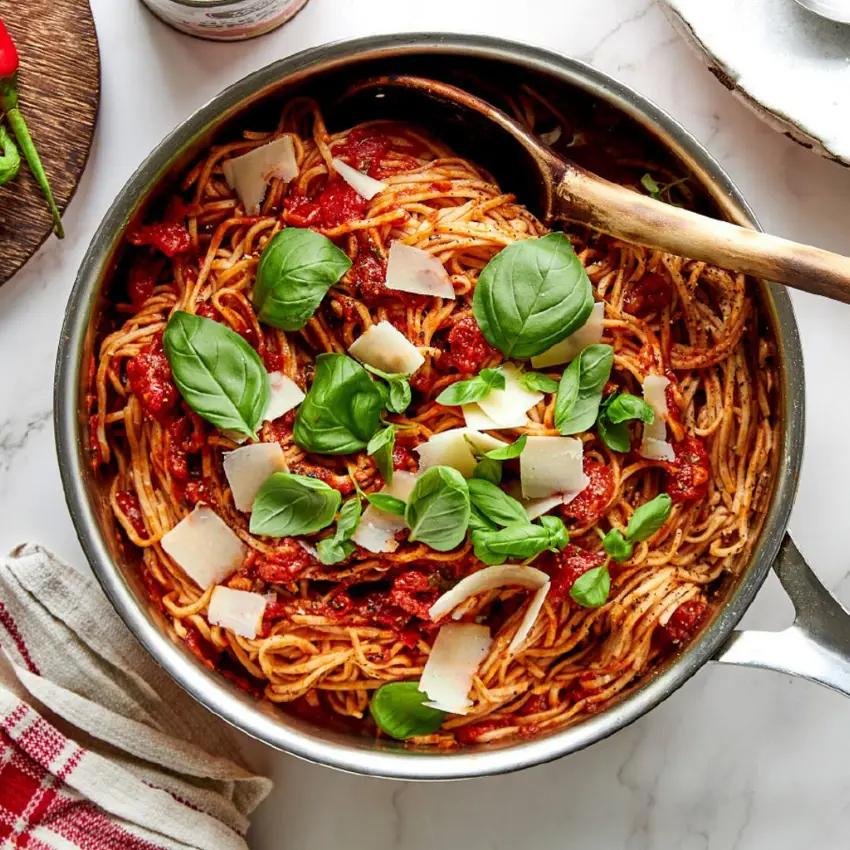
Want a delicious pasta dinner without using multiple pots or heavy cream? This easy one-pot tomato pasta recipe combines pasta, tomatoes, garlic, onion, and Italian seasonings in one pan for a comforting meal with minimal cleanup.
The pasta cooks directly in a flavorful tomato-based liquid, releasing starch that helps thicken the sauce naturally. You do not need heavy cream to make this simple tomato pasta taste satisfying. A little olive oil, properly cooked garlic, and fresh basil bring the ingredients together.
This recipe is ideal for busy weeknights, beginner cooks, students, and anyone looking for a quick homemade vegetarian dinner.
Recipe at a glance
- Prep time: 5 minutes
- Cook time: Approximately 15–20 minutes
- Total time: Approximately 20–25 minutes
- Servings: 2
- Difficulty: Easy
- Course: Main course
- Cuisine: Italian-inspired
- Method: One-pot cooking
Timing note: Actual cooking time depends on the pasta shape, pan size, stove, and package instructions. Allow a few extra minutes if needed.
Why You Will Love This One-Pot Tomato Pasta
- One-pot convenience: Cook the pasta and sauce together in a suitable large pot or deep skillet.
- No heavy cream: Tomatoes and pasta starch create a naturally thickened sauce.
- Simple ingredients: Use everyday pantry staples and fresh aromatics.
- Easy cleanup: Fewer dishes make this a practical weeknight dinner.
- Customizable: Add vegetables, herbs, chili flakes, or your favorite protein.
- Beginner-friendly: The cooking process is straightforward and easy to follow.
Ingredients for One-Pot Tomato Pasta
This recipe makes approximately two servings.
- 6 oz (170 g) dry spaghetti or short pasta
- 1 tablespoon (15 ml) olive oil
- 1/2 medium onion, finely chopped
- 3 garlic cloves, minced
- 1 tablespoon (15 g) tomato paste
- 1 cup (240 g) canned crushed tomatoes or tomato passata
- 2 cups (480 ml) water or low-sodium vegetable broth, with a little extra available if needed
- 1/2 teaspoon dried oregano
- 1/4 teaspoon black pepper
- Salt, to taste
- 1/4 cup (about 25 g) grated Parmesan, optional
- 2 tablespoons chopped fresh basil, optional
Important: Different pasta shapes absorb different amounts of liquid. Start with the stated amount and add hot water gradually if the pasta is not yet tender and the pot is becoming dry.
Ingredient Substitutions
Pasta: Spaghetti, penne, fusilli, and other similar dried pasta shapes can work. Short pasta is easier to stir in some pans.
Tomatoes: Crushed canned tomatoes or passata are convenient. If using fresh tomatoes, chop them finely and allow extra cooking time if necessary.
Vegetable broth: Water works well, while low-sodium vegetable broth can provide additional savory flavor.
Parmesan: Omit the cheese for a dairy-free version, or use a suitable vegetarian or plant-based alternative.
Fresh basil: Use dried basil or a small amount of Italian seasoning if fresh herbs are unavailable.
How to Make One-Pot Tomato Pasta
Step 1: Prepare the Ingredients
Finely chop the onion, mince the garlic, and measure the tomatoes, pasta, and seasonings before you begin.
Choose a wide, deep skillet or saucepan large enough to hold the dry pasta and cooking liquid. If using long spaghetti, break it in half if needed to fit the pan.
Step 2: Sauté the Onion and Garlic
Heat the olive oil over medium heat. Add the chopped onion and cook for about 2–3 minutes, stirring occasionally, until it begins to soften.
Add the minced garlic and cook for another 30–45 seconds. Stir continuously and avoid browning the garlic too much, as burnt garlic can make the sauce bitter.
Step 3: Add the Tomato Paste and Tomatoes
Stir in the tomato paste and cook for approximately 30 seconds to deepen its flavor.
Add the crushed tomatoes, oregano, black pepper, and a small amount of salt. Stir until the ingredients are evenly combined.
Step 4: Add the Pasta and Cooking Liquid
Place the dry pasta in the pot. Pour in the water or vegetable broth and stir to distribute the pasta through the tomato mixture.
Bring the liquid to a gentle boil, then reduce the heat to maintain a steady simmer. Stir frequently, especially during the first few minutes, to prevent the pasta from sticking together or to the bottom of the pan.
Step 5: Simmer Until the Pasta Is Tender
Cook uncovered or partially covered according to the pasta’s shape and package directions, checking regularly. The process will generally take around 10–15 minutes after the liquid begins simmering, but some pasta may need longer.
If the liquid becomes low before the pasta is tender, add hot water in small increments and continue cooking.
Taste a piece of pasta to check doneness. It should be tender but not mushy.
Step 6: Adjust the Sauce
When the pasta is cooked, check the consistency. If the sauce is too watery, simmer for another minute or two while stirring. If it is too thick, add a splash of hot water.
Turn off the heat. Stir in the Parmesan, if using, and most of the fresh basil. Taste and adjust the salt and pepper.
Step 7: Serve Immediately
Divide the tomato pasta between two bowls. Garnish with the remaining basil and a little extra Parmesan if desired.
Serve hot with a fresh salad, toasted bread, or roasted vegetables.
Tips for the Best One-Pot Tomato Pasta
Use the Right Amount of Liquid
The liquid must be sufficient to cook the pasta, but too much can leave the finished sauce thin. Begin with the recommended amount and add more gradually as needed.
Stir Frequently
Pasta releases starch as it cooks. Stirring helps distribute that starch throughout the sauce and reduces sticking, particularly when using long pasta.
Avoid Excessive Heat
A vigorous boil can evaporate liquid too quickly and cause uneven cooking. Maintain a gentle simmer and adjust the heat as necessary.
Season Gradually
Tomato paste, Parmesan, and vegetable broth can all contribute saltiness. Start with a modest amount of salt and taste again before serving.
Let the Sauce Rest Briefly
After turning off the heat, allow the pasta to stand for about one minute, stirring once more before serving. The sauce may thicken slightly as it rests.
Variations to Try
One-Pot Tomato Basil Pasta
Add extra fresh basil near the end of cooking for a fragrant tomato basil pasta. Avoid cooking delicate fresh basil for too long, as its aroma can fade.
Spicy Tomato Pasta
Add a pinch of red pepper flakes along with the garlic. Increase the quantity gradually if you prefer a spicier sauce.
One-Pot Tomato Pasta with Vegetables
Stir in finely diced bell peppers, mushrooms, or zucchini with the onion. Add spinach near the end so it wilts without becoming overcooked.
Cheesy Tomato Pasta Without Cream
Stir in grated Parmesan after removing the pot from the heat. Add a small splash of hot water if necessary to help the cheese blend into the sauce.
Vegan One-Pot Tomato Pasta
Use olive oil, water or vegetable broth, and omit the Parmesan or replace it with a plant-based alternative. Check the labels on all packaged ingredients.
What to Serve with Tomato Pasta
This quick tomato pasta can be enjoyed on its own or paired with:
- Garlic bread or toasted sourdough
- A green salad with a light vinaigrette
- Roasted broccoli or seasonal vegetables
- Sautéed mushrooms
- Grilled tofu or cooked chicken, if desired
For a more balanced meal, pair the pasta with vegetables and a protein source that suits your dietary preferences.
Frequently Asked Questions
Can you cook pasta directly in tomato sauce?
Yes. In a one-pot recipe, the pasta cooks in a mixture of tomatoes and water or broth. Stir regularly and add extra hot water when necessary to ensure the pasta cooks evenly.
How much water do you need for one-pot pasta?
The quantity depends on the pasta shape, pan, heat, and tomato mixture. This recipe starts with two cups of water or broth for six ounces of pasta, with additional hot water added gradually as needed.
How do you make tomato pasta creamy without cream?
Pasta releases starch as it cooks, which helps thicken the sauce. Simmering the tomato mixture to the right consistency and adding a little grated Parmesan, if desired, can make the finished sauce feel richer without heavy cream.
Why is my one-pot pasta watery?
Too much liquid or insufficient simmering can leave the sauce thin. Continue cooking gently while stirring until some excess liquid evaporates. Remember that the sauce may thicken slightly after the heat is turned off.
Why is my pasta still hard?
The pasta may need more cooking time or additional liquid. Add hot water a little at a time and continue simmering until the pasta is tender. Check the package directions for guidance.
Can I use fresh tomatoes instead of canned tomatoes?
Yes. Finely chopped fresh tomatoes can be used, although their water content and ripeness vary. You may need to adjust the cooking time and liquid quantity to achieve the desired sauce consistency.
Can I make one-pot tomato pasta ahead of time?
You can prepare it ahead, but pasta continues absorbing sauce as it cools. For the best texture, serve it freshly cooked. If preparing in advance, reserve a little extra water to loosen the sauce during reheating.
How should I store leftover tomato pasta?
Refrigerate leftovers in a covered container within two hours of cooking. Eat within three to four days and reheat thoroughly. Add a small splash of water if the sauce has thickened. Discard leftovers that have been stored improperly.
Is one-pot tomato pasta vegetarian?
Yes, this recipe can be vegetarian when made with water or vegetable broth and vegetarian-compatible cheese. Traditional Parmesan may contain animal-derived rennet, so check the label if vegetarian ingredients are important to you.
Can I make this recipe gluten-free?
Yes. Use gluten-free pasta and follow the package instructions. Gluten-free pasta can release starch differently and may require adjustments to the cooking liquid and timing.
Final Thoughts
This easy one-pot tomato pasta recipe is a practical choice when you want a comforting homemade dinner without a complicated ingredient list or a sink full of dishes. Cooking the pasta directly in the tomato mixture allows the sauce to develop flavor while the pasta starch helps thicken it.
Adjust the liquid as you cook, stir frequently, and finish with fresh basil or Parmesan if desired. Once you understand the basic technique, you can easily adapt this simple tomato pasta for different vegetables, seasonings, and dietary preferences.
Save this recipe for a quick weeknight meal and enjoy a warm bowl of homemade tomato pasta whenever you need an easy dinner.