






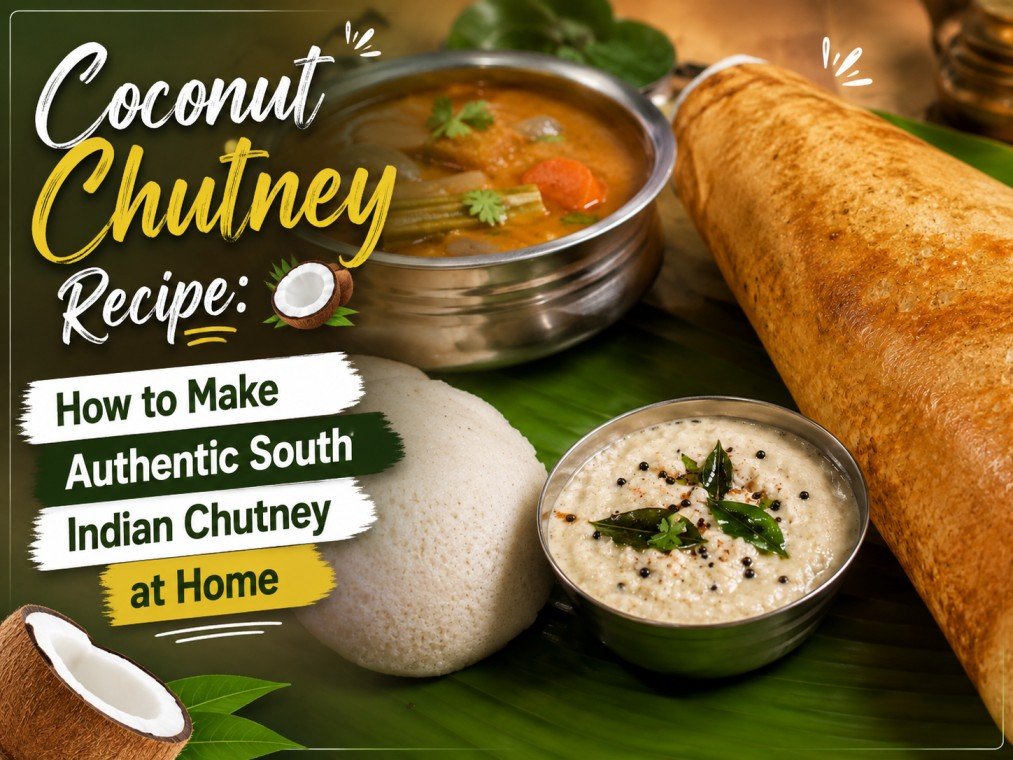
Coconut chutney is one of the most popular accompaniments in South Indian cuisine. Its creamy texture, fresh coconut flavor and mild spiciness make it a perfect match for idli, dosa, vada and uttapam.
The chutney takes only a few minutes to prepare and requires simple ingredients such as fresh coconut, green chilli, roasted gram and a few spices.
The finishing tempering of mustard seeds and curry leaves gives the chutney its classic South Indian aroma.
This easy coconut chutney recipe shows you how to make a smooth, flavorful chutney at home along with tips for getting the right consistency.
What Is Coconut Chutney?
Coconut chutney is a South Indian condiment made primarily from fresh coconut.
A basic version usually contains:
- Fresh coconut
- Green chilli
- Roasted gram
- Ginger
- Salt
- Water
A tempering made with mustard seeds, curry leaves and dried red chilli is often added at the end.
The result is a creamy, fresh and slightly spicy chutney.
Ingredients
For the Chutney
- 1 cup freshly grated coconut
- 2 tablespoons roasted gram dal
- 1–2 green chillies
- ½ inch ginger
- Salt to taste
- Approximately ½ cup water
For Tempering
- 1 teaspoon oil
- ½ teaspoon mustard seeds
- 1 dried red chilli
- 6–8 curry leaves
- A pinch of asafoetida
How to Make Coconut Chutney
Step 1: Prepare the Ingredients
Grate fresh coconut if using a whole coconut.
Peel and roughly chop the ginger.
Break the green chillies into smaller pieces.
Step 2: Blend the Chutney
Add coconut, roasted gram, green chilli, ginger and salt to a blender.
Add a small amount of water.
Blend until smooth.
For a slightly textured chutney, avoid over-blending.
Step 3: Adjust the Consistency
Add water gradually until the chutney reaches your preferred consistency.
For dosa, a slightly thinner chutney works well.
For sandwiches or snacks, you can keep it somewhat thicker.
Step 4: Prepare the Tempering
Heat oil in a small pan.
Add mustard seeds.
Once they crackle, add dried red chilli, curry leaves and asafoetida.
Cook for a few seconds.
Step 5: Combine
Pour the hot tempering over the prepared coconut chutney.
Mix gently.
Your South Indian coconut chutney is ready to serve.
How to Make Restaurant-Style Coconut Chutney
Use Fresh Coconut
Fresh coconut provides the best flavor and aroma.
Don’t Add Too Much Water
Add water gradually while blending.
Balance the Spice
Adjust green chilli according to your preferred level of heat.
Add Roasted Gram
Roasted gram helps create a creamy texture and gives the chutney more body.
Don’t Burn the Tempering
Mustard seeds and curry leaves only need a few seconds in hot oil.
What to Serve With Coconut Chutney
Masala Dosa
Coconut chutney balances the crispy dosa and spicy potato filling.
Idli
Soft idli with coconut chutney and hot sambar is a classic breakfast combination.
Medu Vada
Crispy vada dipped into coconut chutney is another popular South Indian pairing.
Uttapam
Vegetable uttapam works particularly well with a fresh coconut chutney.
Pongal
Coconut chutney can also be served with savory South Indian pongal.
Coconut Chutney Variations
Green Coconut Chutney
Add fresh coriander and extra green chilli for a vibrant green version.
Peanut Coconut Chutney
Add roasted peanuts for a nuttier flavor.
Red Coconut Chutney
Use dried red chillies instead of green chillies for a spicy red version.
Mint Coconut Chutney
Add fresh mint leaves for a refreshing variation.
Garlic Coconut Chutney
Add a small amount of garlic for a stronger savory flavor.
How to Fix Coconut Chutney
Chutney Is Too Thick
Add a little water and blend again.
Chutney Is Too Thin
Add more coconut or roasted gram and blend.
Chutney Is Too Spicy
Increase the amount of coconut to balance the chilli.
Chutney Tastes Bland
Adjust salt and add a little more ginger or chilli if needed.
Chutney Turns Dark
Fresh coconut chutney can change color when exposed to air. Serve soon after preparation and store it covered.
How Long Does Coconut Chutney Last?
Fresh coconut chutney is best consumed soon after preparation.
If you need to store it, place it in an airtight container and refrigerate it.
Always use a clean spoon when serving and check the chutney before consuming.
Frequently Asked Questions
What is coconut chutney made of?
Traditional coconut chutney is made with fresh coconut, green chilli, roasted gram, ginger and salt, followed by a tempering of mustard seeds and curry leaves.
What coconut is best for chutney?
Freshly grated mature coconut generally provides excellent flavor and texture.
Can I make coconut chutney without roasted gram?
Yes. You can make coconut chutney without roasted gram, although the texture may be slightly thinner.
Why is my coconut chutney watery?
Too much water during blending can make the chutney watery. Add liquid gradually.
Can I use frozen coconut?
Yes. Frozen grated coconut can be used when fresh coconut isn’t available. Allow it to thaw before blending.
Is coconut chutney spicy?
It doesn’t have to be. The amount of green chilli can be adjusted according to taste.
What chutney is best for dosa?
Coconut chutney is one of the most popular choices for dosa, especially masala dosa and plain dosa.
Can I make coconut chutney without tempering?
Yes. Tempering is optional, but it adds a distinctive aroma and flavor.
Can coconut chutney be made in advance?
Yes, but fresh coconut chutney generally tastes best soon after preparation. Refrigerate it if making it ahead.
Recipe Card
Recipe: South Indian Coconut Chutney
Cuisine: South Indian
Prep Time: 10 minutes
Cooking Time: 5 minutes
Total Time: 15 minutes
Servings: 4
Difficulty: Easy
Best Served With: Idli, dosa, vada and uttapam