






Table of Contents
ToggleQuestions to Ask About a Restaurant’s Menu and Ingredients: A Complete Guide for Smart Diners
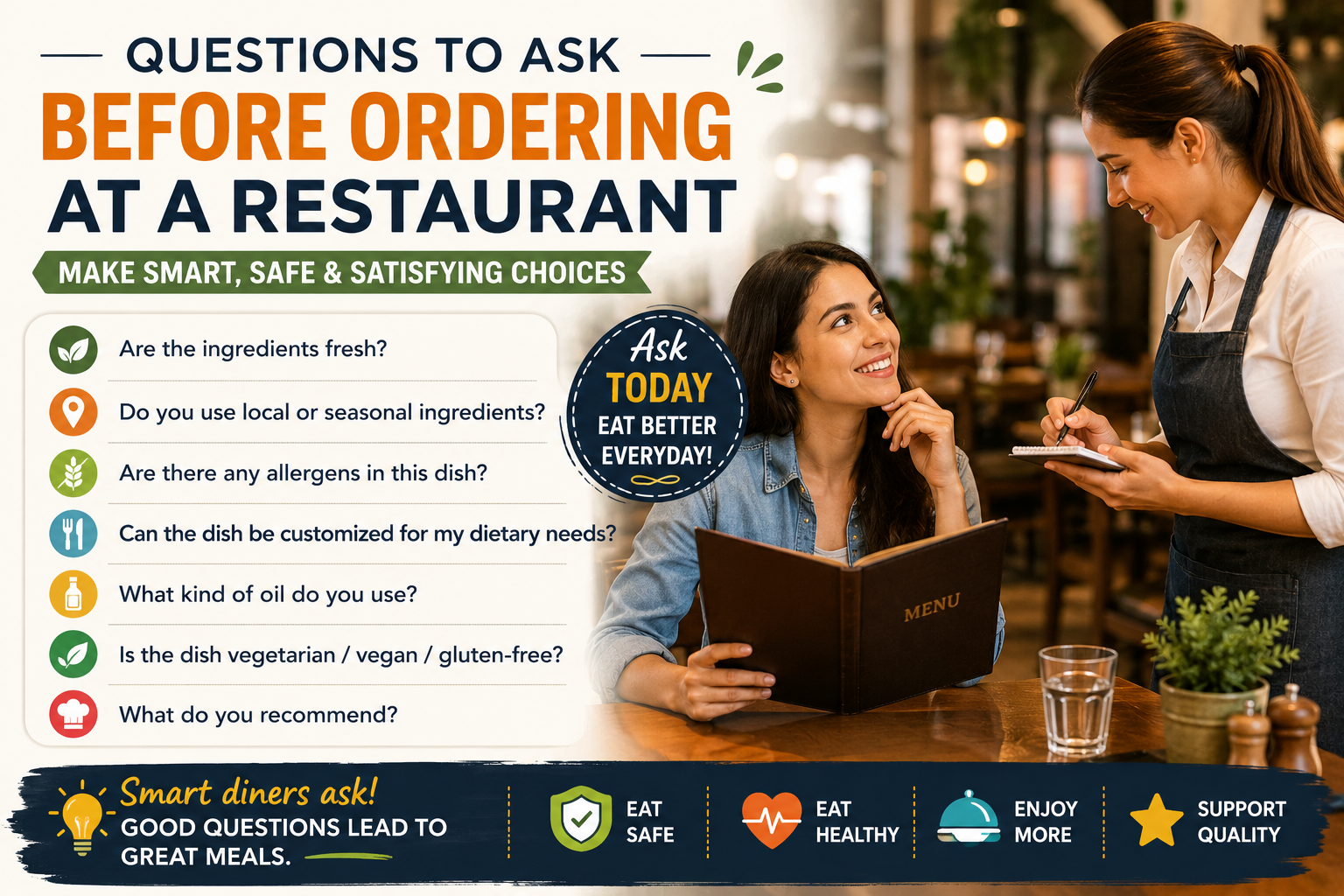
Choosing the right restaurant is about more than good reviews or attractive interiors. The menu and the quality of ingredients play a major role in your dining experience. Whether you have food allergies, dietary preferences, or simply want fresh, high-quality meals, asking the right questions before ordering can help you make informed decisions.
In this guide, we’ll cover the most important questions to ask about a restaurant’s menu and ingredients, why they matter, and how they can help you enjoy a safer and more satisfying meal.
Why It’s Important to Ask About Menu Ingredients
Many diners hesitate to ask questions because they don’t want to inconvenience restaurant staff. However, reputable restaurants appreciate customers who care about what they’re eating.
By asking a few simple questions, you can:
- Avoid allergens
- Ensure food freshness
- Find healthier options
- Support sustainable dining
- Get better value for money
- Discover chef recommendations
- Avoid hidden ingredients
- Customize your meal
A good restaurant should always be transparent about its menu.
1. Are the Ingredients Fresh?
Fresh ingredients often mean better flavor, nutrition, and food safety.
Ask:
- Are your vegetables delivered fresh daily?
- Is the seafood fresh or frozen?
- Is the meat prepared daily?
- Are sauces made in-house?
Restaurants using fresh ingredients are usually proud to answer these questions.
2. Where Do Your Ingredients Come From?
Many restaurants source ingredients locally.
Questions include:
- Do you use local produce?
- Is your meat locally sourced?
- Where does your seafood come from?
- Are your spices imported?
Knowing the source can tell you a lot about quality.
3. Is Everything Made Fresh or Pre-Packaged?
Some restaurants prepare dishes from scratch, while others rely on frozen or pre-made products.
Ask:
- Are soups homemade?
- Are desserts made in-house?
- Is the pasta fresh?
- Are sauces prepared daily?
Fresh preparation often results in better taste.
4. Which Dishes Are Most Popular?
Staff recommendations can help you choose wisely.
Questions:
- What do regular customers order?
- What’s your signature dish?
- Which menu item do you recommend?
Popular dishes are usually prepared more frequently and maintain consistent quality.
5. Are There Any Seasonal Ingredients?
Seasonal ingredients are fresher and often taste better.
Ask:
- Which dishes use seasonal vegetables?
- Do you have seasonal specials?
- Is the menu updated regularly?
Restaurants that change menus seasonally usually prioritize quality.
6. Can the Dish Be Customized?
Customization is especially important for dietary needs.
Ask if they can:
- Remove onions or garlic
- Reduce spice levels
- Make the dish gluten-free
- Substitute rice for vegetables
- Add extra protein
Many restaurants are happy to accommodate reasonable requests.
7. What Cooking Oil Do You Use?
Cooking oil affects both flavor and health.
Questions include:
- Do you use olive oil?
- Is the oil reused?
- Do you fry in vegetable oil or canola oil?
- Are foods cooked in butter?
Health-conscious diners often appreciate this information.
8. Are There Hidden Allergens?
Food allergies can be serious.
Ask about:
- Nuts
- Dairy
- Eggs
- Soy
- Gluten
- Shellfish
- Sesame
Always inform the server if you have severe allergies.
9. Is Cross-Contamination Prevented?
Even if ingredients are safe, cross-contact may occur.
Ask:
- Do you use separate cooking equipment?
- Is gluten-free food prepared separately?
- Are allergy orders handled carefully?
Responsible restaurants usually have procedures in place.
10. Are Vegetarian and Vegan Dishes Truly Separate?
Some vegetarian dishes are cooked alongside meat.
Questions:
- Is vegetable broth actually vegetarian?
- Are vegan meals cooked separately?
- Is fish sauce used?
- Is butter added?
These questions are especially important for strict vegetarians and vegans.
11. What Kind of Meat Is Used?
Quality matters.
Ask:
- Is the chicken fresh?
- Is the beef grass-fed?
- Is the lamb local?
- Is processed meat used?
Premium ingredients usually produce better meals.
12. Are Artificial Preservatives Used?
Some diners prefer natural foods.
Questions include:
- Do you use artificial flavoring?
- Are preservatives added?
- Is MSG used?
Many restaurants now provide this information upon request.
13. How Spicy Is the Dish?
Spice levels vary greatly.
Ask:
- Is it mildly spicy?
- Can you make it less spicy?
- Is extra chili optional?
Avoid unpleasant surprises.
14. Are Portion Sizes Large?
Knowing portion size helps avoid waste.
Questions:
- Is this suitable for one person?
- Can two people share?
- Are half portions available?
This is especially useful when trying multiple dishes.
15. What Ingredients Make This Dish Unique?
Learning about ingredients can help you discover new flavors.
Ask:
- What spices are used?
- What makes this recipe special?
- Is there a chef’s secret ingredient?
Restaurants often enjoy explaining their signature recipes.
16. Is the Seafood Sustainably Sourced?
If you enjoy seafood, sustainability matters.
Questions:
- Is your fish sustainably caught?
- Is the seafood farm-raised or wild?
- When was it delivered?
Fresh seafood greatly improves quality.
17. Are There Healthy Menu Options?
Health-conscious diners should ask:
- Which dishes are low-calorie?
- Which meals are grilled instead of fried?
- Are whole grains available?
- Can dressing be served on the side?
Healthy options are becoming increasingly common.
18. How Often Does the Menu Change?
Restaurants that refresh their menus often introduce seasonal ingredients and new flavors.
Ask:
- Do you change the menu monthly?
- Are there chef specials?
- What’s new this season?
19. Which Ingredients Are Homemade?
Homemade items often provide better flavor.
Examples:
- Bread
- Pasta
- Desserts
- Sauces
- Pickles
These details reflect a restaurant’s commitment to quality.
20. Do You Offer Ingredient Information Online?
Many restaurants publish ingredient lists online.
Ask:
- Is nutritional information available?
- Can I see allergen details?
- Do you have ingredient lists online?
This is especially useful for diners with dietary restrictions.
Tips for Asking Restaurant Questions Politely
Restaurant staff are more likely to help when approached respectfully.
Good phrases include:
- “Could you tell me more about this dish?”
- “Does this contain dairy?”
- “Can this be made gluten-free?”
- “Which dish would you personally recommend?”
- “Is this prepared fresh today?”
Being polite creates a better dining experience for everyone.
Benefits of Asking Questions
When you ask about menu ingredients, you can:
- Eat with confidence
- Avoid food allergies
- Choose healthier meals
- Discover chef specialties
- Support restaurants that value transparency
- Enjoy better quality food
- Reduce food waste
- Make informed dining decisions
Final Thoughts
The best dining experiences start with informed choices. Asking questions about a restaurant’s menu and ingredients isn’t being difficult—it’s being a smart diner. From understanding ingredient quality to checking for allergens and learning about cooking methods, these conversations help ensure your meal matches your expectations.
The next time you visit a restaurant, don’t hesitate to ask. Most restaurants are happy to share information, and your curiosity can lead to a safer, healthier, and more enjoyable dining experience.
Frequently Asked Questions (FAQs)
1. Why should I ask about restaurant ingredients?
It helps you understand food quality, avoid allergens, and choose meals that fit your dietary needs.
2. Can I ask a restaurant to customize my meal?
Yes. Most restaurants can adjust spice levels, remove certain ingredients, or accommodate dietary preferences when possible.
3. How do I know if a restaurant uses fresh ingredients?
Ask whether ingredients are prepared daily, sourced locally, or made in-house. Reputable restaurants are usually transparent.
4. Should I ask about cooking oils?
Yes. The type of oil used can affect both flavor and nutrition, especially if you have dietary concerns.
5. What should people with food allergies ask?
Ask about allergens, cross-contamination prevention, separate preparation areas, and whether ingredient information is available.
6. Are seasonal menu items better?
Often, yes. Seasonal ingredients are typically fresher, more flavorful, and may offer better value.
7. Is it okay to ask the server for recommendations?
Absolutely. Servers can suggest popular dishes, chef specialties, and options that match your preferences.
Disclaimer
This article is for informational purposes only. Menu items, ingredients, preparation methods, and restaurant policies vary by establishment. Always confirm allergen information, ingredient details, and dietary accommodations directly with the restaurant before ordering, particularly if you have food allergies, intolerances, or medical dietary requirements.