







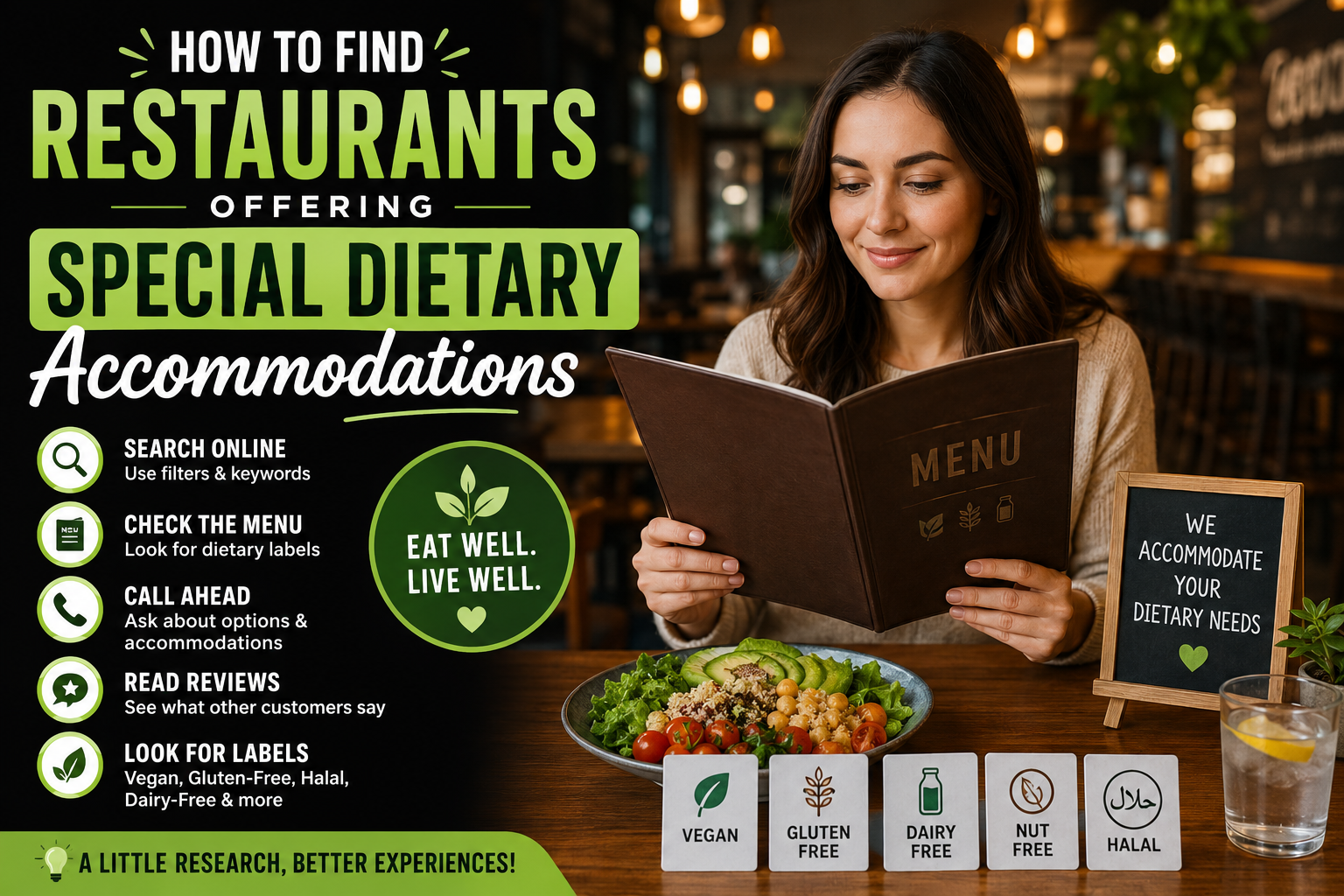
How to Find Restaurants Offering Special Dietary Accommodations
Finding a restaurant that fits your dietary needs can sometimes feel challenging, especially when you’re managing food allergies, intolerances, medical conditions, or lifestyle choices. Whether you’re looking for gluten-free meals, vegan dishes, halal options, kosher food, low-carb meals, or allergy-friendly dining, the good news is that many restaurants now offer special dietary accommodations.
Knowing how to research restaurants before you visit can save time, reduce stress, and help you enjoy your dining experience with confidence. In this guide, you’ll learn practical ways to identify restaurants that truly understand dietary requirements and provide safe, delicious meals.
Why Dietary Accommodations Matter
Food isn’t just about taste—it can directly affect your health and well-being. For many people, eating the wrong ingredient may cause:
- Severe allergic reactions
- Digestive discomfort
- Blood sugar problems
- Religious conflicts
- Lifestyle concerns
- Nutritional imbalances
Restaurants that understand dietary accommodations help guests dine safely while still enjoying a great meal.
Common Dietary Accommodations Restaurants Offer
Modern restaurants often cater to a wide variety of dietary preferences.
Gluten-Free
Ideal for people with:
- Celiac disease
- Gluten sensitivity
- Wheat intolerance
Look for dedicated gluten-free menus or kitchens that minimize cross-contamination.
Vegan
A vegan-friendly restaurant avoids animal products including:
- Meat
- Dairy
- Eggs
- Honey
Many restaurants now offer plant-based burgers, dairy-free desserts, and vegan cheeses.
Vegetarian
Vegetarian options exclude meat but may include:
- Dairy
- Eggs
Many restaurants label vegetarian dishes clearly on their menu.
Dairy-Free
Suitable for lactose intolerance or dairy allergies.
Restaurants may offer:
- Oat milk
- Almond milk
- Coconut milk
- Soy milk
- Dairy-free cheese
Nut-Free
People with nut allergies should look for restaurants that understand:
- Cross-contact prevention
- Separate food preparation
- Allergy protocols
Halal
Halal restaurants prepare food according to Islamic dietary guidelines.
Look for:
- Certified halal meat
- Alcohol-free preparation (where applicable)
Kosher
Kosher restaurants follow Jewish dietary laws.
Some restaurants receive official kosher certification.
Low-Carb & Keto
Many restaurants now accommodate:
- Keto diets
- Low-carb lifestyles
- Diabetic-friendly meals
These often include:
- Grilled meats
- Salads
- Low-carb sides
Low Sodium
Helpful for people managing:
- High blood pressure
- Heart disease
Many restaurants can reduce added salt upon request.
Start with the Restaurant’s Website
One of the easiest ways to research dietary accommodations is by checking the restaurant’s official website.
Look for:
- Online menu
- Nutrition information
- Ingredient lists
- Allergy guide
- Dietary icons
- FAQ section
Many restaurants now label menu items with symbols like:
- V = Vegan
- VG = Vegetarian
- GF = Gluten-Free
- DF = Dairy-Free
Read the Menu Carefully
A detailed menu often reveals how seriously a restaurant handles dietary needs.
Pay attention to:
- Ingredient descriptions
- Sauce ingredients
- Cooking methods
- Side dish options
- Customization choices
Menus with flexible substitutions are usually a positive sign.
Use Restaurant Review Platforms
Customer reviews often mention real experiences regarding dietary accommodations.
Look for comments such as:
- “Excellent gluten-free menu.”
- “Staff understood my nut allergy.”
- “Great vegan options.”
- “Kitchen handled cross-contamination carefully.”
Reading several reviews provides a more balanced picture.
Search Using Specific Keywords
Instead of searching:
“Best restaurants near me”
Try searching:
- Vegan restaurants near me
- Gluten-free restaurants
- Allergy-friendly restaurants
- Halal restaurants
- Keto-friendly restaurants
- Dairy-free dining
- Nut-free restaurants
Targeted searches often produce better results.
Call the Restaurant Before Visiting
Speaking directly with the restaurant is one of the safest approaches.
Ask questions like:
- Do you have gluten-free options?
- Can dishes be customized?
- How do you prevent cross-contamination?
- Are ingredients listed?
- Can I substitute ingredients?
- Do you accommodate food allergies?
A knowledgeable staff member is often a good indicator of how well the restaurant handles dietary requests.
Ask About Cross-Contamination
This is especially important for severe allergies or celiac disease.
Questions include:
- Are separate utensils used?
- Is there a dedicated fryer?
- Are cutting boards separated?
- Are gluten-free foods prepared separately?
Cross-contact can happen even if ingredients themselves are safe.
Look for Allergy-Friendly Policies
Many restaurants publish allergy information explaining:
- Common allergens
- Kitchen procedures
- Staff training
- Ingredient transparency
These policies show a commitment to guest safety.
Check Nutrition Information
Nutrition guides often include:
- Calories
- Protein
- Fat
- Carbohydrates
- Sodium
- Sugar
This information is useful for people following:
- Weight-loss diets
- Diabetic meal plans
- Heart-healthy diets
- High-protein diets
Ask About Ingredient Substitutions
Many restaurants allow substitutions such as:
- Lettuce wraps instead of buns
- Gluten-free bread
- Dairy-free cheese
- Plant-based meat
- Extra vegetables
- Brown rice
- Cauliflower rice
Customization makes dining much easier.
Visit Restaurants with Flexible Menus
Restaurants offering build-your-own meals usually accommodate dietary preferences well.
Examples include:
- Salad bars
- Burrito restaurants
- Bowl restaurants
- Poke shops
- Sandwich shops
These allow customers to choose ingredients individually.
Look for Certified Restaurants
Some restaurants participate in certification programs.
Examples include:
- Gluten-free certification
- Kosher certification
- Halal certification
- Vegan certification
Official certifications provide extra confidence.
Use Mobile Apps
Many food apps allow filtering restaurants by dietary preference.
Useful filters include:
- Vegan
- Vegetarian
- Gluten-Free
- Halal
- Dairy-Free
- Allergy-Friendly
These filters simplify restaurant discovery.
Observe Staff Knowledge
When you arrive, notice whether employees can confidently answer questions about:
- Ingredients
- Allergens
- Food preparation
- Menu modifications
Well-trained staff usually provide a safer dining experience.
Be Clear About Your Needs
When ordering, explain your dietary requirement politely and specifically.
For example:
- “I have a severe peanut allergy.”
- “I need a completely gluten-free meal.”
- “Can this dish be prepared without dairy?”
- “I’m vegan—does this sauce contain butter?”
Clear communication helps avoid misunderstandings.
Consider Off-Peak Dining
Restaurants are often less busy during non-peak hours.
Advantages include:
- More time for staff to answer questions
- Better attention to special requests
- Lower chance of order mistakes
Build a List of Trusted Restaurants
Once you find restaurants that accommodate your dietary needs, save them.
Keep notes about:
- Favorite dishes
- Helpful staff
- Allergy handling
- Safe menu options
Over time, you’ll create a reliable list of dining choices.
Red Flags to Watch For
Be cautious if a restaurant:
- Cannot identify ingredients
- Doesn’t understand allergies
- Refuses to answer questions
- Has inconsistent staff responses
- Cannot explain cross-contamination practices
If you feel uncertain, it’s often safer to choose another restaurant.
Benefits of Choosing Dietary-Friendly Restaurants
Restaurants that accommodate special diets often provide:
- Safer meals
- Better customer service
- More menu choices
- Higher customer satisfaction
- Greater ingredient transparency
- Peace of mind
Tips for Safe Dining
Before visiting any restaurant:
- Review the menu online.
- Read recent customer reviews.
- Call ahead with questions.
- Inform staff about your dietary needs.
- Confirm your order before eating.
- Avoid assumptions about ingredients.
- Ask for substitutions if needed.
- Choose restaurants with clear allergy policies.
Frequently Asked Questions (FAQs)
1. How can I tell if a restaurant is allergy-friendly?
Look for allergy guides, ingredient transparency, knowledgeable staff, and positive customer reviews mentioning allergy accommodations.
2. Should I call the restaurant before visiting?
Yes. Calling ahead helps confirm whether they can safely meet your dietary needs.
3. What should I ask about food allergies?
Ask about ingredients, cross-contamination prevention, separate cooking equipment, and menu modifications.
4. Are online restaurant reviews reliable?
They can be helpful, especially when multiple reviewers consistently mention good dietary accommodations. However, always verify important information directly with the restaurant.
5. Can restaurants customize meals?
Many restaurants can modify dishes by removing or substituting ingredients such as dairy, gluten-containing items, or meat. Availability varies by restaurant.
6. What if a restaurant cannot answer allergy questions?
If the staff cannot confidently explain ingredients or preparation methods, it’s safest to choose another restaurant.
Disclaimer
This article is for informational purposes only and should not replace professional medical or dietary advice. If you have severe food allergies, celiac disease, or other medical dietary requirements, always verify ingredients and preparation methods directly with the restaurant before ordering. When in doubt, consult your healthcare provider or registered dietitian.
Conclusion
Learning how to find restaurants offering special dietary accommodations can make dining out safer, easier, and more enjoyable. By researching menus, reading reviews, contacting restaurants in advance, and clearly communicating your dietary needs, you can confidently choose restaurants that prioritize your health and preferences. Whether you follow a vegan lifestyle, require gluten-free meals, or need allergy-friendly options, a little preparation goes a long way toward ensuring a positive dining experience.