






Best Ways to Research Restaurants Before You Go
Choosing the right restaurant can turn an ordinary meal into a memorable dining experience. Whether you’re planning a romantic dinner, a family outing, a business lunch, or simply exploring a new city, spending a few minutes researching restaurants beforehand can save you from disappointment.
With thousands of dining options available today, it’s easier than ever to compare restaurants online. However, not every review, rating, or social media post tells the complete story. Learning how to research restaurants effectively helps you find places that match your taste, budget, and expectations.
In this comprehensive guide, you’ll discover the best ways to research restaurants before you go, what factors to consider, common mistakes to avoid, and expert tips for making smarter dining decisions.
Why Researching Restaurants Matters
Many people choose restaurants based solely on ratings or attractive food photos. While these can be useful, they don’t always reflect the overall dining experience.
Researching beforehand helps you:
- Find better quality food
- Avoid overpriced restaurants
- Save time and money
- Discover hidden gems
- Ensure good hygiene standards
- Check dietary options
- Read genuine customer experiences
- Avoid long waiting times
A little research often leads to a much better meal.
1. Read Reviews from Multiple Platforms
One of the easiest ways to evaluate a restaurant is by reading customer reviews.
Instead of relying on just one website, compare reviews across different platforms.
Popular review sources include:
- Google Reviews
- TripAdvisor
- Yelp
- OpenTable
- Zomato (where available)
Look for recent reviews rather than those posted several years ago.
Pay attention to repeated comments such as:
- Excellent service
- Fresh food
- Long waiting times
- Friendly staff
- Poor cleanliness
- High prices
When many reviewers mention the same issue, it’s usually accurate.
2. Check the Overall Rating Carefully
A restaurant with a perfect 5-star rating isn’t always the best choice.
Instead, consider:
- Number of reviews
- Average rating
- Recent customer feedback
For example:
- 4.7 stars with 2,000 reviews is usually more reliable than
- 5.0 stars with only 15 reviews.
Large numbers of consistent reviews often indicate trustworthiness.
3. Examine Food Photos
Photos reveal far more than written reviews.
Look at customer-uploaded images instead of only professional marketing photos.
Pay attention to:
- Food presentation
- Portion sizes
- Fresh ingredients
- Clean serving plates
- Dining atmosphere
- Interior lighting
Real customer photos usually show what you can actually expect.
4. Browse the Restaurant’s Menu
A menu provides valuable insight into a restaurant.
Look for:
- Variety
- Pricing
- Seasonal ingredients
- Signature dishes
- Vegetarian options
- Vegan options
- Gluten-free meals
- Kids’ menu
Restaurants with clear menus often demonstrate professionalism.
Avoid places where pricing is hidden without explanation.
5. Compare Prices
Expensive doesn’t always mean better.
Compare prices with similar restaurants nearby.
Ask yourself:
- Are portion sizes reasonable?
- Does quality justify the cost?
- Are beverages overpriced?
- Are taxes included?
- Are service charges added?
Knowing this beforehand prevents unexpected bills.
6. Look for Signature Dishes
Most excellent restaurants have specialties.
Research:
- Chef recommendations
- Customer favorites
- Best-selling dishes
- Seasonal specials
Ordering the restaurant’s signature meal often provides the best experience.
7. Visit Their Website
A restaurant’s official website tells you a lot about its professionalism.
Check:
- Updated menu
- Opening hours
- Reservation options
- Location
- Parking information
- Dress code
- Events
- Private dining
A well-maintained website reflects attention to detail.
8. Check Social Media
Instagram, Facebook, and TikTok can provide recent updates.
Look for:
- Daily specials
- New menu items
- Customer interactions
- Food quality
- Restaurant cleanliness
- Busy hours
- Seasonal events
Recent social media activity often reflects the restaurant’s current condition.
9. Research the Chef
Many excellent restaurants are known because of talented chefs.
Learn about:
- Culinary background
- Awards
- Years of experience
- Cooking philosophy
- Specialty cuisine
Experienced chefs often maintain higher food consistency.
10. Evaluate Cleanliness
Cleanliness is one of the most important factors.
Customer reviews often mention:
- Clean tables
- Washrooms
- Kitchen visibility
- Staff hygiene
- Overall maintenance
If numerous reviews complain about cleanliness, consider another option.
11. Check Peak Hours
Restaurants can become crowded.
Research:
- Lunch rush
- Dinner rush
- Weekend traffic
- Waiting times
Many restaurants now display popular visiting hours online.
Visiting slightly earlier or later can improve your experience.
12. Ask Friends and Family
Personal recommendations remain one of the most trusted sources.
Ask:
- What did they order?
- How was the service?
- Was it worth the price?
- Would they return?
Recommendations from people you trust often prove more valuable than anonymous reviews.
13. Explore Local Food Blogs
Food bloggers often provide detailed restaurant reviews.
Their articles usually include:
- Menu recommendations
- Dining experience
- Ambience
- Service quality
- Price analysis
- Photography
Reading multiple blogs gives a balanced perspective.
14. Watch YouTube Reviews
Video reviews show:
- Restaurant atmosphere
- Portion sizes
- Food preparation
- Customer crowd
- Parking
- Seating arrangements
Videos provide a realistic view before visiting.
15. Verify Dietary Options
If you have dietary restrictions, research beforehand.
Check whether the restaurant offers:
- Vegan meals
- Vegetarian dishes
- Gluten-free options
- Dairy-free meals
- Nut-free choices
- Halal food
- Jain food
- Keto meals
This prevents disappointment upon arrival.
16. Check Reservation Policies
Popular restaurants often require reservations.
Research:
- Booking process
- Cancellation policy
- Deposit requirements
- Walk-in availability
Booking early avoids long waits.
17. Look for Awards and Recognition
Awards don’t guarantee perfection but indicate consistent quality.
Examples include:
- Michelin recognition
- Local food awards
- Best Restaurant lists
- Chef awards
Restaurants receiving industry recognition often maintain higher standards.
18. Understand the Restaurant’s Style
Different occasions require different dining experiences.
Examples include:
Casual Dining
Ideal for families and friends.
Fine Dining
Perfect for celebrations.
Café
Best for coffee and light meals.
Buffet
Suitable for large groups.
Street Food
Great for authentic local flavors.
Choose according to your occasion.
19. Compare Nearby Restaurants
Never select the first restaurant you find.
Compare at least three options based on:
- Reviews
- Price
- Distance
- Menu
- Service
- Cleanliness
- Atmosphere
Comparison helps identify the best value.
20. Trust Your Instincts
Sometimes everything looks great online, but the restaurant doesn’t feel welcoming.
Notice:
- Staff behavior
- Restaurant smell
- Clean entrance
- Friendly greeting
- Comfortable environment
Your first impression often matters.
Common Mistakes People Make
Avoid these common errors:
- Choosing only by food photos
- Ignoring recent reviews
- Not checking prices
- Forgetting reservation requirements
- Believing every influencer recommendation
- Ignoring hygiene complaints
- Not checking parking
- Visiting during peak hours without booking
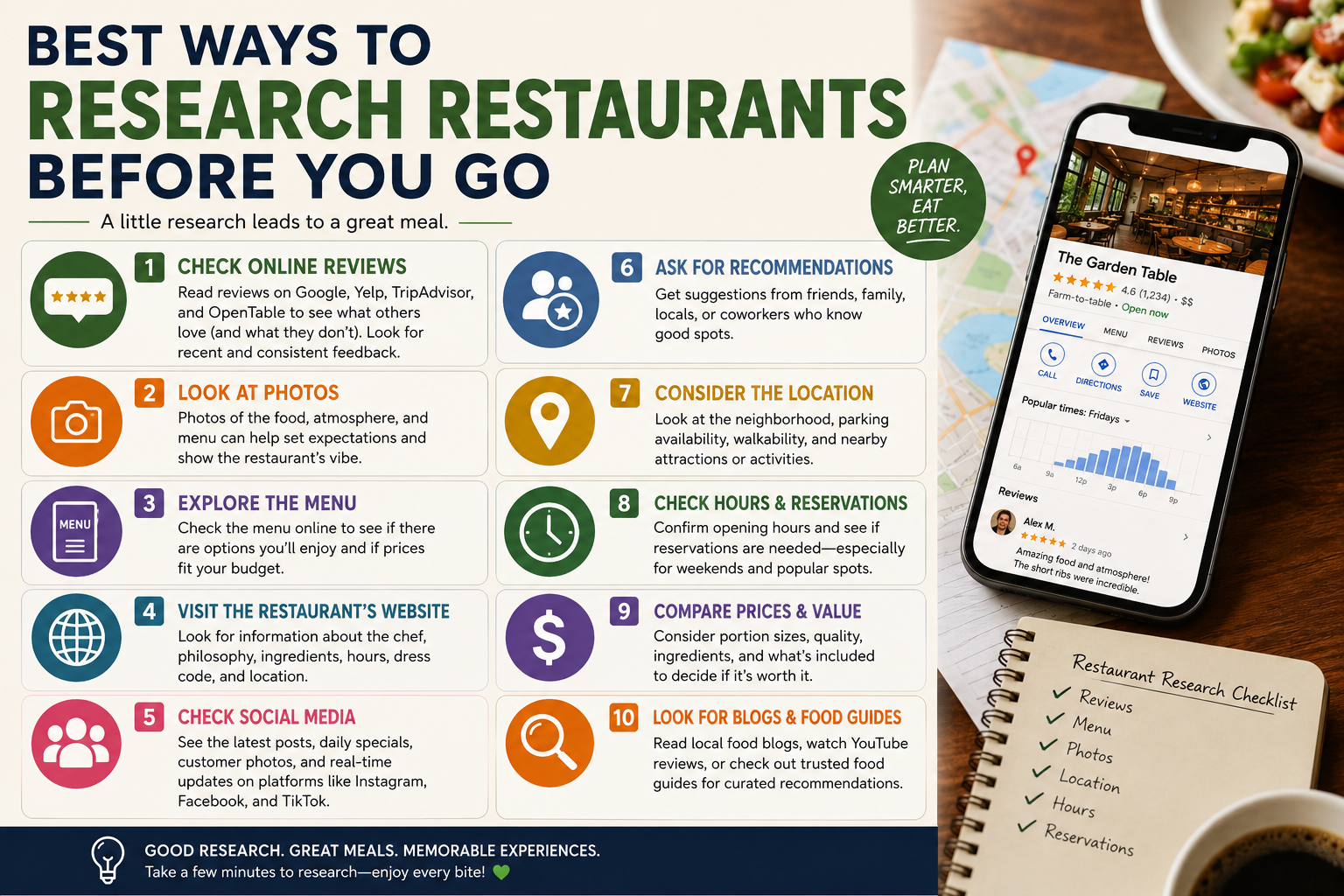
Quick Restaurant Research Checklist
Before visiting, confirm:
✔ Read recent reviews
✔ Checked food photos
✔ Viewed the menu
✔ Compared prices
✔ Verified opening hours
✔ Looked at social media
✔ Checked cleanliness reviews
✔ Verified dietary options
✔ Confirmed reservations
✔ Read customer experiences
Expert Tips
- Read reviews from the last 30–90 days.
- Focus on detailed reviews instead of one-line comments.
- Compare ratings across multiple platforms.
- Check customer-uploaded photos.
- Try signature dishes.
- Visit during non-peak hours for better service.
- Book ahead for weekends and holidays.
- Consider both food quality and overall experience.
Conclusion
Researching restaurants before you go takes only a few minutes, but it can greatly improve your dining experience. By reading reviews, checking menus, exploring photos, comparing prices, and considering factors like cleanliness, service, and atmosphere, you can make informed decisions and avoid unpleasant surprises.
Whether you’re searching for a local favorite or planning a meal while traveling, following these research tips will help you discover restaurants that offer great food, excellent service, and lasting memories.
Frequently Asked Questions (FAQs)
1. Why should I research a restaurant before visiting?
Research helps you find restaurants with good food, fair prices, excellent service, and a clean environment while avoiding disappointing experiences.
2. Which review platforms are the most reliable?
Google Reviews, TripAdvisor, Yelp, Facebook, OpenTable, and Zomato (where available) are among the most trusted platforms.
3. Are online restaurant ratings always accurate?
Not always. Combine ratings with recent reviews, customer photos, and feedback from multiple platforms for a clearer picture.
4. What should I look for in restaurant reviews?
Look for recurring comments about food quality, cleanliness, service, atmosphere, portion sizes, and value for money.
5. Why are customer-uploaded photos important?
They show the real appearance of dishes, portions, and the dining environment without professional editing.
6. How can I tell if a restaurant is good value for money?
Compare prices, portion sizes, ingredient quality, customer reviews, and nearby restaurants offering similar cuisine.
7. Should I check a restaurant’s social media pages?
Yes. Social media often features recent menu updates, customer interactions, special offers, and current photos.
8. How far in advance should I make a reservation?
For popular restaurants, weekends, holidays, or special occasions, booking several days ahead is recommended.
9. What if I have dietary restrictions?
Review the menu online or contact the restaurant to confirm options for vegetarian, vegan, gluten-free, halal, Jain, or allergy-friendly meals.
10. What is the best way to compare multiple restaurants?
Evaluate them based on recent reviews, menu variety, pricing, cleanliness, location, ambience, service quality, and reservation availability.
Disclaimer
This article is intended for informational purposes only. Restaurant ratings, menus, prices, operating hours, and customer experiences may change over time. Always verify details through the restaurant’s official website or by contacting the establishment directly before your visit. Individual dining experiences and preferences may vary, and the opinions shared in online reviews or social media posts may not reflect every guest’s experience.