






What Makes a Restaurant Good: 10 Signs to Look For
Walk into any restaurant and within minutes you can usually sense whether you’re in for a great meal or a disappointing one. But what exactly are we picking up on? It’s rarely just the food. A truly good restaurant gets dozens of small details right, and those details add up to something bigger than the sum of its parts.
Whether you’re scouting a new spot for date night or just trying to figure out why your favorite hole-in-the-wall keeps you coming back, here are ten signs that separate the good restaurants from the merely average ones.
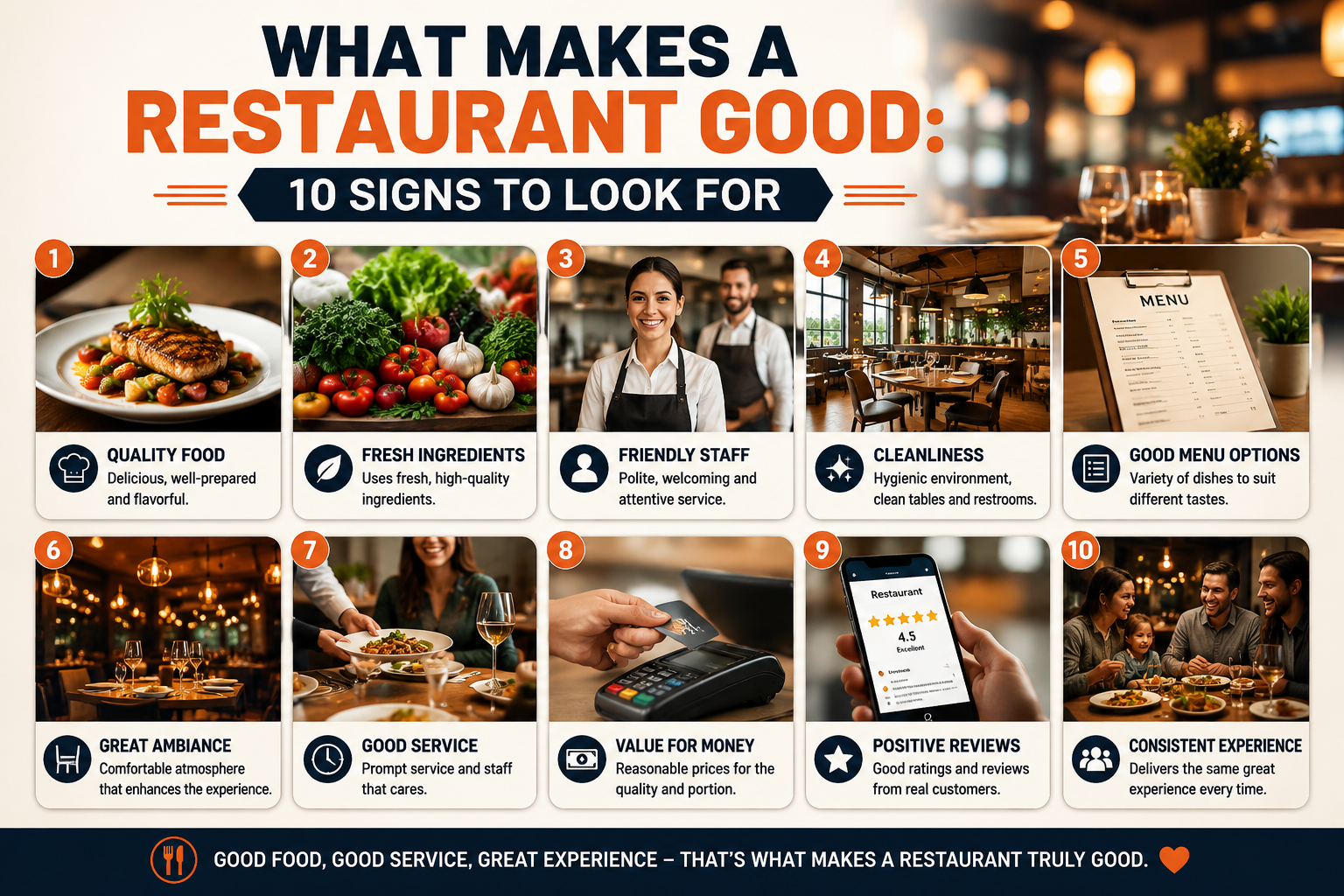
1. Consistency, Not Just Peak Performance
Anyone can cook one great meal. The mark of a good restaurant is doing it the same way, every single time, whether it’s a slow Tuesday lunch or a packed Saturday night. Consistency means the kitchen has real systems in place — standardized recipes, trained staff, and quality control — rather than relying on one chef’s good mood.
If you order the same dish twice, weeks apart, and it tastes the same both times, that’s a strong signal of a well-run operation.
2. A Menu That Knows What It Is
Good restaurants tend to have focused menus rather than sprawling ones. When a menu tries to be an Italian place, a sushi bar, and a burger joint all at once, it’s usually a sign the kitchen doesn’t have a clear identity — and quality suffers as a result. A tighter menu, executed with confidence, almost always beats a bloated one trying to please everybody.
3. Fresh, Thoughtfully Sourced Ingredients
You can taste the difference between a tomato picked that morning and one that’s been sitting in cold storage for two weeks. Good restaurants pay attention to sourcing — seasonal produce, quality proteins, ingredients that taste like what they’re supposed to taste like. Many will even tell you where their ingredients come from, which is often a good sign the kitchen takes pride in what it’s serving.
4. Service That Reads the Room
Good service isn’t about following a script. It’s about attentiveness that matches the moment: prompt without being intrusive, friendly without being fake, knowledgeable about the menu without being pushy. A good server can answer questions about dishes, make honest recommendations, and know when to check in versus when to leave you alone.
5. Cleanliness, Visible and Otherwise
This one’s non-negotiable. Clean bathrooms, clean tables, clean silverware — these are the visible cues. But cleanliness also extends to things you can’t always see, like proper food handling and storage. A restaurant that’s careless about the details you can observe is often careless about the details you can’t.
6. Value That Matches the Price
Good doesn’t necessarily mean cheap — it means the price feels justified by what you get. A $12 sandwich that’s generous, fresh, and well-made can feel like better value than a $40 entrée that’s mediocre. Good restaurants understand their price point and deliver accordingly, rather than coasting on reputation or location.
7. Atmosphere That Fits the Food
The best restaurants create an environment that complements what they’re serving. A cozy neighborhood trattoria doesn’t need white tablecloths to feel right — it needs warmth, good lighting, and a layout that makes sense for how people actually eat there. Atmosphere isn’t about luxury; it’s about coherence between the food, the space, and the experience.
8. A Kitchen That Handles Mistakes Well
Every restaurant makes mistakes occasionally — an order comes out wrong, a dish takes too long. What separates good restaurants from bad ones is how they respond. Do they acknowledge the issue, fix it quickly, and make it right? Or do they get defensive or ignore it? How a restaurant handles a hiccup often reveals more about its quality than a flawless night does.
9. Word of Mouth and Repeat Customers
Marketing budgets can buy attention, but they can’t buy loyalty. Good restaurants tend to build a base of regulars — people who come back not because of an ad, but because the experience was worth repeating. If you notice the same faces at the bar or the staff greeting people by name, that’s usually a sign the place is doing something right.
10. Passion You Can Taste
This last one is harder to quantify, but you know it when you find it. It shows up in small details: a garnish that didn’t need to be there but elevates the dish anyway, a server who genuinely lights up talking about the specials, a plate that’s been composed with obvious care. Restaurants run by people who love what they do tend to show it in ways that are hard to fake.
The Bottom Line
No restaurant is going to hit all ten of these perfectly every time — even great ones have off nights. But when you find a place that consistently checks most of these boxes, you’ve likely found somewhere worth returning to. The next time you’re evaluating a new spot, look past the first bite and pay attention to the whole experience. Good restaurants reveal themselves in the details.