






Table of Contents
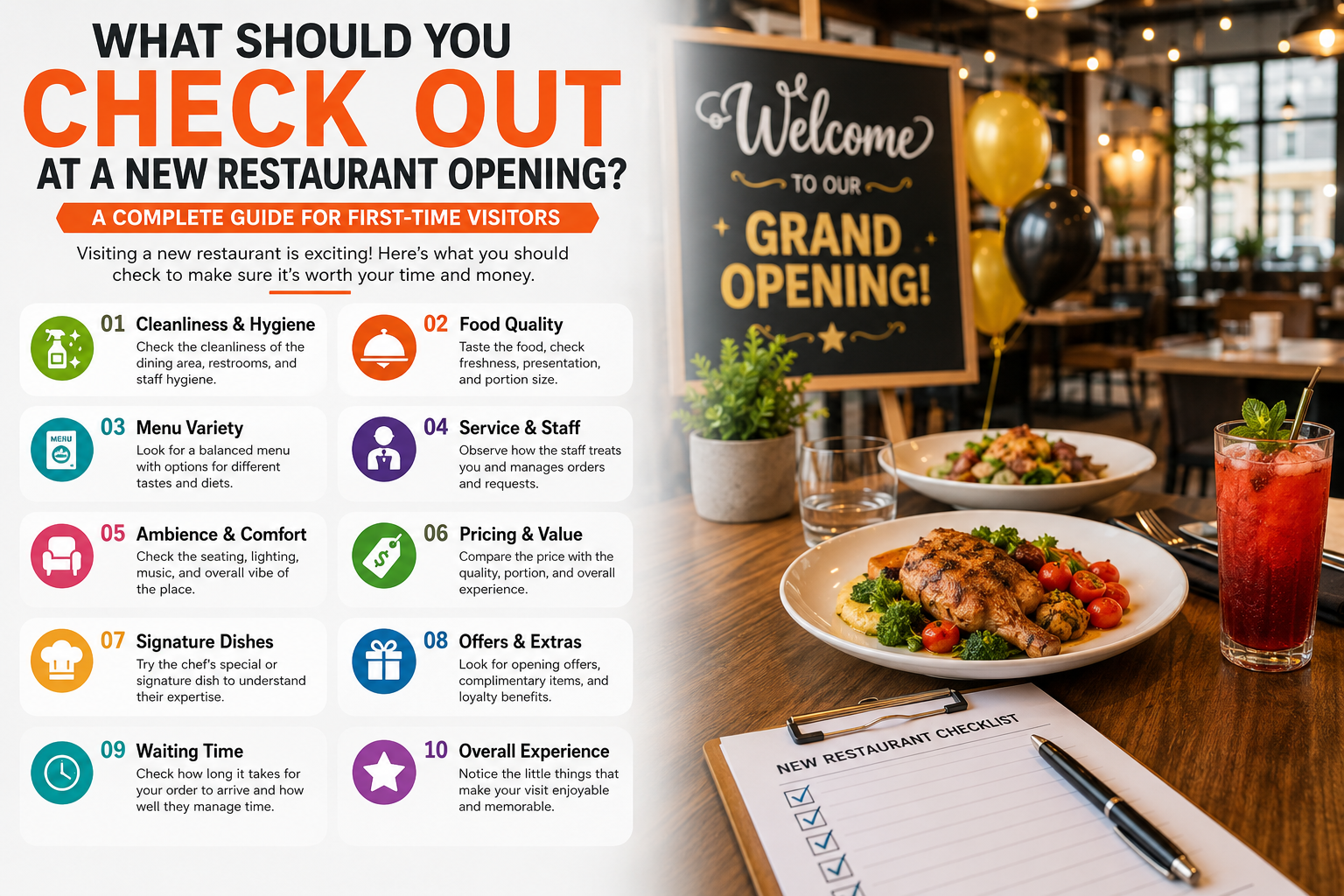
ToggleWhat Should You Check Out at a New Restaurant Opening? A Complete Guide for First-Time Visitors
Have you ever noticed a brand-new restaurant opening in your city and wondered whether it’s worth visiting? New restaurant openings are exciting because they often introduce fresh menus, unique interiors, opening-day offers, and innovative dining experiences. However, not every new restaurant delivers the same level of quality.
Before you reserve a table or walk in, it’s helpful to know what to look for. From the food and service to cleanliness and ambiance, several factors determine whether a new restaurant deserves a second visit.
In this guide, you’ll learn exactly what you should check out at a new restaurant opening so you can enjoy the best possible dining experience while avoiding disappointment.
Why Visit a Newly Opened Restaurant?
New restaurants often try their best to impress early customers. They usually offer:
- Grand opening discounts
- Complimentary desserts or drinks
- Fresh and creative menu items
- Modern interior designs
- Friendly and attentive service
- Opportunities to discover future local favorites
Early visitors also get the chance to experience something new before it becomes crowded.
1. Check the Restaurant’s Overall Cleanliness
The first thing you’ll notice when entering a restaurant is its cleanliness.
Look at:
- Floors
- Tables
- Chairs
- Windows
- Restrooms
- Kitchen visibility (if it’s an open kitchen)
A clean restaurant usually reflects good management and proper hygiene standards.
Green Flags
- Spotless tables
- Clean restrooms
- Staff wearing clean uniforms
- Sanitized dining area
Red Flags
- Sticky tables
- Dirty menus
- Overflowing trash bins
- Unpleasant odors
2. Observe the Welcome and Customer Service
First impressions matter.
Notice how the staff greets guests.
Ask yourself:
- Were you welcomed warmly?
- Did someone guide you to your table quickly?
- Were your questions answered politely?
Excellent service often indicates proper staff training.
Friendly employees can significantly improve your dining experience.
3. Explore the Menu Carefully
A new restaurant’s menu reveals a lot about its identity.
Look for:
- Signature dishes
- Seasonal ingredients
- Vegetarian options
- Vegan choices
- Kids’ meals
- Gluten-free alternatives
Avoid restaurants with overly complicated menus featuring hundreds of dishes. A focused menu often means better quality.
4. Try the Signature Dish
Every restaurant has one or two dishes they’re proud of.
Ask your server:
“What do you recommend?”
Signature dishes are usually:
- Chef’s specialties
- Best-selling items
- Unique creations
- Local favorites
Trying these gives you the best impression of the restaurant’s quality.
5. Evaluate Food Presentation
People eat with their eyes first.
Notice:
- Plate arrangement
- Garnishing
- Portion size
- Color combinations
- Fresh ingredients
Beautiful presentation often reflects attention to detail.
Remember, presentation alone isn’t enough—it should also taste great.
6. Judge the Food Quality
Food quality is the biggest factor when evaluating a new restaurant.
Consider:
Freshness
Are vegetables crisp?
Is seafood fresh?
Does the meat taste freshly cooked?
Temperature
Hot food should arrive hot.
Cold dishes should remain chilled.
Flavor Balance
Check whether flavors are balanced rather than overly salty, spicy, or sweet.
7. Notice the Restaurant’s Atmosphere
Atmosphere greatly affects your overall experience.
Observe:
- Music volume
- Lighting
- Seating comfort
- Decoration
- Noise levels
A relaxing environment encourages guests to stay longer and enjoy their meals.
8. Check Waiting Time
A new restaurant may attract large crowds.
Pay attention to:
- Waiting for a table
- Order preparation time
- Drink service
- Food delivery
Reasonable waiting times suggest efficient kitchen operations.
9. Observe Staff Coordination
Good teamwork is easy to spot.
Notice whether employees:
- Communicate smoothly
- Deliver food correctly
- Handle busy periods calmly
- Assist each other
Efficient teamwork creates a better customer experience.
10. Inspect Beverage Options
Many restaurants focus only on food while neglecting drinks.
Check if they offer:
- Fresh juices
- Mocktails
- Specialty coffee
- Tea varieties
- Soft drinks
- Local beverages
A creative beverage menu enhances the overall dining experience.
11. Review Pricing and Value
Expensive doesn’t always mean better.
Compare:
- Portion sizes
- Ingredient quality
- Service
- Overall experience
Ask yourself:
“Was this meal worth the money?”
Value matters more than price alone.
12. Look for Opening Offers
Many restaurants celebrate their launch with promotions.
Examples include:
- Buy One Get One Free
- Free desserts
- Complimentary drinks
- Family combo meals
- Loyalty cards
- Discount vouchers
Take advantage of these offers if they suit your plans.
13. Observe the Kitchen (If Visible)
Open kitchens let customers see how food is prepared.
Watch for:
- Clean workstations
- Proper food handling
- Organized chefs
- Fresh ingredients
An open kitchen builds trust.
14. Check Online Reviews After Your Visit
Even after dining, compare your experience with others.
Look for comments about:
- Food quality
- Service
- Pricing
- Hygiene
- Waiting time
If many guests mention the same strengths or weaknesses, it’s likely a consistent pattern.
15. Evaluate Menu Variety
A good restaurant should cater to different preferences.
Look for options like:
- Vegetarian
- Vegan
- Seafood
- Chicken
- Beef or lamb (where applicable)
- Desserts
- Healthy meals
Balanced variety helps groups with different tastes dine together.
16. Check Seating Comfort
Comfort influences how much you enjoy your meal.
Notice:
- Chair design
- Table spacing
- Air conditioning
- Lighting
- Noise
A comfortable dining space encourages repeat visits.
17. Assess Dessert Options
Desserts often leave the final impression.
Popular choices include:
- Cheesecake
- Brownies
- Ice cream
- Traditional sweets
- Chocolate lava cake
A memorable dessert can elevate the entire meal.
18. Look at Safety and Hygiene Practices
Good restaurants prioritize customer safety.
Check for:
- Staff washing hands
- Gloves when appropriate
- Sanitized tables
- Covered food
- Clean utensils
These practices reflect professionalism and care.
19. Observe Customer Reactions
Look around the dining room.
Are customers:
- Smiling?
- Taking photos?
- Finishing their meals?
- Ordering desserts?
- Planning return visits?
Satisfied guests are often a positive sign of quality.
20. Decide Whether You’d Return
At the end of your visit, ask yourself:
- Was the food enjoyable?
- Was the service friendly?
- Was the restaurant clean?
- Was the atmosphere pleasant?
- Was it worth the cost?
If the answer is yes to most of these questions, you’ve likely found a restaurant worth visiting again.
Tips for Visiting a New Restaurant Opening
- Visit during non-peak hours for a more relaxed experience.
- Make a reservation if the opening is expected to be busy.
- Start with the restaurant’s signature dishes.
- Take advantage of opening promotions.
- Be patient, as new teams may still be refining their operations.
- Share honest feedback to help the restaurant improve.
Common Mistakes to Avoid
- Ordering too many unfamiliar dishes at once.
- Judging the restaurant based only on décor.
- Ignoring hygiene and cleanliness.
- Expecting perfect service during the first few days.
- Visiting only because of social media hype without checking reviews.
Final Thoughts
A new restaurant opening is more than just an opportunity to enjoy a meal—it’s a chance to discover fresh flavors, support a new business, and experience a unique dining atmosphere. By paying attention to cleanliness, service, food quality, ambiance, pricing, and overall value, you can decide whether the restaurant deserves a place on your list of favorites.
Keep an open mind, enjoy the experience, and remember that many new restaurants improve significantly after their first few weeks. Thoughtful observation and honest feedback can help you make better dining choices while supporting restaurants that are committed to delivering excellent food and service.
Frequently Asked Questions (FAQs)
1. What is the first thing to check at a new restaurant?
Start by checking the cleanliness, overall atmosphere, and how the staff welcomes customers. These factors often reflect the restaurant’s standards.
2. Should I try the signature dish at a new restaurant?
Yes. Signature dishes are usually the chef’s specialties and provide the best insight into the restaurant’s culinary style.
3. Are grand opening discounts worth using?
Absolutely. Many restaurants offer valuable promotions during their opening period, making it a great time to visit.
4. How can I judge food quality?
Look for fresh ingredients, balanced flavors, proper serving temperature, and attractive presentation.
5. Is slow service normal during a restaurant opening?
Some delays are common because staff are adjusting to operations. However, communication and courtesy should still remain professional.
6. Why is menu variety important?
A balanced menu accommodates different dietary preferences and makes the restaurant suitable for families and groups.
7. Should I rely on online reviews before visiting?
Reviews can be helpful, but remember that new restaurants may have only a limited number of reviews. Consider both online feedback and your own experience.
8. What makes a new restaurant worth revisiting?
Consistently good food, excellent service, clean facilities, fair pricing, and a welcoming atmosphere are strong reasons to return.
Disclaimer
This article is intended for informational purposes only. Restaurant quality, menu offerings, pricing, promotions, and customer experiences may vary depending on the location, management, and timing of your visit. The opinions and suggestions provided are general guidelines to help diners evaluate newly opened restaurants. Always verify current menus, operating hours, reservation policies, and promotional offers directly with the restaurant before planning your visit.