






How to Know If a Restaurant Is Worth Visiting
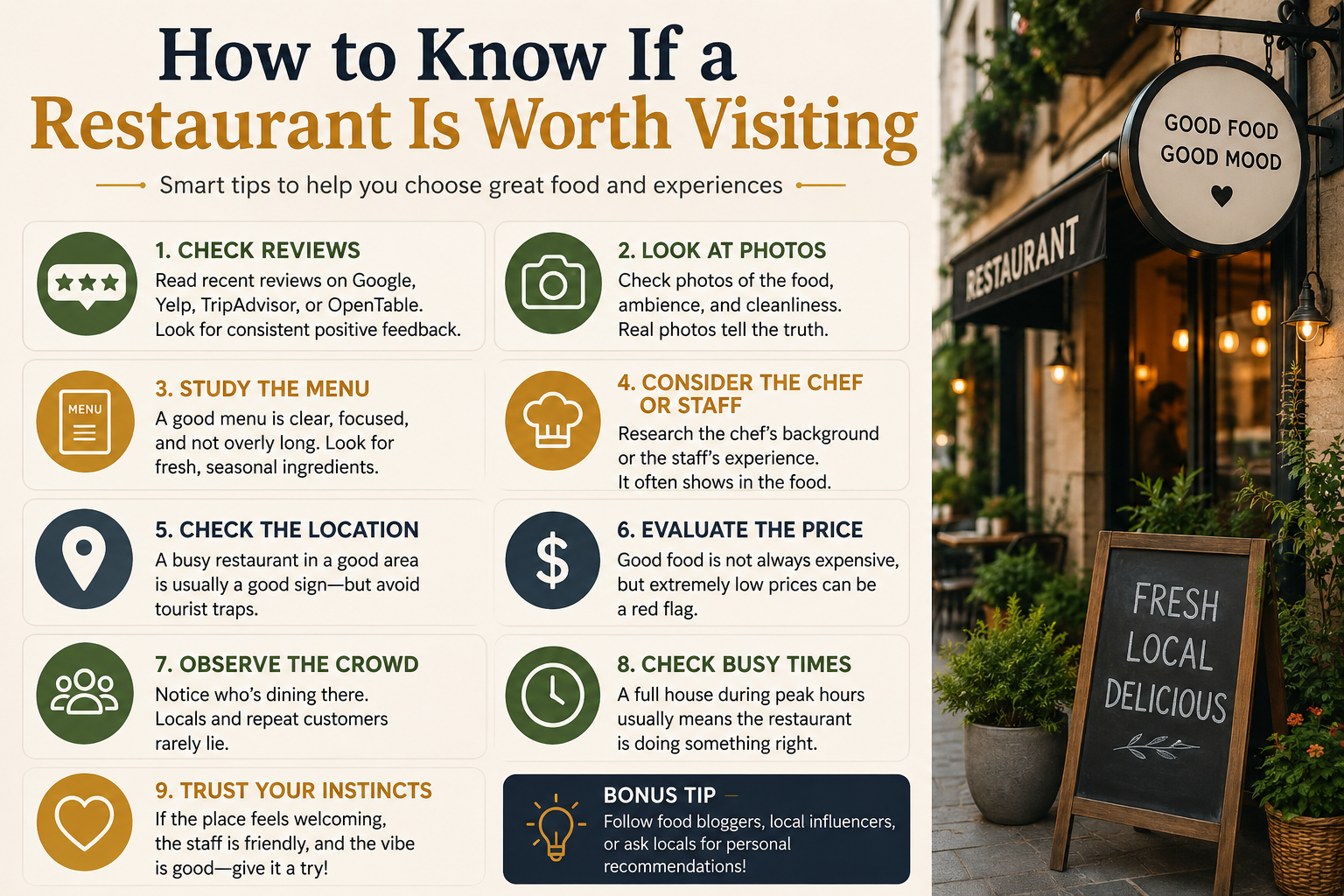
Choosing where to eat can feel like a gamble. Glossy photos, inflated review counts, and paid influencer posts make it hard to tell a genuinely great restaurant from one that’s simply good at marketing. The good news is that with a bit of practice, you can read the signs before you even sit down — and confirm them within the first few minutes of your visit.
1. Look Beyond the Star Rating
A 4.5-star average means little on its own. Instead:
- Read the volume, not just the score. A 4.3 rating from 2,000 reviews is more reliable than a 4.8 from 15.
- Sort by “most recent.” Restaurants change chefs, ownership, and quality over time. Recent reviews tell you what to expect today.
- Scan for recurring specifics. One-off complaints happen everywhere. Patterns — like repeated mentions of slow service or inconsistent seasoning — are the real signal.
2. Check Who’s Actually Eating There
Locals are often better judges than tourists chasing a “top 10” list.
- Look for a mix of ages, families, and solo diners rather than only large tour groups.
- Restaurants busy with regulars (people who clearly aren’t checking a menu) tend to have reliable quality.
- If it’s empty at peak hours in a busy area, that’s worth noting — though not always disqualifying (sometimes it’s simply new).
3. Study the Menu Before You Go
A menu reveals more than food — it reveals philosophy.
- Focused menus often beat sprawling ones. A restaurant that does 15 dishes well is usually a safer bet than one that offers 80 items across five cuisines.
- Seasonal or rotating items suggest the kitchen is cooking with fresh ingredients, not just reheating from a freezer.
- Pricing consistency matters — wildly cheap prices for complex dishes can hint at corner-cutting.
4. Trust Your Senses at the Door
Once you arrive, you can confirm a lot before you even order:
- Smell: Good restaurants smell like food, not like heavy cleaning chemicals trying to cover something up.
- Cleanliness of visible areas: Floors, tables, and restrooms are a fair proxy for kitchen hygiene.
- Staff energy: Attentive, unhurried staff usually reflect good management — which correlates with good food.
5. Watch the Turnover of Food
If you can see other tables:
- Dishes coming out hot and visually similar to their menu photos is a good sign.
- If everything looks pre-plated or sitting under heat lamps for a while, quality may be inconsistent.
6. Use Multiple Sources, Not Just One App
- Cross-reference Google, Yelp, TripAdvisor, and local food blogs or forums.
- Ask locals directly — taxi drivers, hotel staff, and shopkeepers often know honest answers.
- Be wary of restaurants that appear only through heavily sponsored influencer content with little organic mention elsewhere.
7. Give It a Low-Risk Test
If you’re unsure, order one simple, telling dish rather than committing to a full meal:
- A basic dish (like a simple pasta, dumpling, or grilled item) reveals kitchen competence better than a complex signature dish that hides flaws.
- If that dish impresses, it’s a strong signal the rest of the menu is worth exploring.
The Bottom Line
No single indicator guarantees a great meal, but combining recent reviews, local presence, menu focus, and in-person sensory cues dramatically improves your odds. The best approach is triangulation: don’t rely on one review site, one photo, or one recommendation — look for agreement across several signals.
FAQ
Q: Are more reviews always better? Not necessarily quality-wise, but a larger sample size makes the average rating more statistically reliable. A restaurant with thousands of reviews averaging 4.2 is generally more predictable than one with 10 reviews averaging 4.9.
Q: Should I avoid restaurants with no reviews at all? Not automatically — it may just be new. In that case, rely more heavily on in-person cues (smell, cleanliness, how busy it is with locals) and menu inspection.
Q: Is a busy restaurant always a good one? Usually a positive sign, but not foolproof. Some places stay busy due to location, price, or marketing rather than food quality. Combine crowd size with other signals like repeat local customers.
Q: Do food photos on the menu or website matter? Yes, somewhat. Overly stocky, stock-photo-style images can be a red flag, while photos that closely match what’s actually served (check recent user-uploaded photos on review platforms) build confidence.
Q: How much should I trust influencer recommendations? Treat them as one data point, not a verdict. Sponsored content doesn’t always reflect genuine food quality. Cross-check with organic reviews and local opinions.
Q: What’s the single fastest way to judge a restaurant on the spot? Order one simple dish. Simple dishes are harder to disguise and reveal a kitchen’s real skill level quickly.
Disclaimer
This article is intended for general informational purposes only. It reflects common, practical heuristics for evaluating restaurants and does not guarantee the quality, safety, or suitability of any specific establishment. Dining experiences can vary based on factors such as location, time of visit, staffing, and personal taste preferences. Always use your own judgment, check current health and safety guidance where relevant, and consider individual dietary needs or allergies before dining out. The author and publisher assume no responsibility for outcomes related to decisions made based on this content.