







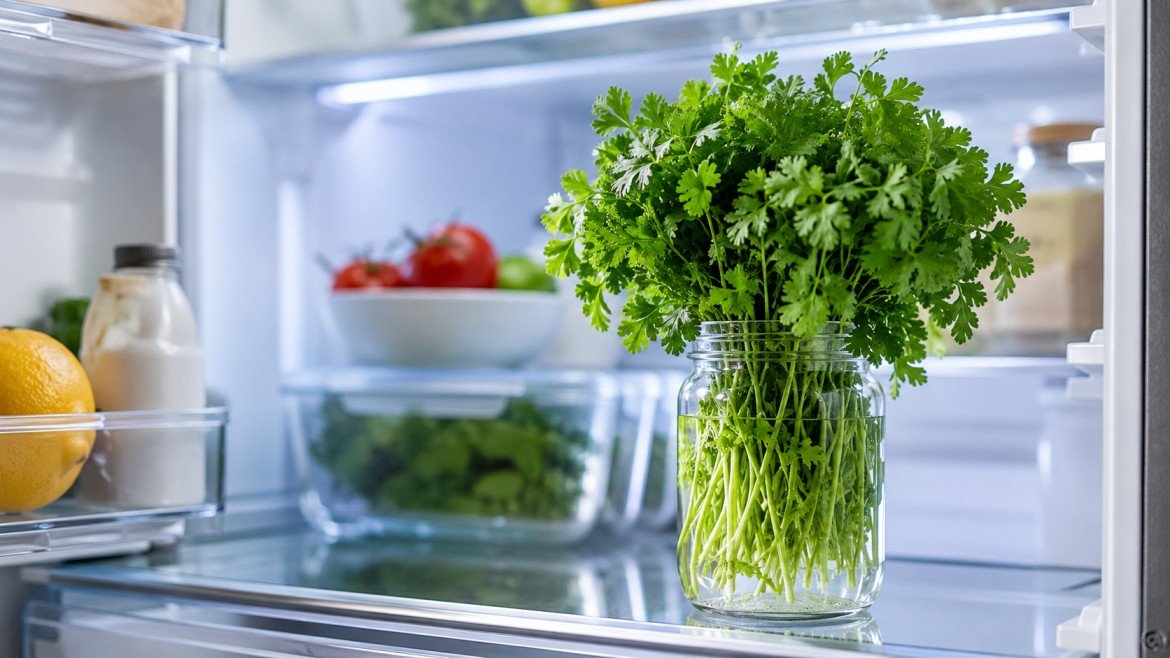
Fresh coriander leaves, also known as cilantro, are one of the most commonly used herbs in Indian kitchens. Whether you’re preparing dal, curry, biryani, sandwiches, salads, or green chutney, coriander instantly adds freshness, aroma, and flavor to any dish.
However, coriander is also one of the quickest herbs to spoil. Many people buy a fresh bunch from the market only to find it wilted, yellow, or slimy within just a few days. This not only wastes money but also forces you to make frequent grocery trips.
The good news is that coriander can stay fresh for 2 to 3 weeks if stored correctly. With a few simple storage techniques, you can preserve its freshness, vibrant green color, and natural aroma for much longer.
In this guide, you’ll learn the best ways to store coriander leaves, the mistakes that cause them to spoil quickly, and expert kitchen tips that help reduce food waste.
Why Do Coriander Leaves Spoil So Quickly?
Understanding why coriander spoils can help you avoid common storage mistakes.
Coriander leaves have a high moisture content and delicate stems. When exposed to excess moisture, heat, or poor air circulation, bacteria and mold grow rapidly. As a result, the leaves become soft, yellow, or slimy.
Some of the most common reasons include:
- Storing wet coriander without drying it.
- Keeping it inside tightly sealed plastic bags.
- Leaving damaged or rotten leaves mixed with fresh ones.
- Placing coriander near fruits like bananas or apples, which release ethylene gas and speed up spoilage.
- Storing it in the warmest section of the refrigerator.
By correcting these small mistakes, you can significantly extend the shelf life of fresh coriander.
Should You Wash Coriander Before Storing?
This is one of the most common questions.
The answer depends on when you plan to use it.
If You Will Use It Within 2–3 Days
You can wash the coriander, but make sure it is completely dry before storing it.
If You Want Long-Term Storage
It is better to store coriander without washing it. Wash only the amount you need before cooking.
This reduces excess moisture and keeps the leaves fresher for a longer time.
Best Way to Store Coriander Leaves
Among all storage methods, the glass jar method is considered one of the most effective.
Method 1: Store Coriander in a Glass Jar
This method helps maintain the right balance of moisture while allowing the stems to stay hydrated.
What You’ll Need
- Fresh coriander
- A clean glass jar
- Fresh water
- A loose plastic bag or reusable produce bag
Steps
- Remove any yellow, damaged, or rotten leaves.
- Trim about half an inch from the bottom of the stems.
- Fill the glass jar with 2–3 inches of clean water.
- Place the coriander upright, just like a bouquet of flowers.
- Cover the leaves loosely with a plastic bag.
- Store the jar inside the refrigerator.
- Change the water every two to three days.
Shelf Life
Using this method, coriander can stay fresh for 2–3 weeks.
Why It Works
The stems continue absorbing water while the cool refrigerator temperature slows down moisture loss. This keeps the leaves crisp and green for much longer.
Method 2: Paper Towel Method
If your refrigerator doesn’t have enough space for a glass jar, this is another excellent option.
Steps
- Dry the coriander thoroughly.
- Wrap it gently in a clean paper towel.
- Place the wrapped bunch inside an airtight container or zip-lock bag.
- Store it in the refrigerator’s vegetable drawer.
The paper towel absorbs excess moisture, reducing the risk of mold and spoilage.
Shelf Life
Fresh for 10–14 days.
Comparison of Storage Methods
| Storage Method | Freshness | Best For |
|---|---|---|
| Kitchen Counter | 1–2 Days | Immediate Use |
| Plastic Bag | 3–5 Days | Short Storage |
| Paper Towel Method | 10–14 Days | Small Families |
| Glass Jar Method | 2–3 Weeks | Best Overall |
| Freezer | 3–6 Months | Long-Term Storage |
Common Mistakes to Avoid
Even fresh coriander can spoil quickly if stored incorrectly.
Avoid these mistakes:
- Storing wet leaves directly in the refrigerator.
- Keeping rotten leaves with fresh ones.
- Using airtight containers without any moisture control.
- Forgetting to change the water in the glass jar.
- Crushing the leaves under heavy vegetables.
Small improvements in storage habits can significantly increase freshness and reduce food waste.
Can You Freeze Coriander Leaves?
Yes. Freezing coriander is one of the best ways to preserve it for several months. While frozen coriander may lose some crispness, it still retains much of its flavor and works well in cooked dishes like curries, soups, dals, pulao, and gravies.
Method 1: Freeze Chopped Coriander
- Wash the coriander thoroughly.
- Dry it completely using a kitchen towel or salad spinner.
- Chop the leaves finely.
- Store them in a freezer-safe airtight container or freezer bag.
- Remove as much air as possible before sealing.
Shelf Life: 3–4 months
Best For: Curries, dals, gravies, and rice dishes.
Method 2: Coriander Ice Cube Method
This is one of the easiest methods for busy home cooks.
Steps
- Finely chop fresh coriander.
- Fill each section of an ice cube tray with chopped coriander.
- Add a little water or olive oil.
- Freeze overnight.
- Transfer the frozen cubes to a freezer bag.
Whenever you cook, simply drop one cube directly into the pan.
Shelf Life: Up to 6 months
Can You Store Coriander Without a Refrigerator?
Yes, but only for a short period.
If you plan to use coriander within 24–48 hours:
- Trim the stems slightly.
- Place them in a glass of water.
- Keep the glass in a cool, shaded place away from direct sunlight.
- Change the water daily.
This method works well during cooler weather but is less effective in hot and humid climates.
How to Know If Coriander Has Gone Bad
Never use coriander that shows signs of spoilage.
Signs of Spoiled Coriander
- Yellow or brown leaves
- Slimy texture
- Bad or sour smell
- Mold spots
- Soft, mushy stems
Discard the entire bunch if mold has spread significantly.
Expert Tips to Keep Coriander Fresh Longer
Professional chefs and experienced home cooks follow these simple practices:
- Buy coriander with bright green leaves and firm stems.
- Avoid bunches with yellow or wilted leaves.
- Remove damaged leaves before storage.
- Never store wet coriander.
- Keep the refrigerator temperature between 1°C and 4°C.
- Replace damp paper towels with fresh ones.
- Use the oldest coriander first to reduce waste.
- Store herbs separately from fruits like bananas, apples, and avocados.
Common Questions About Storing Coriander
1. How do you store coriander leaves for a long time?
The best way to store coriander leaves is by placing the stems in a glass jar filled with 2–3 inches of water and loosely covering the leaves with a plastic bag before refrigerating. Change the water every 2–3 days. This method can keep coriander fresh for up to 2–3 weeks.
2. Should I wash coriander before storing it?
If you plan to use coriander within a day or two, you can wash it first, but make sure it is completely dry before storing. For longer storage, it is better to avoid washing it until you’re ready to use it, as excess moisture speeds up spoilage.
3. Can I freeze fresh coriander leaves?
Yes. Coriander can be frozen for 3–6 months. You can freeze chopped coriander in airtight freezer bags or prepare coriander ice cubes by mixing chopped leaves with water or olive oil in an ice cube tray.
4. Why do coriander leaves become yellow in the refrigerator?
Coriander usually turns yellow because of excess moisture, improper storage, warm refrigerator temperatures, or natural aging. Removing damaged leaves and storing coriander correctly helps keep it fresh for longer.
5. How long do coriander leaves stay fresh in the fridge?
The shelf life depends on the storage method:
- Plastic bag: 3–5 days
- Airtight container: 5–7 days
- Paper towel method: 10–14 days
- Glass jar method: Up to 3 weeks
6. What is the best container for storing coriander?
A clean glass jar with a small amount of water is considered the best option for keeping coriander fresh. If space is limited, an airtight container lined with paper towels also works well.
7. Can I store coriander without a refrigerator?
Yes, but only for a short time. Place the stems in a glass of water and keep it in a cool, shaded area. This method usually keeps coriander fresh for 1–2 days, depending on the weather.
8. Can I use slightly wilted coriander?
Yes. If the coriander is only slightly wilted and has no bad smell, slime, or mold, you can soak the stems in cold water for 15–20 minutes to revive some freshness before using it.
9. Why does coriander become slimy?
Slimy coriander is usually caused by trapped moisture, poor air circulation, or bacterial growth. Once the leaves become slimy or develop a foul smell, they should be discarded.
10. How can I keep coriander fresh without using plastic bags?
You can store coriander in a glass jar with water or wrap it in a clean cotton cloth or paper towel before placing it in an airtight container. These methods reduce moisture buildup and help keep the leaves fresh naturally.
Quick Storage Guide
| Storage Method | Shelf Life | Difficulty |
|---|---|---|
| Countertop | 1–2 Days | Easy |
| Plastic Bag | 3–5 Days | Easy |
| Paper Towel | 10–14 Days | Easy |
| Glass Jar | 2–3 Weeks | Easy |
| Freezer | 3–6 Months | Medium |
Final Verdict
Fresh coriander is a kitchen essential, but it doesn’t have to spoil within a few days. By choosing the right storage method, you can enjoy fresh, flavorful coriander for weeks while reducing food waste and saving money.
If you’re looking for the best overall solution, the glass jar method is highly effective because it keeps the stems hydrated and the leaves fresh. For long-term storage, freezing chopped coriander or using the ice cube method works exceptionally well.
With these simple techniques, you’ll always have fresh coriander ready for your favorite Indian recipes.