






Table of Contents
ToggleHow to Find the Best Restaurants in Your Neighborhood
Finding a great restaurant nearby isn’t just about satisfying your hunger—it’s about enjoying memorable food, excellent service, and a pleasant atmosphere. Whether you’re searching for a cozy café, a family-friendly restaurant, or a fine dining experience, knowing how to identify quality restaurants can save you both time and money.
With countless restaurants available in every city, choosing the right one may seem overwhelming. Fortunately, by using the right tools and paying attention to a few key factors, you can confidently discover hidden gems and popular local favorites.
In this guide, we’ll share practical tips to help you find the best restaurants in your neighborhood every time.
Why Choosing the Right Restaurant Matters
The restaurant you choose can significantly affect your dining experience. A well-reviewed restaurant often provides:
- Fresh, high-quality food
- Friendly customer service
- Clean and hygienic surroundings
- Fair pricing
- Comfortable ambiance
- Consistent dining experience
Instead of relying solely on advertisements, it’s always better to do a little research before making your choice.
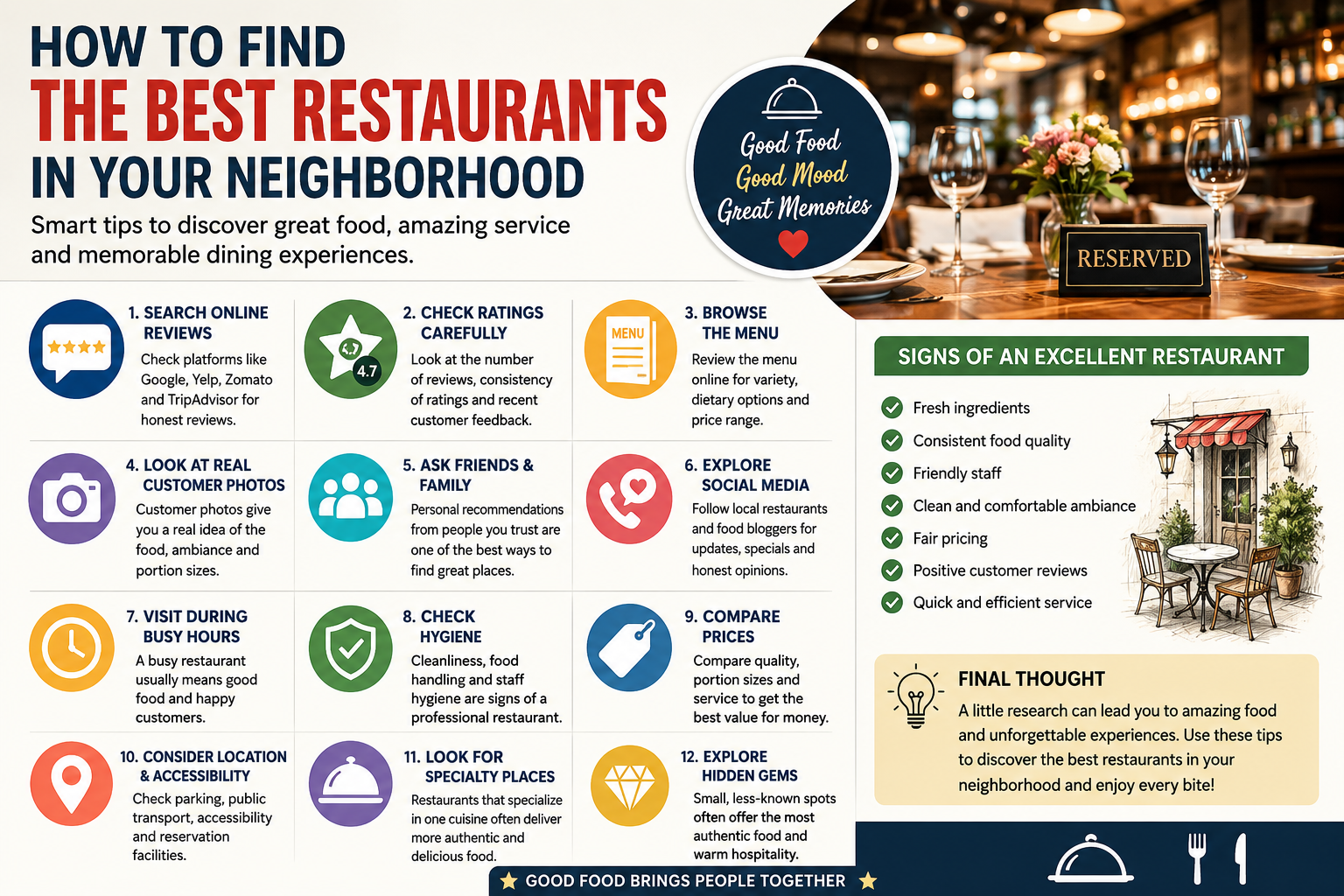
1. Search Online Reviews
One of the easiest ways to find excellent restaurants is by checking online reviews.
Popular platforms include:
- Google Reviews
- TripAdvisor
- Yelp
- Zomato
- OpenTable
Look beyond the overall star rating. Read recent customer reviews to understand:
- Food quality
- Service speed
- Portion sizes
- Restaurant cleanliness
- Waiting times
- Staff behavior
Restaurants with many recent positive reviews are generally more reliable than those with only a few high ratings.
2. Check Restaurant Ratings Carefully
A restaurant with a 4.7-star rating based on 2,000 reviews is often more trustworthy than one with a perfect 5-star rating from only 10 customers.
Pay attention to:
- Number of reviews
- Consistency of ratings
- Recent customer experiences
- Owner responses to complaints
Businesses that respond professionally to feedback often care more about customer satisfaction.
3. Browse the Menu Before Visiting
Most restaurants now publish their menus online.
Review the menu to check:
- Variety of dishes
- Vegetarian or vegan options
- Gluten-free meals
- Children’s menu
- Prices
- Seasonal specialties
A clear, well-organized menu often reflects a professionally managed restaurant.
4. Look at Real Customer Photos
Professional food photography can be attractive, but customer-uploaded images usually provide a more realistic view.
Check photos showing:
- Actual food presentation
- Portion sizes
- Restaurant interior
- Seating arrangements
- Outdoor dining areas
- Cleanliness
These images help set realistic expectations.
5. Ask Friends and Family for Recommendations
Personal recommendations remain one of the most reliable ways to discover great restaurants.
Ask people about:
- Their favorite local restaurants
- Best family dining spots
- Romantic dinner locations
- Affordable eateries
- Hidden food gems
Word-of-mouth recommendations often lead to memorable dining experiences.
6. Explore Social Media
Many excellent restaurants actively share updates on social media.
Platforms like Instagram, Facebook, and YouTube showcase:
- New menu items
- Customer reviews
- Behind-the-scenes cooking
- Restaurant ambiance
- Special offers
- Live events
Food bloggers and local influencers also provide honest recommendations.
7. Visit During Busy Hours
A restaurant that stays busy during lunch or dinner usually indicates customer satisfaction.
However, don’t assume every crowded restaurant is excellent.
Consider:
- Waiting time
- Table management
- Staff efficiency
- Customer turnover
Busy restaurants often prepare fresh food more frequently.
8. Check Food Hygiene
Cleanliness is extremely important.
Look for:
- Clean dining tables
- Hygienic washrooms
- Neatly dressed staff
- Organized kitchen (if visible)
- Proper food handling
A clean restaurant demonstrates professionalism and attention to detail.
9. Compare Prices
Expensive doesn’t always mean better.
Compare nearby restaurants based on:
- Food quality
- Portion size
- Service
- Ambiance
- Value for money
Sometimes small local restaurants offer better meals at lower prices than premium establishments.
10. Look for Specialty Restaurants
Instead of choosing restaurants with huge menus, consider places specializing in one cuisine.
Examples include:
- Authentic Italian restaurants
- Japanese sushi bars
- Indian fine dining
- Mexican restaurants
- Seafood restaurants
- BBQ restaurants
Specialized restaurants often provide more authentic flavors.
11. Check Location and Accessibility
A great restaurant should also be convenient.
Consider:
- Parking availability
- Public transport access
- Wheelchair accessibility
- Family-friendly seating
- Reservation options
Easy accessibility enhances your overall dining experience.
12. Explore Hidden Local Gems
Many outstanding restaurants aren’t located in shopping malls or busy commercial areas.
Hidden neighborhood restaurants often offer:
- Authentic recipes
- Affordable pricing
- Friendly service
- Unique atmosphere
- Loyal local customers
Don’t hesitate to explore side streets and lesser-known locations.
13. Visit Restaurant Websites
A professional restaurant website often provides valuable information:
- Menu
- Opening hours
- Reservation system
- Contact details
- Event information
- Photo gallery
Regular updates suggest active business management.
14. Read Food Blogs
Food bloggers frequently review local restaurants in detail.
They discuss:
- Taste
- Pricing
- Service
- Ambiance
- Signature dishes
- Overall dining experience
Reading multiple reviews gives a balanced perspective.
15. Consider Your Dining Purpose
The best restaurant depends on the occasion.
Different occasions require different settings:
Family Dinner
Choose restaurants with:
- Spacious seating
- Kids’ menu
- Comfortable atmosphere
Date Night
Look for:
- Romantic ambiance
- Quiet seating
- Quality service
Business Meeting
Prioritize:
- Professional atmosphere
- Reservation options
- Quiet environment
Quick Lunch
Focus on:
- Fast service
- Affordable meals
- Convenient location
Signs of an Excellent Restaurant
Great restaurants usually share several characteristics:
- Fresh ingredients
- Consistent food quality
- Friendly staff
- Comfortable seating
- Positive customer reviews
- Fair pricing
- Clean environment
- Quick service
- Transparent menu
- Strong local reputation
Common Mistakes to Avoid
Many diners make these mistakes:
- Choosing solely based on advertisements
- Ignoring recent reviews
- Not checking menus beforehand
- Visiting without reservations during weekends
- Overlooking hygiene standards
- Assuming expensive means better
- Ignoring customer photos
Avoiding these mistakes can lead to a much better dining experience.
Final Thoughts
Finding the best restaurants in your neighborhood doesn’t have to be difficult. With online reviews, social media, local recommendations, and a little research, you can discover fantastic places that match your taste and budget.
Whether you’re craving authentic local cuisine, international flavors, or a cozy café, taking a few extra minutes to compare restaurants will help you enjoy better food, better service, and memorable dining experiences.
The next time you’re wondering where to eat, use these practical tips to confidently choose a restaurant you’ll love.
Disclaimer
The information provided in this article is for general informational purposes only. Restaurant ratings, menus, prices, operating hours, and customer experiences may change over time. Readers are encouraged to verify the latest information through the restaurant’s official website, social media pages, or trusted review platforms before visiting. Individual dining experiences may vary based on personal preferences, location, and service availability.
Frequently Asked Questions (FAQs)
1. How can I find the best restaurants near me?
You can use Google Maps, TripAdvisor, Yelp, Zomato, and customer reviews to compare ratings, menus, photos, and dining experiences.
2. Are online restaurant reviews reliable?
Most reviews are helpful when viewed collectively. Read multiple recent reviews rather than relying on a single opinion.
3. What should I check before visiting a restaurant?
Review the menu, customer ratings, opening hours, hygiene, pricing, parking availability, and reservation options.
4. Is a higher price always a sign of better food?
No. Many affordable local restaurants serve exceptional food and provide excellent value for money.
5. Why are customer-uploaded photos important?
They show the actual food presentation, portion sizes, restaurant ambiance, and cleanliness, giving a more realistic view than promotional images.
6. Should I make a reservation before visiting?
Yes, especially during weekends, holidays, or peak dining hours to avoid long waiting times.
7. How do I know if a restaurant is hygienic?
Look for clean dining areas, tidy washrooms, well-groomed staff, and positive customer comments about cleanliness.
8. What’s the best way to discover hidden local restaurants?
Ask locals, follow food bloggers, explore neighborhood streets, and browse community recommendations on social media.
9. Can social media help me choose a restaurant?
Yes. Platforms like Instagram and Facebook often showcase recent dishes, customer experiences, and special events.
10. What makes a restaurant truly great?
A combination of delicious food, quality ingredients, excellent customer service, cleanliness, fair pricing, and a welcoming atmosphere creates a memorable dining experience.