




Famous Food of Himachal Pradesh: Siddu & Dham – A Taste of Himachali Tradition
Himachal Pradesh is famous for its breathtaking mountains, peaceful valleys, apple orchards, and rich cultural traditions. But beyond its scenic beauty lies another treasure that deserves equal attention—Himachali cuisine. The traditional food of Himachal Pradesh reflects the state’s mountain lifestyle, local ingredients, seasonal produce, and generations-old cooking traditions.
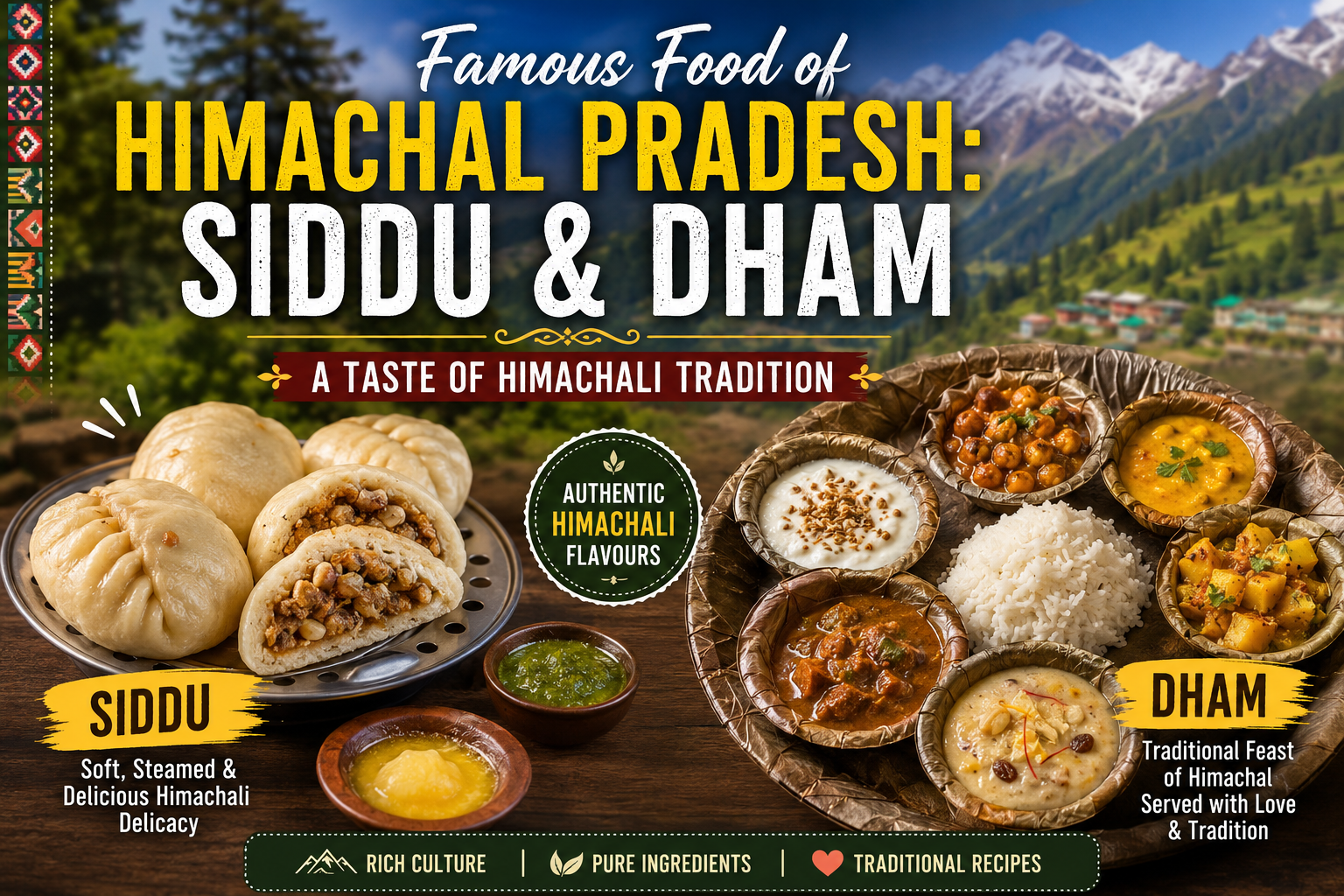
Among the many dishes found across the state, Siddu and Dham hold a special place in Himachali food culture. Siddu is a popular steamed bread-like delicacy, while Dham is a traditional festive feast featuring a variety of vegetarian dishes served on special occasions.
Together, Siddu and Dham represent the warmth, simplicity, and cultural richness of Himachal Pradesh.
What Makes Himachali Cuisine Special?
Traditional Himachali cuisine developed around the geographical and climatic conditions of the Himalayan region. In many mountain communities, people have traditionally relied on locally available grains, pulses, vegetables, dairy products, and seasonal ingredients.
Unlike heavily spiced restaurant-style food, many traditional Himachali dishes focus on creating depth of flavour through simple ingredients and careful cooking.
The cuisine varies from one region to another. You can find different cooking styles and specialties in places such as Kangra, Mandi, Kullu, Shimla, Chamba, Kinnaur, and other parts of Himachal Pradesh.
Some popular Himachali foods include:
- Siddu
- Dham
- Madra
- Rajma Madra
- Chana Madra
- Chha Gosht
- Tudkiya Bhath
- Babru
- Bhey
- Mittha
However, Siddu and Dham remain particularly important when discussing the famous food of Himachal Pradesh.
Siddu: A Traditional Favourite of Himachal Pradesh
Siddu is one of the most recognizable traditional foods associated with Himachal Pradesh. It is essentially a steamed wheat-based preparation made from dough and filled with a savoury or sweet stuffing.
The dish is especially popular in parts of Himachal Pradesh, including areas around Shimla, Kullu, Mandi, and nearby regions.
Siddu is often enjoyed during colder weather because it is filling, warm, and comforting.
What Is Siddu?
Siddu is prepared using wheat flour dough that is allowed to ferment or rest before being shaped. The dough is then filled with a mixture that can vary according to local tradition.
A savoury filling may include ingredients such as walnuts, spices, herbs, and other locally preferred ingredients. Some versions may feature a simple pulse-based or nut-based stuffing.
After stuffing, the dough is shaped into round or slightly flattened portions and steamed until cooked.
The result is a soft, fluffy outer layer with a flavorful filling inside.
How Is Siddu Traditionally Served?
Siddu is commonly served hot and can be accompanied by ghee, dal, or a spicy chutney. In some traditional preparations, it may be enjoyed with a walnut-based or mint-based chutney.
The combination of soft steamed dough, rich filling, and ghee makes Siddu particularly satisfying during the cold Himalayan winter.
The exact recipe can differ between households and regions, which is one of the reasons why Siddu is such an interesting part of Himachali culinary culture.
Why Is Siddu Popular in Himachal Pradesh?
There are several reasons behind Siddu’s popularity.
1. Perfect for the Mountain Climate
Himachal Pradesh experiences cold winters, particularly in higher-altitude areas. Warm, filling foods have traditionally been an important part of everyday meals.
2. Locally Available Ingredients
Traditional versions of Siddu can incorporate ingredients commonly available in the region, including wheat, walnuts, pulses, herbs, and local spices.
3. Simple Cooking Technique
Steaming allows the dish to be cooked without excessive oil. The process also creates its characteristic soft texture.
4. Cultural Connection
Siddu is more than just a food item. It is connected with home cooking, family meals, local traditions, and Himachali hospitality.
Dham: The Traditional Feast of Himachal Pradesh
If Siddu represents everyday comfort food, Dham represents celebration and community.
Dham is a traditional vegetarian feast associated with festivals, weddings, religious occasions, and other important gatherings in Himachal Pradesh.
It is not simply one dish. Instead, Dham is a complete meal consisting of several preparations served together.
The exact dishes can vary depending on the region, community, and occasion.
What Makes Dham Unique?
One of the most fascinating aspects of Dham is its traditional method of preparation and serving.
Dham has historically been prepared by specialized traditional cooks known as botis. Large quantities of food are cooked for groups of people, making Dham strongly connected to community celebrations.
The meal is traditionally served on leaf plates, adding another distinctive element to the experience.
Dham is generally vegetarian and can feature several dishes prepared using lentils, chickpeas, yogurt, rice, and local spices.
Popular Dishes Found in Himachali Dham
Dham differs across regions, so there is no single fixed menu that represents every version.
Some preparations commonly associated with different forms of Himachali Dham include:
Madra
Madra is a rich yogurt-based dish traditionally prepared with legumes such as chickpeas or kidney beans. It is gently cooked with yogurt and spices to develop a creamy and aromatic flavour.
Rajma Madra
Rajma Madra combines kidney beans with a rich yogurt-based gravy. It is one of the well-known preparations associated with Himachali cuisine.
Chana Madra
Chana Madra uses chickpeas cooked in a yogurt-based gravy with traditional spices. It offers a combination of creamy, tangy, and mildly spiced flavours.
Khatta
Khatta is known for its tangy flavour. It provides a refreshing contrast to richer dishes served as part of the meal.
Dal
Different varieties of dal can also form part of a Dham meal, providing protein and balancing the other preparations.
Rice
Rice is an important component of the traditional feast and is typically served alongside the different gravies and lentil preparations.
Mittha
A traditional Himachali sweet preparation known as Mittha may be served toward the end of the meal. Sweet rice preparations can feature ingredients such as sugar, raisins, and nuts.
The menu and preparation style can differ considerably depending on where the Dham is being prepared.
Dham and Himachali Culture
Dham is deeply connected with the social and cultural life of Himachal Pradesh.
It is traditionally prepared for important occasions such as:
- Weddings
- Religious festivals
- Community celebrations
- Family functions
- Cultural gatherings
- Special ceremonies
The communal nature of Dham makes it much more than a meal.
People come together, food is prepared in large quantities, and everyone shares the same traditional feast. This creates a strong sense of community and hospitality.
For many people, enjoying Dham is also a way of experiencing Himachali culture.
Siddu vs Dham: What’s the Difference?
Although both are famous examples of Himachali cuisine, Siddu and Dham are very different.
| Feature | Siddu | Dham |
|---|---|---|
| Type | Steamed stuffed bread | Traditional festive feast |
| Main Ingredients | Wheat flour and stuffing | Rice, pulses, yogurt, legumes and spices |
| Preparation | Steamed | Multiple dishes cooked separately |
| Serving | Individual portions | Community-style meal |
| Occasion | Everyday meals and snacks | Festivals and celebrations |
| Style | Simple and comforting | Elaborate and ceremonial |
Siddu is a specific traditional dish, while Dham is an entire dining experience.
Traditional Ingredients Used in Himachali Food
The natural environment of Himachal Pradesh has influenced its food culture for generations.
Common ingredients found in traditional Himachali cooking include:
- Wheat
- Rice
- Rajma
- Chickpeas
- Lentils
- Yogurt
- Ghee
- Walnuts
- Seasonal vegetables
- Local herbs
- Cumin
- Coriander
- Turmeric
- Other regional spices
Walnuts and other locally grown ingredients can add distinctive flavours to traditional dishes.
The use of seasonal and locally available ingredients also reflects the close connection between Himachali food and the surrounding landscape.
How to Enjoy Authentic Siddu
If you want to experience Siddu in a traditional way, try eating it fresh and hot.
A simple serving can include:
Hot Siddu + Ghee + Local Chutney + Dal
The soft steamed exterior works beautifully with rich ghee and spicy or tangy chutney.
For a more authentic experience, try Siddu at a traditional local eatery or during a cultural food event where the dish is prepared using regional methods.
How to Experience Traditional Dham
Dham is best experienced during a traditional Himachali celebration or at a place that specializes in regional cuisine.
Rather than thinking of Dham as a single recipe, consider it a complete culinary tradition.
A typical experience may involve sitting together with others and enjoying multiple dishes served in a particular sequence.
This communal aspect is an important part of what makes Dham special.
Why You Should Try Himachali Food
Himachali food offers a different experience from many popular Indian cuisines.
It is often:
- Simple yet flavorful
- Closely connected to local traditions
- Based on seasonal ingredients
- Influenced by the Himalayan climate
- Rich in regional cooking techniques
- Strongly connected to festivals and community gatherings
For travellers visiting Himachal Pradesh, exploring local cuisine can make the journey even more memorable.
Popular tourist destinations such as Shimla, Manali, Kullu, Mandi, Dharamshala, and Chamba offer opportunities to discover different aspects of regional food culture.
The Cultural Importance of Food in Himachal Pradesh
Food in Himachal Pradesh is closely connected with family, community, hospitality, and celebration.
A traditional meal is often more than something prepared simply to satisfy hunger. It can represent identity and heritage.
Dham, in particular, demonstrates how food can bring an entire community together.
Siddu, meanwhile, reflects the comfort and warmth of traditional mountain cooking.
Both dishes show how generations of Himachali families have preserved culinary traditions while adapting to changing times.
Modern Popularity of Siddu and Dham
Today, Himachali cuisine is becoming increasingly popular among travellers and food enthusiasts.
Social media, food blogs, tourism, and regional restaurants have helped introduce dishes such as Siddu and Dham to audiences outside Himachal Pradesh.
However, the popularity of these dishes also makes it important to appreciate their cultural background.
Trying traditional food is not only about taste. It is also about understanding the history, ingredients, cooking methods, and traditions behind it.
Final Thoughts
Siddu and Dham represent two important sides of Himachali cuisine.
Siddu showcases the comforting, warm, and simple side of traditional mountain food. Its soft steamed dough, flavorful filling, and delicious accompaniments make it a must-try dish for anyone interested in the famous food of Himachal Pradesh.
Dham, on the other hand, represents celebration, hospitality, and community. With several vegetarian preparations served together, it provides a glimpse into the rich cultural traditions of Himachal Pradesh.
Together, Siddu and Dham tell a story about the mountains—not just through their flavours, but through the people, traditions, celebrations, and generations that have preserved them.
So, the next time you travel to Himachal Pradesh, don’t just admire the mountains. Take time to explore the local food as well.
From a steaming plate of Siddu to a traditional Dham feast, the flavours of Himachal Pradesh offer a delicious way to experience the heart and soul of the Himalayas.
Frequently Asked Questions (FAQ)
1. What is the famous food of Himachal Pradesh?
Some famous foods of Himachal Pradesh include Siddu, Dham, Madra, Rajma Madra, Chana Madra, Tudkiya Bhath, Babru, and Mittha. Siddu and Dham are especially popular examples of traditional Himachali cuisine.
2. What is Siddu in Himachal Pradesh?
Siddu is a traditional Himachali steamed dish made from wheat flour dough and filled with a savoury or sweet stuffing. It is usually served hot with ghee, dal, or chutney.
3. What is Dham food in Himachal Pradesh?
Dham is a traditional vegetarian feast from Himachal Pradesh. It consists of multiple dishes, often including rice, lentils, yogurt-based preparations, legumes, tangy dishes, and sweets.
4. Is Himachali Dham vegetarian?
Yes, traditional Dham is generally a vegetarian feast, although the exact menu can vary depending on the region and occasion.
5. When is Dham traditionally served?
Dham is commonly associated with weddings, festivals, religious ceremonies, family functions, and community celebrations.
6. What is Himachali cuisine famous for?
Himachali cuisine is known for its use of locally available grains, pulses, dairy products, seasonal vegetables, yogurt, nuts, and regional spices.
7. Is Siddu healthy?
Siddu is a steamed preparation, and its nutritional value depends on the ingredients used in the dough, filling, and accompaniments. Portion size and preparation methods also matter.
8. What is Madra in Himachali food?
Madra is a traditional yogurt-based preparation generally made with legumes such as chickpeas or kidney beans and seasoned with spices.
9. Where can I try traditional Himachali food?
Traditional Himachali food can be found at local restaurants, regional eateries, homestays, food festivals, and traditional celebrations across Himachal Pradesh.
10. What is the difference between Siddu and Dham?
Siddu is an individual steamed stuffed dish, while Dham is a complete traditional feast consisting of several dishes served together.
Disclaimer
This article is intended for general informational and cultural purposes only. Himachali cuisine varies significantly from one region, community, household, and occasion to another. The ingredients, recipes, preparation techniques, serving styles, and dishes included in Siddu and Dham may therefore differ from the descriptions provided here.
The information in this article is a general overview of traditional Himachali food and should not be considered an official or definitive representation of every regional culinary tradition in Himachal Pradesh.
If you are preparing any of these dishes at home, ingredient quantities and cooking methods should be adjusted according to your personal preferences and dietary requirements. Individuals with food allergies, intolerances, or specific dietary restrictions should verify ingredients before consuming any dish.
The purpose of this article is to celebrate and introduce readers to the rich culinary heritage of Himachal Pradesh while encouraging them to explore authentic regional food and traditions respectfully.