







Fresh mint leaves, also known as pudina, can instantly make food and drinks taste fresher. From mint chutney and raita to biryani, lemonade, mojitos, salads, curries, and refreshing summer drinks, mint is a small ingredient with a big impact.
The problem is that fresh mint can wilt, turn dark, or become slimy surprisingly quickly when it is stored incorrectly.
If you have ever bought a bunch of fresh pudina and found it unusable after just a few days, you are not alone. The good news is that you do not need complicated equipment to keep mint fresh. With the right combination of moisture, airflow, temperature, and storage technique, fresh mint can last considerably longer.
In this guide, you will learn the best ways to store mint leaves in the refrigerator, how to store mint in water, how to freeze it for longer-term use, when drying is a better option, and how to recognize mint that should no longer be used.
What Is the Best Way to Store Fresh Mint?
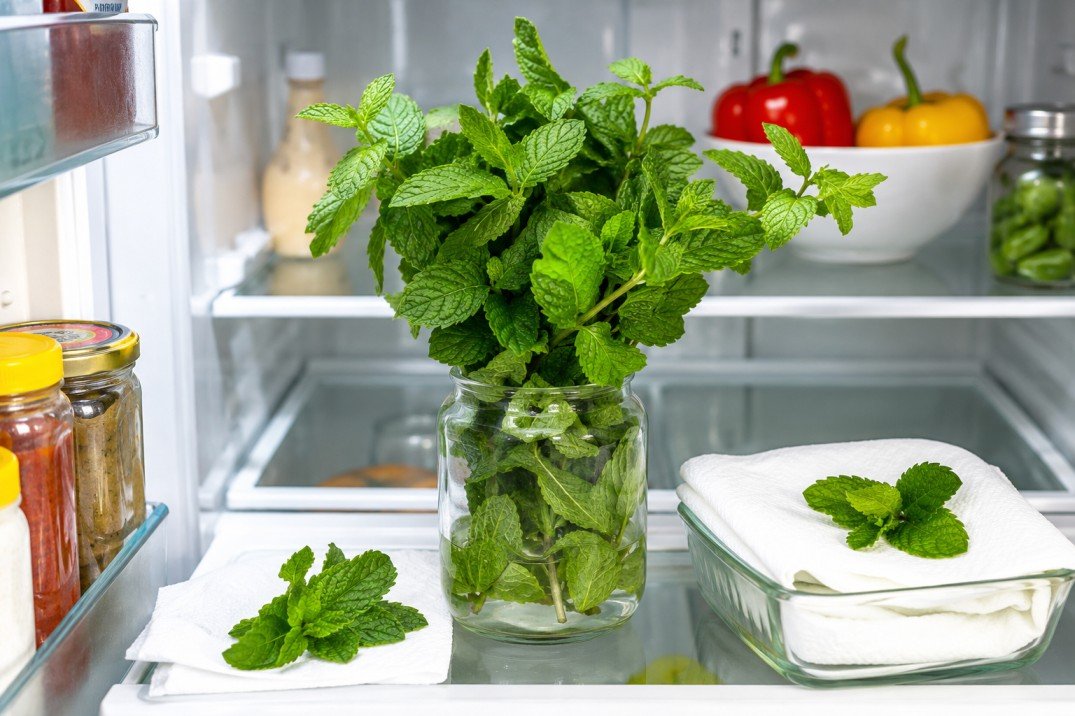
For most households, one of the easiest methods is to keep the mint stems in a glass or jar containing a small amount of water and then place the jar in the refrigerator with the leaves loosely covered.
Another practical option is to wrap dry mint gently in a paper towel and place it inside a suitable storage container or bag.
The best method depends on how quickly you plan to use the mint.
| Storage Method | Best For | Approximate Storage Life |
|---|---|---|
| Glass of water in refrigerator | Fresh mint for regular cooking | About 1–3 weeks |
| Paper towel method | Everyday kitchen use | About 1–2 weeks |
| Freezing | Long-term cooking use | Several months |
| Drying | Tea and dried seasoning | Months when properly stored |
| Room temperature | Very short-term use | Usually only a few days |
Actual shelf life can vary depending on the freshness of the mint when purchased, refrigerator conditions, moisture, and handling.
How to Choose Fresh Mint Before Storing It
Good storage begins at the market or grocery store.
Choose mint that has:
- Bright green leaves
- Firm stems
- A fresh minty aroma
- Crisp-looking leaves
- No visible mold
- No black or mushy areas
- Minimal yellowing
Avoid bunches that already look heavily wilted, slimy, or brown. Storage can slow deterioration, but it cannot restore herbs that are already spoiled.
If you grow mint at home, harvesting healthy stems and handling them gently can also help maintain quality.
Should You Wash Mint Before Storing It?
For longer refrigerator storage, it is generally better to avoid storing mint while it is soaking wet.
If the mint is dirty, wash it carefully and then dry it thoroughly before putting it away.
Excess water trapped around delicate leaves can encourage deterioration. On the other hand, mint should not be allowed to become completely dehydrated either. The goal is to maintain a controlled level of moisture without leaving the leaves wet.
If your mint is already clean, you can simply remove damaged leaves and store it.
Method 1: Store Mint Leaves in a Glass of Water
This is one of the simplest methods for keeping fresh mint hydrated.
What You Need
- Fresh mint
- A clean glass or jar
- Fresh water
- A loose food-safe bag or produce bag
- Refrigerator
Step-by-Step Method
- Remove yellow, damaged, or slimy leaves.
- Trim a small amount from the bottom of the stems.
- Add a few centimetres of clean water to a glass or jar.
- Place the mint stems into the water.
- Make sure the leaves are above the water rather than sitting submerged.
- Loosely cover the mint with a clean bag.
- Place the jar in the refrigerator.
- Check the water regularly and replace it when needed.
This method works because the stems can take up water while the cool environment slows down moisture loss and deterioration.
A water-and-loose-cover method is also commonly recommended for refrigerated fresh mint, with some sources reporting freshness for roughly two to three weeks under suitable conditions.
Method 2: Store Mint With Paper Towels
The paper towel method is useful if you do not have room for a standing jar.
How to Do It
- Sort through the mint and remove damaged leaves.
- If you wash the mint, dry it thoroughly.
- Place a clean paper towel on a flat surface.
- Spread the mint gently over the towel.
- Roll the mint loosely inside the towel.
- Place the wrapped mint in a suitable food-storage container or bag.
- Avoid crushing the leaves.
- Refrigerate it.
The paper towel helps manage excess surface moisture, which can otherwise contribute to deterioration.
Some storage guides recommend a slightly damp towel for mint, while others emphasize keeping the herb dry before wrapping. The important point is to avoid water pooling around the leaves.
Method 3: Use an Airtight Container Carefully
An airtight container can protect mint from being crushed and from excessive moisture loss, but it should not become a humid environment full of condensation.
If you notice water droplets collecting inside the container, remove the mint, dry the container, replace the damp towel if necessary, and repack the herb.
A container lined with a paper towel can be particularly useful for smaller quantities.
Method 4: Can You Store Mint Without a Refrigerator?
Yes, but room-temperature storage is mainly suitable for short-term use.
Trim the stems and place them in a glass of water. Keep the mint away from direct sunlight, hot appliances, and other sources of heat.
This can be useful when you plan to use the mint soon.
In hot Indian weather, however, refrigerator storage is usually more practical for extending freshness.
Traditional low-tech methods such as keeping herbs in water, a cool shaded area, or even naturally cooling containers have also been used to preserve fresh herbs without refrigeration.
How to Store Mint Leaves for Chutney
If you regularly make mint chutney, you may want to prepare the leaves in advance.
First, remove damaged leaves and wash the mint thoroughly. Dry it well and store the leaves in a clean container lined with a paper towel.
Do not grind the mint into chutney too early if you want the freshest possible flavor. Freshly prepared mint chutney generally has a brighter aroma and flavor than chutney stored for a long period.
You can also freeze chopped mint in small portions if you mainly use it for cooking.
Can You Freeze Fresh Mint Leaves?
Yes, mint can be frozen.
Freezing is useful when you have more mint than you can consume within a week or two.
However, frozen mint will not have exactly the same crisp texture as fresh mint after thawing. It is therefore better suited to cooked dishes, sauces, drinks, chutneys, and other preparations where texture is less important.
Method 1: Freeze Mint in Ice Cubes
- Wash the mint.
- Dry it thoroughly.
- Remove leaves from thick stems if desired.
- Chop the mint.
- Place small portions into an ice cube tray.
- Add water or another suitable freezing liquid.
- Freeze until solid.
- Transfer the cubes to a freezer-safe container or bag.
This makes portioning easy. You can take out only as much mint as you need.
Ice-cube freezing is particularly useful for drinks and recipes where a small amount of mint is required.
Method 2: Freeze Whole Mint Leaves
You can also freeze individual leaves.
Spread clean, dry leaves in a single layer on a tray and freeze them. Once firm, transfer them to a freezer-safe container.
This prevents the leaves from freezing into one large block and makes it easier to remove small portions.
Can You Dry Mint Leaves?
Yes. Drying is another excellent option when you have a large quantity of mint.
Dried mint is particularly useful for:
- Tea
- Raita
- Chaat
- Spice blends
- Marinades
- Soups
- Curries
- Homemade seasoning
Fresh mint has a brighter and more delicate flavor, while dried mint has a concentrated aroma that works especially well in certain Indian dishes.
For long-term storage, properly dried mint should be kept in a clean, dry, airtight container away from heat, moisture, and direct sunlight.
How to Tell If Mint Has Gone Bad
Do not use mint simply because you want to avoid wasting food. Check its condition first.
Discard mint if you notice:
- Visible mold
- Strong unpleasant smell
- Slimy leaves
- Extensive black or brown patches
- Extremely soft or decomposed stems
- Significant signs of decay
A few slightly wilted leaves are not necessarily the same as spoiled mint. If the herb is otherwise clean and free from signs of decay, it may still be usable depending on its condition.
When in doubt, it is safer to discard herbs showing clear spoilage.
Why Does Mint Turn Black?
Mint can darken for several reasons, including age, bruising, excess moisture, temperature stress, or deterioration.
Rough handling can damage delicate leaves, making them more vulnerable to browning.
To reduce the risk:
- Handle mint gently.
- Do not pack it too tightly.
- Keep excess water away from the leaves.
- Remove damaged leaves promptly.
- Keep refrigerated mint away from excessive heat.
Common Mistakes When Storing Mint
1. Storing Wet Mint in a Closed Container
Excess water trapped inside a container can accelerate deterioration.
2. Leaving Spoiled Leaves in the Bunch
One damaged or moldy leaf can contaminate surrounding leaves.
3. Crushing the Leaves
Compressed leaves deteriorate more quickly.
4. Keeping Mint in Direct Sunlight
Heat can cause rapid wilting.
5. Freezing Mint Without Drying It
Excess water can create large ice crystals and affect texture.
6. Keeping Mint Near Heat
Avoid storing it beside a stove, oven, or other warm appliance.
How Long Does Fresh Mint Last?
There is no single guaranteed shelf life because freshness depends on several factors.
A rough guide is:
Room temperature: Short-term use, often only a few days.
Refrigerated in water: Around one to three weeks under suitable conditions.
Paper towel storage: Around one to two weeks, depending on moisture and freshness.
Frozen: Several months for cooking and drinks.
Dried: Several months when completely dried and stored correctly.
These are practical estimates rather than guarantees. Always inspect mint before using it.
Best Mint Storage Method for Different Uses
For Mint Chutney
Use refrigerated fresh mint. It provides the best fresh aroma and flavor.
For Raita
Refrigerated fresh mint is ideal, although dried mint can also work well.
For Drinks
Fresh mint is best for garnish and aroma. Frozen mint cubes can be convenient for long-term storage.
For Curries
Frozen or dried mint can be useful.
For Tea
Fresh or properly dried mint can both work well.
10 Simple Tips to Keep Mint Fresh Longer
- Start with fresh, healthy mint.
- Remove damaged leaves before storage.
- Avoid storing mint while excessively wet.
- Keep stems hydrated when using the water method.
- Change the water regularly.
- Use paper towels to manage excess moisture.
- Do not crush the leaves inside containers.
- Keep refrigerated mint away from heat.
- Freeze extra mint before it begins to spoil.
- Always check for mold, slime, and unpleasant odors before use.
Frequently Asked Questions
How do you keep mint leaves fresh for a long time?
Place mint stems in a glass with a small amount of water and refrigerate them with a loose cover. Alternatively, dry the leaves and wrap them gently in paper towels before refrigeration.
Should fresh mint be refrigerated?
Yes, refrigeration is generally a good option when you want to keep fresh mint for longer than a few days.
Can I freeze fresh mint leaves?
Yes. Mint can be frozen whole, chopped, or in ice cubes. Frozen mint is best used in cooking, sauces, drinks, and other preparations where crisp texture is not essential.
Should I wash mint before storing it?
If the mint needs washing, clean it and then dry it thoroughly before storage. If it is already clean, you can store it without washing and wash the amount you need before use.
Why does my mint become slimy in the fridge?
Excess moisture, condensation, poor airflow, and deterioration can cause mint to become slimy. Remove damaged leaves and avoid storing wet mint in a tightly sealed environment.
How long does mint last in the refrigerator?
Depending on its initial freshness and storage method, fresh mint can last roughly one to three weeks in the refrigerator.
Can I store mint in water?
Yes. Trim the stems and place them in a glass or jar containing water. Keep the leaves above the water and refrigerate with a loose cover.
Can mint be dried at home?
Yes. Mint can be air-dried or dried using appropriate equipment. Once completely dry, store it in an airtight container away from moisture and direct sunlight.
What is the best way to store mint for drinks?
For immediate use, refrigerated fresh mint is best. For longer-term use, mint can be frozen in ice cubes and added to drinks when needed.
How do I know if mint is spoiled?
Look for mold, slime, strong unpleasant odors, extensive darkening, and mushy or decomposed leaves. Discard mint showing clear signs of spoilage.
Final Thoughts
Fresh mint is one of the easiest herbs to waste if it is simply left in its original packaging. Fortunately, a few simple changes can make a big difference.
For regular household use, the refrigerator water method is a convenient choice when you want to keep the stems hydrated. The paper towel method is useful when refrigerator space is limited, while freezing is better when you have a large quantity of mint that you cannot use soon.
If you buy fresh pudina regularly for chutney, raita, biryani, drinks, or everyday cooking, choosing the right storage method can help reduce waste and ensure that fresh mint is ready whenever you need it.
The key is simple: control moisture, avoid heat, protect the delicate leaves, and remove spoiled pieces quickly.