



Famous Food of Rajasthan: Explore the Authentic Flavours of Dal Baati Churma & Pyaz Kachori
Rajasthan is famous not only for its magnificent forts, royal palaces, colourful culture, and desert landscapes but also for its rich and distinctive cuisine. Famous food of Rajasthan reflects the state’s history, traditional lifestyle, local ingredients, and royal culinary heritage. From the iconic Dal Baati Churma to the crispy and spicy Pyaz Kachori, Rajasthani food offers a delicious combination of bold flavours, aromatic spices, and traditional cooking techniques.
Rajasthani cuisine is especially known for dishes that can be prepared with ingredients that are easily available in the region. Many traditional recipes were developed to suit the dry climate and limited availability of fresh vegetables. This is one reason why ingredients such as gram flour, lentils, wheat, spices, ghee, and dried vegetables have an important place in Rajasthani cooking.
Among the many traditional dishes, Dal Baati Churma and Pyaz Kachori have become two of the most recognizable foods associated with Rajasthan. Whether you are visiting Jaipur, Jodhpur, Udaipur, Jaisalmer, or another part of the state, trying authentic Rajasthani food can be one of the most memorable parts of your trip.
Dal Baati Churma: The Iconic Food of Rajasthan
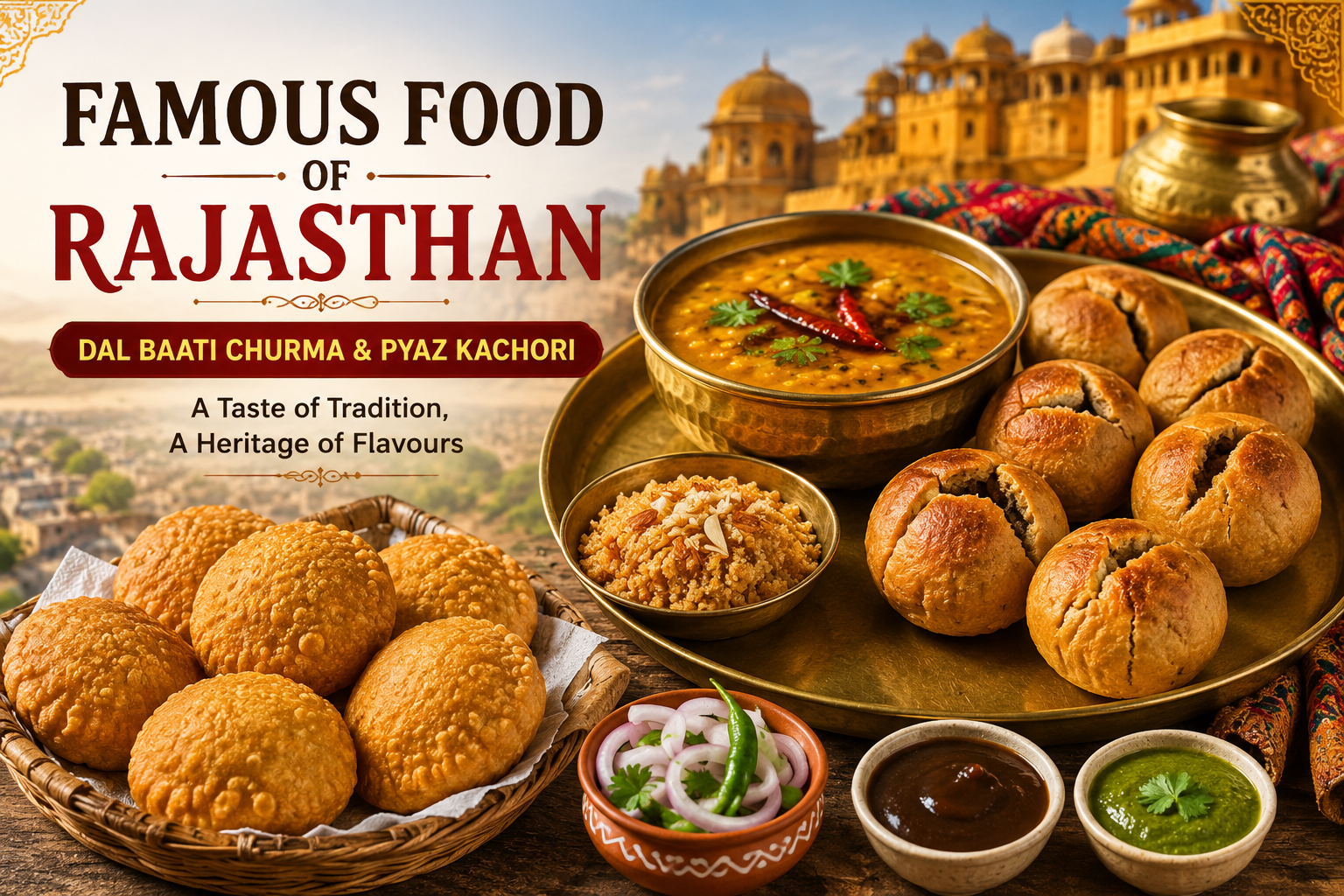
When discussing the famous food of Rajasthan, Dal Baati Churma deserves the top spot. This traditional combination is widely associated with Rajasthani cuisine and is loved for its comforting flavours and rich texture.
Dal Baati Churma consists of three important components: dal, baati, and churma.
What Is Baati?
Baati is a round wheat-based bread traditionally baked until it develops a firm, slightly crispy exterior. Traditionally, baati is cooked over a traditional fire, although modern kitchens often use ovens or other cooking methods.
Once cooked, baati is commonly broken into pieces and generously coated or served with ghee. The rich ghee adds aroma and softness to the otherwise crisp baati.
What Is Dal?
The dal served with baati is generally made using lentils and a combination of spices. Different households and restaurants may use different lentils and spice blends.
The dal provides a warm, comforting, and slightly spicy element that pairs perfectly with the richness of baati.
What Is Churma?
Churma is a sweet preparation traditionally made from crushed wheat-based baati or similar ingredients, combined with ghee and sugar or jaggery. Nuts and cardamom may also be added for additional flavour.
The sweetness of churma balances the savoury and spicy flavours of dal and baati, making the complete meal satisfying and memorable.
Why Is Dal Baati Churma So Popular?
Dal Baati Churma represents the traditional character of Rajasthan’s cuisine. It combines simple ingredients with rich flavours and demonstrates how traditional cooking can turn basic pantry staples into a complete and delicious meal.
Today, it is enjoyed at homes, restaurants, weddings, festivals, cultural events, and traditional Rajasthani food establishments.
Pyaz Kachori: Rajasthan’s Crispy & Spicy Favourite
Another popular entry on the list of famous food of Rajasthan is Pyaz Kachori.
Pyaz Kachori is a deep-fried, flaky pastry filled with a spicy onion mixture. It is particularly popular as a breakfast or evening snack and is often served with chutneys.
The outer layer is made from flour and is prepared in a way that gives the kachori its characteristic flaky and crispy texture. The filling usually contains cooked onions, spices, and herbs.
Depending on the recipe, ingredients such as fennel, cumin, coriander, chilli, and other Indian spices can be used to create a fragrant and spicy filling.
What Makes Pyaz Kachori Special?
The biggest attraction of Pyaz Kachori is its contrast of textures and flavours. The exterior is crisp and flaky, while the onion filling is soft, spicy, and aromatic.
It is commonly enjoyed with tamarind chutney, mint chutney, or other traditional accompaniments.
For many food lovers, enjoying a freshly prepared kachori with a hot cup of tea is an essential part of experiencing Rajasthan’s local food culture.
Other Famous Foods of Rajasthan
Although Dal Baati Churma and Pyaz Kachori are among the most popular dishes, Rajasthan offers a much wider range of traditional foods.
1. Gatte Ki Sabzi
Gatte Ki Sabzi is a popular Rajasthani curry made with gram-flour dumplings cooked in a spiced gravy. It is a good example of how Rajasthani cuisine makes creative use of ingredients that are easy to store.
2. Ker Sangri
Ker Sangri is a traditional preparation made using dried desert berries and beans. It is strongly associated with Rajasthan and is often prepared with spices and oil to create a distinctive, earthy flavour.
3. Mirchi Vada
Mirchi Vada is a popular spicy snack made by stuffing large green chillies, coating them in gram-flour batter, and frying them until crisp. It is especially popular as a street-food snack.
4. Mawa Kachori
Mawa Kachori is a sweet variation of kachori filled with a rich mixture often made using mawa, sugar, nuts, and aromatic spices. It is a popular choice for people who enjoy traditional Indian sweets.
5. Ghevar
Ghevar is a traditional Rajasthani sweet with a distinctive honeycomb-like texture. It is particularly popular during festivals and celebrations and is often topped with rabri, nuts, or other ingredients.
6. Bajra Roti
Bajra Roti is a traditional flatbread made from pearl millet flour. It is commonly enjoyed with vegetables, dal, ghee, chutney, or other traditional accompaniments.
7. Papad Ki Sabzi
Papad Ki Sabzi is another interesting Rajasthani preparation in which papad is cooked in a spiced gravy. It demonstrates the creativity of traditional Rajasthani home cooking.
Why Is Rajasthani Food So Unique?
The uniqueness of Rajasthani food comes from a combination of geography, history, culture, and culinary traditions.
The dry climate of Rajasthan historically influenced the use of ingredients and cooking techniques. Dried vegetables, pulses, grains, spices, and preserved ingredients became important components of traditional meals.
Another defining characteristic is the use of spices. Rajasthani cuisine can be bold and flavourful, with ingredients such as cumin, coriander, chilli, turmeric, fennel, and other spices frequently appearing in traditional recipes.
Ghee also plays an important role in many traditional dishes, adding richness and aroma.
Rajasthani Food and Royal Culinary Heritage
Rajasthan has a fascinating royal history, and its food culture reflects that heritage. The kitchens of the former princely states developed elaborate recipes using local ingredients alongside techniques influenced by royal cooking traditions.
Different regions and communities have their own versions of traditional dishes, which means that the experience of Rajasthani food can vary from one city to another.
From the royal atmosphere of Jaipur to the blue streets of Jodhpur and the lakes of Udaipur, food provides another way to experience the culture and history of Rajasthan.
Best Places to Experience Rajasthani Food
If you are travelling through Rajasthan, local restaurants, traditional food establishments, street-food markets, and cultural dining experiences can all provide opportunities to explore the cuisine.
Jaipur is particularly well known for its traditional food and street snacks. Visitors can explore Dal Baati Churma, Pyaz Kachori, Ghevar, and other local specialities.
Jodhpur is another excellent destination for food lovers, especially those interested in kachoris, mirchi vada, and other local snacks.
Udaipur offers traditional Rajasthani food alongside beautiful views and a memorable dining atmosphere.
Meanwhile, cities such as Jaisalmer, Bikaner, Ajmer, and Pushkar also offer opportunities to experience the diverse flavours of Rajasthan.
How to Enjoy Authentic Rajasthani Food
To get the most out of your culinary experience, try eating traditional dishes freshly prepared rather than choosing only familiar restaurant-style versions.
For a complete traditional meal, Dal Baati Churma is an excellent starting point. For snacks, Pyaz Kachori and Mirchi Vada are worth trying.
You can also explore regional sweets such as Ghevar and Mawa Kachori to finish your meal on a sweet note.
The Cultural Importance of Rajasthani Cuisine
Food in Rajasthan is more than just something to eat. It is closely connected with hospitality, festivals, family gatherings, celebrations, and cultural traditions.
Traditional meals are often served generously, and sharing food with guests is an important part of Rajasthani hospitality.
The cuisine also represents the resourcefulness of generations of cooks who developed flavourful dishes from locally available ingredients.
Final Thoughts
The famous food of Rajasthan is a wonderful reflection of the state’s vibrant culture, history, and traditional lifestyle. From the comforting combination of Dal Baati Churma to the crispy, spicy goodness of Pyaz Kachori, Rajasthani cuisine offers something for every food lover.
While Dal Baati Churma represents the hearty side of the cuisine, Pyaz Kachori showcases Rajasthan’s love for bold and flavourful snacks. Along with dishes such as Gatte Ki Sabzi, Ker Sangri, Mirchi Vada, Bajra Roti, Ghevar, and Mawa Kachori, these foods make Rajasthan a fascinating destination for anyone interested in Indian cuisine.
If you are planning a trip to Rajasthan, make sure your itinerary includes time to explore its traditional food. After all, one of the best ways to understand a place is through the flavours that have been passed down through generations.
Frequently Asked Questions (FAQ)
1. What is the most famous food of Rajasthan?
Dal Baati Churma is widely regarded as one of the most famous and iconic foods of Rajasthan. It is a traditional combination of dal, baked baati, and sweet churma.
2. What is Rajasthan famous for in food?
Rajasthan is famous for dishes such as Dal Baati Churma, Pyaz Kachori, Gatte Ki Sabzi, Ker Sangri, Mirchi Vada, Bajra Roti, Ghevar, and Mawa Kachori.
3. What is the famous street food of Rajasthan?
Some popular Rajasthani street foods include Pyaz Kachori, Mirchi Vada, Samosa, and various local snacks and sweets.
4. Is Dal Baati Churma sweet or spicy?
Dal Baati Churma combines different flavours. The dal is generally savoury and spiced, baati is rich and savoury, while churma is traditionally sweet. Together, they create a balanced meal.
5. What is Pyaz Kachori made of?
Pyaz Kachori is generally made with a flour-based outer layer and a spiced onion filling. The kachori is deep-fried until crisp and is commonly served with chutneys.
6. Which Rajasthani food is best for breakfast?
Pyaz Kachori is a popular choice for breakfast in Rajasthan. It is commonly enjoyed with chutney and tea.
7. What is a traditional Rajasthani sweet?
Ghevar and Mawa Kachori are among the well-known traditional sweets associated with Rajasthan. Churma is also an important sweet component of the traditional Dal Baati Churma meal.
8. Is Rajasthani food very spicy?
Rajasthani cuisine is known for bold flavours and the use of spices, but the level of spiciness varies by dish, recipe, region, and individual preference.
9. What makes Rajasthani cuisine different?
Rajasthani cuisine is distinctive because of its use of grains, pulses, spices, ghee, dried vegetables, and traditional cooking methods. The cuisine developed in a region where food preservation and locally available ingredients were particularly important.
10. What should I try first in Rajasthan?
If you are experiencing Rajasthani cuisine for the first time, start with Dal Baati Churma for a traditional meal and Pyaz Kachori for a popular snack. You can then explore dishes such as Gatte Ki Sabzi, Ker Sangri, Mirchi Vada, and Ghevar.
Disclaimer
This article is intended for general informational and educational purposes only. Food names, ingredients, preparation methods, flavours, and serving styles can vary between different regions, communities, restaurants, and households across Rajasthan.
The information presented here is a general overview of traditional Rajasthani cuisine and should not be considered a definitive representation of every regional or family recipe. Some dishes may also have different variations depending on local customs and available ingredients.
Readers should use their own discretion when selecting food, particularly if they have food allergies, dietary restrictions, medical conditions, or specific nutritional requirements. Ingredients and preparation methods may differ from one restaurant or food establishment to another, so it is advisable to confirm ingredients directly with the food provider when necessary.
This article does not guarantee the authenticity, taste, quality, hygiene, nutritional value, or availability of any particular dish or food establishment. Any travel, restaurant, or food-related decisions should be made based on current and independently verified information.
The purpose of this article is to celebrate and introduce readers to the rich culinary heritage of Rajasthan and encourage them to explore its traditional food responsibly.