







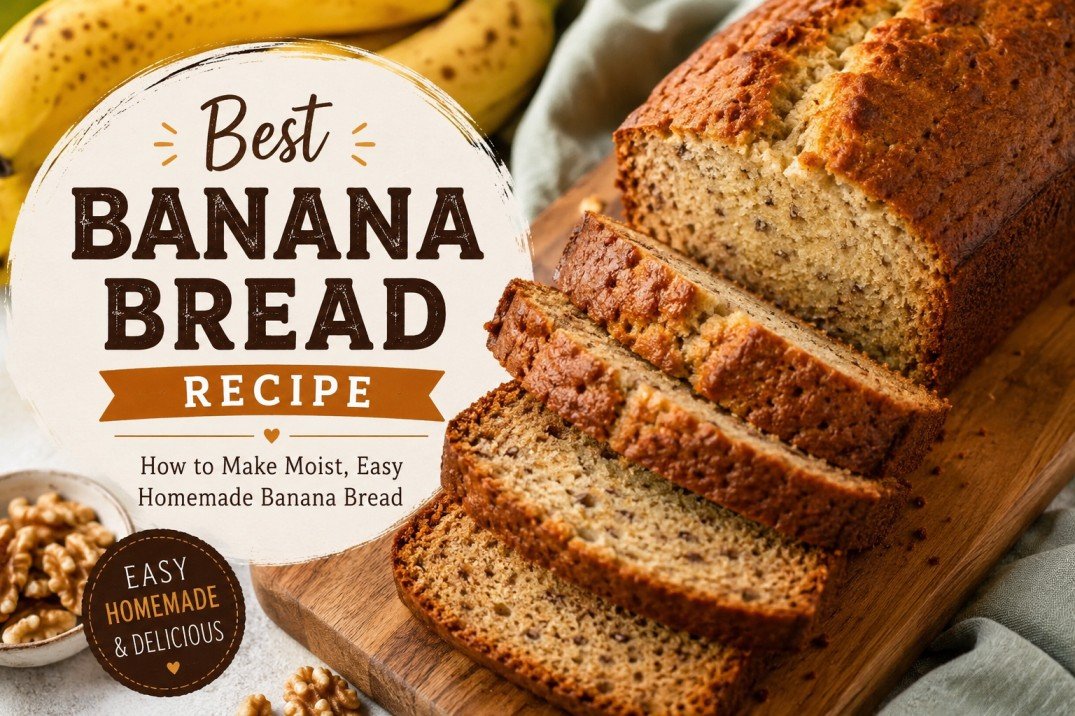
There’s something almost magical about the smell of banana bread baking in the oven — warm, sweet, a little nutty, and impossible to ignore. Whether you’re using up a bunch of spotty bananas sitting on your counter or craving a comforting weekend bake, this banana bread recipe is the one you’ll come back to again and again. It’s soft, moist, perfectly sweet, and simple enough for a beginner baker to nail on the first try.
In this guide, you’ll find everything you need to know — from picking the right bananas to troubleshooting common mistakes — so your loaf comes out perfect every single time.
Why You’ll Love This Banana Bread Recipe
This isn’t just another banana bread recipe — it’s designed to be foolproof. Here’s why it stands out:
- Incredibly moist crumb thanks to a combination of butter, oil, and sour cream (or yogurt).
- One-bowl simplicity — no stand mixer required, just a whisk and a spatula.
- Balanced sweetness that lets the banana flavor shine instead of getting buried in sugar.
- Forgiving and flexible — swap in mix-ins, adjust ripeness, or make it eggless with easy substitutions.
- Bakery-style top with that classic golden crust and a slight crack down the center.
Once you make this recipe, you’ll understand why banana bread remains one of the most beloved homemade bakes of all time.
Ingredients for Homemade Banana Bread
Great banana bread starts with the right ingredients, measured correctly. Here’s what you’ll need and why each one matters.
Best Bananas to Use
Not all bananas are created equal when it comes to baking. The best bananas for banana bread are ones that are heavily spotted or even mostly black on the outside. These bananas are sweeter, softer, and mash easily into a smooth puree that blends seamlessly into the batter. Avoid bananas that are still yellow with no brown spots — they lack the deep flavor and natural sweetness that makes banana bread taste rich and caramelized.
Why Overripe Bananas Are Best
As bananas ripen, their starches convert into natural sugars, which is why overripe bananas taste noticeably sweeter than fresh ones. This transformation also softens their texture, making them easier to mash and incorporate into batter. Overripe bananas also contain more moisture, which directly contributes to that soft, tender crumb everyone loves in a good banana bread. If your bananas aren’t ripe enough yet, there are quick tricks (covered later) to speed up the ripening process.
Flour and Other Dry Ingredients
All-purpose flour is the standard choice for banana bread, giving it structure without making it dense. You’ll also need baking soda (not baking powder, unless your recipe specifically calls for both) to help the bread rise and develop a light texture. A pinch of salt balances the sweetness and enhances the overall flavor, while a touch of cinnamon or nutmeg can add warmth if you like a spiced version.
Butter, Oil, and Sour Cream
The secret to ultra-moist banana bread lies in using a combination of fats rather than just one. Butter adds richness and flavor, oil keeps the bread moist even after refrigeration, and sour cream (or full-fat yogurt) adds tanginess while making the crumb incredibly tender. This trio works together to prevent the bread from drying out, even a few days after baking.
Sugar and Eggs
A mix of granulated sugar and brown sugar gives the best flavor — brown sugar in particular adds moisture and a subtle molasses note that pairs beautifully with banana. Eggs bind the ingredients together and add structure, while also contributing to that soft, cake-like texture. Room-temperature eggs blend more smoothly into the batter, so take them out of the fridge ahead of time if possible.
How to Make Banana Bread Step by Step
Now that you know your ingredients, let’s walk through the process from start to finish.
Prepare the Loaf Pan
Before you start mixing anything, preheat your oven and prepare your loaf pan. Grease a standard 9×5-inch loaf pan with butter or non-stick spray, then line it with parchment paper, leaving some overhang on the sides. This makes it incredibly easy to lift the finished bread out without sticking or tearing.
Mash the Bananas
Peel your ripe bananas and place them in a large mixing bowl. Using a fork or potato masher, mash them until mostly smooth, with just a few small lumps remaining for texture. Aim for about 1.5 to 2 cups of mashed banana, which usually comes from 3 to 4 medium bananas.
Mix the Wet Ingredients
In the same bowl as your mashed bananas, whisk in the melted butter, oil, sour cream, eggs, and both sugars. Whisk until the mixture looks smooth and well combined. Add in your vanilla extract at this stage too, as it blends best into the wet ingredients before the flour goes in.
Combine the Dry Ingredients
In a separate bowl, whisk together the flour, baking soda, salt, and cinnamon (if using). Whisking the dry ingredients separately ensures even distribution of the leavening agent, so you don’t end up with pockets of untouched baking soda in your final loaf.
Mix the Batter Without Overmixing
Gently fold the dry ingredients into the wet mixture using a spatula. Mix just until you no longer see streaks of flour — the batter should look thick and slightly lumpy. This is a crucial step, so take your time and avoid the temptation to stir vigorously.
Pour the Batter Into the Pan
Pour the batter into your prepared loaf pan and smooth the top with a spatula. If you’re adding mix-ins like chocolate chips or nuts, sprinkle a few extra on top before baking for a bakery-style finish.
Bake the Banana Bread
Bake in a preheated oven at 350°F (175°C) for about 55 to 65 minutes. Every oven is different, so start checking around the 50-minute mark. The top should be golden brown, and a toothpick inserted into the center should come out clean or with just a few moist crumbs attached.
Cool Before Slicing
Let the bread cool in the pan for about 10-15 minutes, then use the parchment overhang to lift it out onto a wire rack. Allow it to cool for at least an hour before slicing — cutting too early can cause the loaf to fall apart or feel gummy in the center.
How to Make Moist Banana Bread
Moisture is the defining quality of great banana bread, and there are a few key techniques to lock it in. First, use very ripe bananas, since their higher moisture and sugar content directly improves texture. Second, combine multiple fats — butter for flavor and oil or sour cream for lasting moisture — rather than relying on just one. Third, avoid overbaking; pull the loaf out as soon as the toothpick test shows just a few moist crumbs, since a few extra minutes in the oven can dry it out quickly. Finally, storing the bread properly (covered below) helps it stay moist for days after baking.
How Ripe Should Bananas Be for Banana Bread?
The ideal bananas for banana bread are heavily speckled with brown spots, or even mostly black on the peel. At this stage, they’re overly ripe for eating on their own but perfect for baking. If your bananas are still yellow and firm, you can speed up ripening by baking them (unpeeled) at 300°F for about 15-20 minutes until the skins turn black, then let them cool before using. This method mimics natural ripening and works in a pinch when you don’t have time to wait several days.
Common Banana Bread Mistakes to Avoid
Even a simple recipe like banana bread can go wrong if a few key details are overlooked. Here are the most common pitfalls.
Using Underripe Bananas
Underripe bananas are starchy rather than sweet, and they don’t mash down as smoothly. This results in a loaf that’s less flavorful and can even affect the final texture, making it denser than intended.
Overmixing the Batter
Once flour is added, overmixing develops gluten, which can make banana bread tough and rubbery instead of soft and tender. Always mix just until the flour disappears into the batter.
Using Too Much Banana
While it’s tempting to throw in every last banana, too much mashed banana can throw off the ratio of wet to dry ingredients, leading to a soggy, undercooked center. Stick to the recommended amount for the best results.
Measuring Flour Incorrectly
Scooping flour directly from the bag with a measuring cup often packs in too much, resulting in dense, dry bread. Instead, spoon the flour into your measuring cup and level it off with a knife, or better yet, use a kitchen scale for precision.
Cutting the Bread Too Soon
Slicing into banana bread while it’s still warm can make it seem gummy or underbaked, even when it’s perfectly done. Letting it rest and cool completely allows the crumb structure to set properly.
Easy Banana Bread Variations
Once you’ve mastered the classic recipe, it’s fun to switch things up. Here are some popular variations to try.
Chocolate Chip Banana Bread
Fold in about 3/4 to 1 cup of semi-sweet or dark chocolate chips into the batter for a rich, dessert-like twist. Save a small handful to sprinkle on top before baking for that irresistible bakery-style look.
Banana Nut Bread
Add 1/2 to 3/4 cup of chopped walnuts or pecans for crunch and nutty flavor. Toasting the nuts beforehand deepens their flavor even further.
Eggless Banana Bread
To make this recipe eggless, replace each egg with a flax egg (1 tablespoon ground flaxseed mixed with 3 tablespoons water, rested for 5 minutes) or 1/4 cup of unsweetened applesauce. The texture will be very similar, with just a slightly denser crumb.
Whole Wheat Banana Bread
Swap out half or all of the all-purpose flour for whole wheat flour for a heartier, more rustic loaf. Since whole wheat flour absorbs more moisture, you may need to add a tablespoon or two of extra milk or yogurt to keep the batter from becoming too thick.
How to Store Banana Bread
Once fully cooled, store banana bread at room temperature in an airtight container or wrapped tightly in plastic wrap. It will stay fresh for about 3-4 days on the counter. If your kitchen is particularly warm or humid, storing it in the refrigerator can extend its freshness up to a week, though it may slightly firm up the texture — simply let it come to room temperature or warm it slightly before serving.
Can You Freeze Banana Bread?
Yes, banana bread freezes beautifully, making it a great make-ahead treat. Wrap the fully cooled loaf (or individual slices) tightly in plastic wrap, then place it in a freezer-safe bag or airtight container. It will keep well in the freezer for up to 3 months. For convenience, freezing individual slices allows you to thaw just what you need instead of defrosting the entire loaf at once.
How to Reheat Banana Bread
To reheat a slice, simply pop it in the microwave for about 15-20 seconds until warm and soft. If reheating from frozen, let the slice thaw at room temperature first, or microwave it in short 10-second bursts. For a slightly crisp exterior, you can also warm slices in a toaster oven or a regular oven at 300°F for about 5-10 minutes.
Frequently Asked Questions About Banana Bread
Can I use frozen bananas?
Yes, frozen bananas work wonderfully in banana bread and are actually a great way to use up bananas before they go to waste. Thaw them completely first, then drain off any excess liquid before mashing, since frozen bananas release extra moisture as they thaw.
Can I make banana bread without eggs?
Absolutely. As mentioned in the variations section, a flax egg or unsweetened applesauce can easily replace eggs while keeping the bread moist and well-structured.
Why is my banana bread dry?
Dry banana bread is usually the result of overbaking, using too much flour, or not including enough fat or moisture-rich ingredients like sour cream. Double-check your measurements and pull the loaf out as soon as the toothpick test passes.
Why is my banana bread soggy in the middle?
A soggy or gummy center is often caused by underbaking, using too much mashed banana, or slicing into the loaf before it has fully cooled. If this happens, try baking a few minutes longer next time and let it rest properly before cutting.
How long does homemade banana bread last?
Stored properly at room temperature, banana bread lasts about 3-4 days. In the refrigerator, it can last up to a week, and in the freezer, it stays fresh for up to 3 months.
Can I make banana bread without a mixer?
Yes, this recipe is specifically designed to be made without any electric mixer. A large bowl, a whisk, and a spatula are all you need — the batter comes together easily by hand.
Why did my banana bread sink in the middle?
This is one of the most searched banana bread problems, and it usually comes down to a handful of causes: an oven temperature that’s too high or too low, overmixing the batter, using too much mashed banana or too few eggs, opening the oven door mid-bake, or using expired baking soda. Too little leavening leaves the batter too weak to hold its structure, while too much causes it to rise fast and then collapse as it cools. To avoid this, measure your bananas accurately, keep your oven door shut while baking, use fresh baking soda, and let the loaf finish baking fully before testing it.
How many bananas equal one cup of mashed banana?
As a general rule, two medium bananas make about one cup of mashed banana, while three medium bananas give you roughly 1 to 1¼ cups. Since banana sizes vary a lot, it’s more reliable to measure with a measuring cup after mashing rather than counting bananas. Sticking closely to the amount your recipe calls for helps prevent a dense, gummy, or sunken loaf.
Can I use baking powder instead of baking soda in banana bread?
Baking soda and baking powder aren’t directly interchangeable because baking soda needs an acidic ingredient (like sour cream, yogurt, or the banana itself) to activate, while baking powder already contains its own acid. If a recipe calls for baking soda, swapping in baking powder can affect the rise and leave an odd aftertaste, so it’s best to follow what the recipe specifies rather than substituting on the fly.
What size loaf pan should I use for banana bread?
A standard 9×5-inch loaf pan is the go-to size for most banana bread recipes and gives you that classic tall, domed loaf. Using a much smaller pan can cause the batter to overflow or collapse since it rises higher than the pan can support, while a larger pan will give you a shorter, wider loaf that may bake faster than the recipe states.
How do I ripen bananas quickly for banana bread?
If your bananas aren’t ripe enough, place them (unpeeled) on a baking sheet in an oven preheated to 300°F and bake for about 15-20 minutes, until the peels turn dark and glossy. Let them cool completely before peeling and mashing. This quick-ripening trick softens the bananas and boosts their natural sugars, mimicking what happens over several days of natural ripening on the counter.
Why is my banana bread gummy or wet even after baking the full time?
A gummy texture even after a full bake time is often a sign of too much moisture relative to flour — usually from overripe, oversized bananas or inaccurate flour measurements. It can also happen if the loaf is sliced before it’s fully cooled, since the crumb needs time to finish setting after it comes out of the oven. If this keeps happening, try reducing the mashed banana slightly, spooning and leveling your flour, and letting the loaf rest for a full hour before cutting.
Final Tips for the Perfect Homemade Banana Bread
Banana bread is one of those recipes that rewards patience and attention to small details more than fancy equipment or techniques. Use bananas that are as ripe as possible, measure your flour carefully, and resist the urge to overmix once the dry ingredients go in. Let the loaf cool fully before slicing so the texture has time to set, and don’t be afraid to experiment with mix-ins once you’ve nailed the base recipe.
With this guide in hand, you’re well equipped to bake a loaf that’s moist, flavorful, and guaranteed to disappear fast — whether it’s for breakfast, an afternoon snack, or a warm slice with coffee at the end of the day.