






Table of Contents
ToggleHow to Find Restaurants That Match Your Dietary Preferences
Finding a restaurant that fits your dietary needs is much easier today than it was a few years ago. Whether you follow a vegetarian, vegan, gluten-free, keto, halal, kosher, dairy-free, or allergy-friendly diet, many restaurants now offer menus designed for different lifestyles and health requirements.
However, not every restaurant provides accurate dietary information, and choosing the wrong place can result in a disappointing—or even unsafe—dining experience. That’s why it’s important to research before visiting.
This guide explains practical ways to find restaurants that match your dietary preferences while helping you enjoy delicious meals with confidence.
Why Finding the Right Restaurant Matters
Your dietary choices may be based on:
- Health conditions
- Food allergies
- Religious beliefs
- Ethical reasons
- Weight management
- Fitness goals
- Personal taste
Choosing restaurants that understand these needs ensures:
- Better dining experiences
- Safer food preparation
- More menu choices
- Less stress while ordering
- Better value for your money
Identify Your Dietary Requirements First
Before searching for restaurants, know exactly what you’re looking for.
Common dietary preferences include:
Vegetarian
No meat, poultry, or seafood.
Vegan
No animal products including:
- Meat
- Eggs
- Dairy
- Honey
Gluten-Free
Suitable for people with gluten intolerance or celiac disease.
Avoid:
- Wheat
- Rye
- Barley
Keto
Focuses on:
- Healthy fats
- Moderate protein
- Very low carbohydrates
Dairy-Free
Avoid:
- Milk
- Cheese
- Butter
- Cream
Halal
Food prepared according to Islamic dietary guidelines.
Kosher
Food prepared according to Jewish dietary laws.
Allergy-Friendly
Suitable for people avoiding:
- Peanuts
- Tree nuts
- Shellfish
- Soy
- Eggs
- Dairy
Knowing your exact needs helps narrow your restaurant search.
Search Restaurants Online
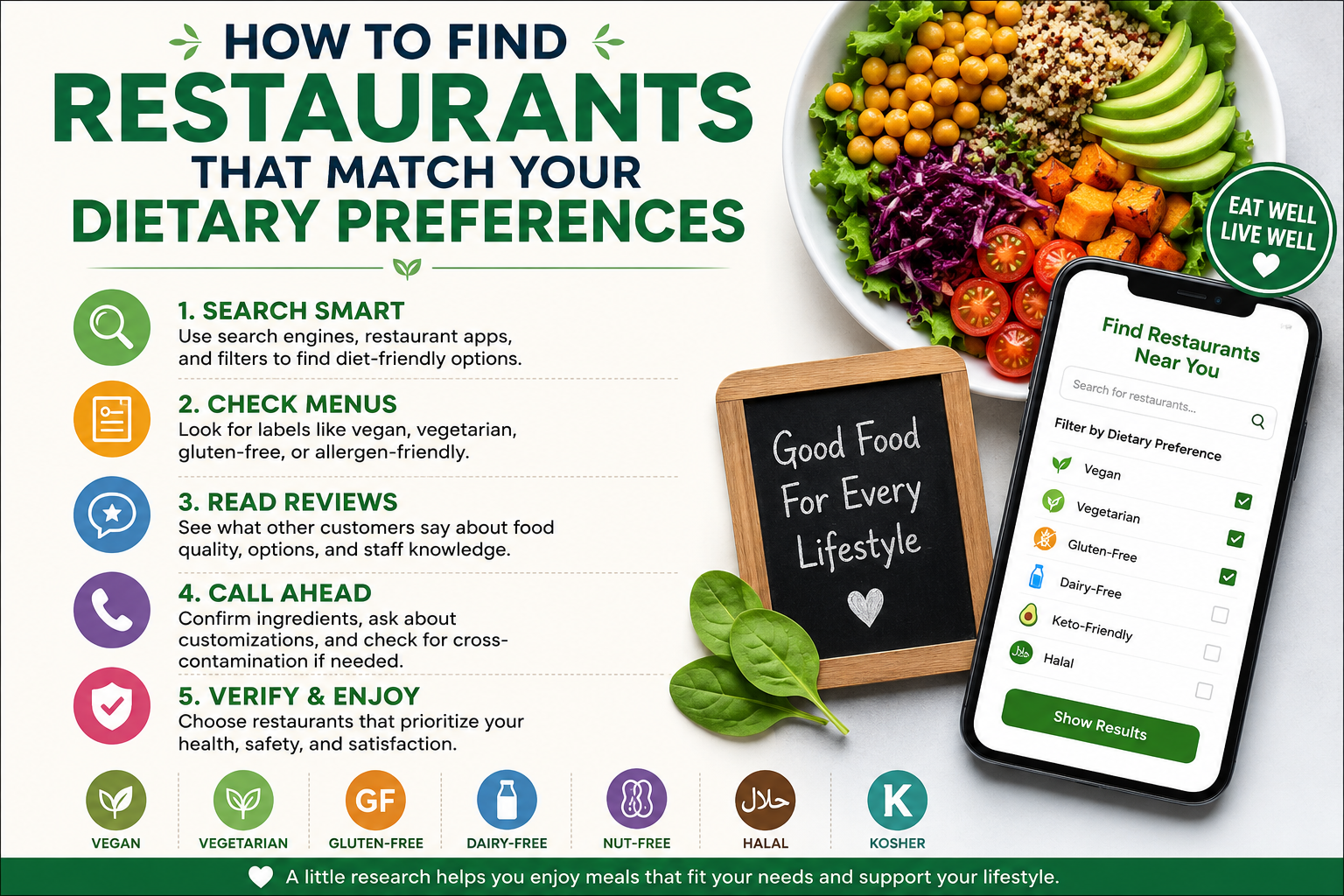
Start with search engines.
Try searches like:
- Vegan restaurants near me
- Gluten-free restaurants
- Halal restaurants nearby
- Best vegetarian restaurants
- Allergy-friendly restaurants
Most search results include:
- Ratings
- Reviews
- Menus
- Photos
- Opening hours
Check Restaurant Menus Before Visiting
A quality restaurant usually publishes its menu online.
Look for labels like:
- Vegan
- Vegetarian
- Gluten-Free (GF)
- Dairy-Free (DF)
- Nut-Free
- Low Carb
Restaurants that clearly label menu items generally understand dietary needs better.
Read Customer Reviews Carefully
Reviews often reveal details that menus don’t mention.
Look for comments about:
- Vegan options
- Portion size
- Cross-contamination
- Staff knowledge
- Food quality
- Customization
Recent reviews are usually the most helpful.
Call the Restaurant
If your dietary needs are strict, calling ahead can save time.
Ask questions such as:
- Do you have vegan options?
- Can dishes be made gluten-free?
- Is there a separate cooking area?
- How do you handle food allergies?
- Can ingredients be customized?
Helpful staff usually indicate good customer service.
Use Restaurant Finder Apps
Many food apps allow filtering restaurants by dietary preferences.
Useful filters include:
- Vegan
- Vegetarian
- Gluten-Free
- Healthy
- Halal
- Organic
These filters make searching much faster.
Check Ingredient Transparency
Good restaurants openly share:
- Ingredients
- Nutritional facts
- Allergens
- Calories
Transparent restaurants build greater customer trust.
Look for Allergy Information
Food allergies require extra caution.
Responsible restaurants often provide allergen charts listing:
- Milk
- Eggs
- Peanuts
- Soy
- Tree nuts
- Wheat
- Fish
- Shellfish
Always confirm with staff if you have severe allergies.
Check for Customizable Meals
Many restaurants allow modifications such as:
- No cheese
- No butter
- Extra vegetables
- Plant-based protein
- Gluten-free bread
- Dairy-free milk
Customization makes dining easier for different dietary needs.
Explore Healthy Restaurant Chains
Many restaurant chains now offer healthy menus with:
- Fresh salads
- Grilled proteins
- Whole grains
- Plant-based meals
- Low-calorie dishes
Chain restaurants often provide detailed nutrition information online.
Follow Food Bloggers and Influencers
Local food bloggers frequently review restaurants from a dietary perspective.
They often cover:
- Vegan cafés
- Healthy restaurants
- Keto-friendly menus
- Gluten-free bakeries
- Budget-friendly healthy dining
Their recommendations can help you discover hidden gems.
Join Online Communities
Online communities are excellent sources of honest recommendations.
People often share:
- Best vegan restaurants
- Allergy-safe places
- Vegetarian cafés
- Healthy meal options
- Restaurant experiences
Community advice is often more detailed than standard reviews.
Look for Restaurant Certifications
Some restaurants display certifications indicating dietary standards.
Examples include:
- Certified Gluten-Free
- Vegan Certified
- Halal Certified
- Kosher Certified
These certifications add credibility, though it’s still wise to verify details.
Consider Cross-Contamination
This is especially important for people with:
- Celiac disease
- Severe allergies
Ask whether the restaurant uses:
- Separate fryers
- Separate grills
- Separate preparation areas
- Clean utensils
Cross-contact can occur even if ingredients are safe.
Signs of a Great Dietary-Friendly Restaurant
Look for restaurants that:
- Clearly label dietary options
- Welcome special requests
- Understand food allergies
- Use fresh ingredients
- Have knowledgeable staff
- Maintain clean kitchens
- Receive positive customer reviews
- Offer customizable meals
These are strong indicators of a reliable dining experience.
Common Mistakes to Avoid
Avoid these common errors:
- Assuming every salad is vegetarian
- Believing “gluten-friendly” means gluten-free
- Ignoring allergy warnings
- Not checking recent reviews
- Skipping ingredient verification
- Forgetting to ask about cooking oils
- Trusting outdated menus
A few extra questions can prevent unpleasant surprises.
Tips for Dining Out With Dietary Restrictions
- Research before visiting.
- Save restaurants that meet your needs.
- Inform staff about allergies or restrictions.
- Double-check ingredients.
- Read menus carefully.
- Ask for modifications when needed.
- Keep emergency medication with you if you have severe allergies.
Planning ahead makes dining out more enjoyable and worry-free.
Conclusion
Finding restaurants that match your dietary preferences doesn’t have to be difficult. With online menus, customer reviews, restaurant apps, and direct communication with staff, you can confidently choose places that suit your lifestyle and health needs.
Whether you’re vegan, vegetarian, gluten-free, keto, halal, kosher, or managing food allergies, taking a few minutes to research before dining can help you enjoy safer, healthier, and more satisfying meals.
Frequently Asked Questions (FAQs)
1. How can I find restaurants that match my dietary preferences?
Search online, read customer reviews, check menus, use restaurant finder apps, and contact the restaurant to confirm dietary accommodations.
2. Are online restaurant menus always accurate?
Not always. Menus can change, so it’s a good idea to call ahead if you have strict dietary requirements or allergies.
3. What should I ask a restaurant if I have food allergies?
Ask about ingredients, allergen handling, cross-contamination prevention, separate cooking areas, and whether dishes can be customized safely.
4. How do I know if a restaurant is truly vegan-friendly?
Look for clearly labeled vegan menu items, plant-based options, positive reviews from vegan diners, and staff who understand vegan dietary requirements.
5. Is “gluten-friendly” the same as “gluten-free”?
No. “Gluten-friendly” may still involve cross-contamination, while “gluten-free” should meet stricter preparation standards.
6. Can restaurants customize meals for dietary restrictions?
Many restaurants can modify dishes by removing ingredients or substituting alternatives, but it’s best to confirm before ordering.
7. What are the best ways to verify halal or kosher options?
Check for official certifications, review the menu, and ask the restaurant directly about their sourcing and preparation methods.
8. Why are customer reviews important when choosing a restaurant?
Reviews often provide real experiences about food quality, service, allergy awareness, menu variety, and how well the restaurant accommodates dietary needs.
9. Should I trust restaurant apps for dietary information?
Restaurant apps are helpful for discovering options, but always verify details with the restaurant if your dietary needs are strict.
10. What is the safest way to dine out with severe food allergies?
Research the restaurant, inform the staff about your allergy, confirm preparation methods, ask about cross-contamination, and carry emergency medication if prescribed.
Disclaimer
The information in this article is for general educational and informational purposes only. Restaurant menus, ingredients, preparation methods, and dietary accommodations may change without notice. Always verify ingredient details, allergen information, and food preparation practices directly with the restaurant before ordering, especially if you have food allergies, medical conditions, or strict dietary requirements. This article should not be considered medical, nutritional, or professional dietary advice. Always consult a qualified healthcare professional or registered dietitian for personalized guidance regarding your dietary needs.