







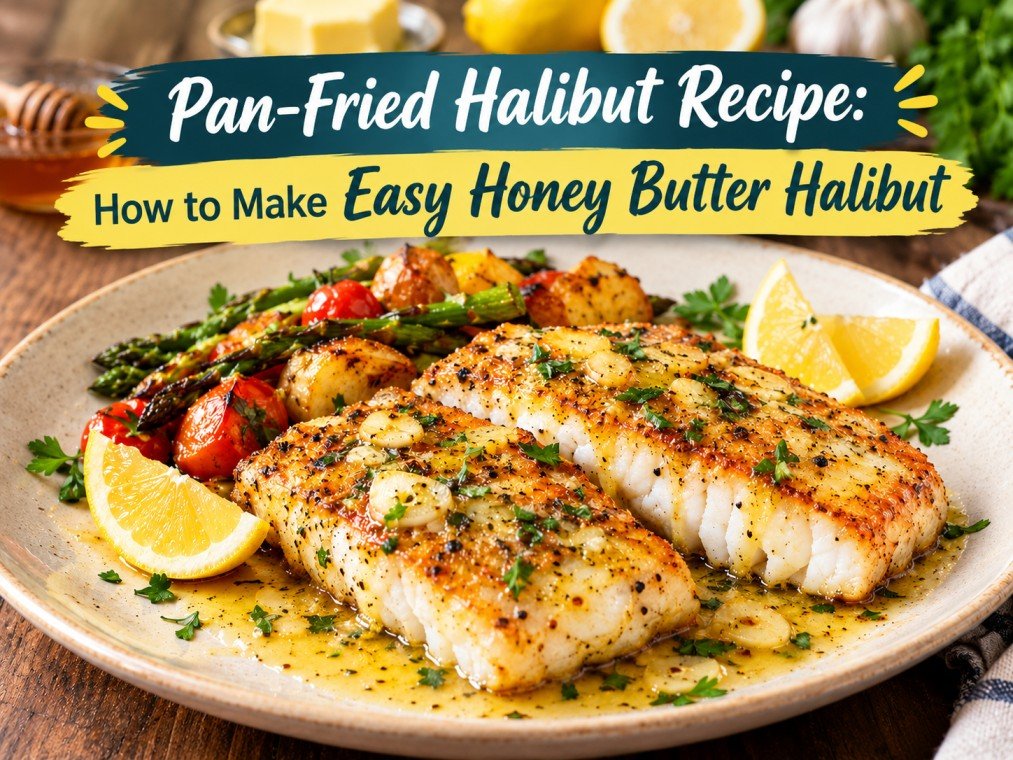
A well-made pan-fried halibut recipe is one of the easiest ways to prepare a delicious seafood dinner at home. Halibut has a naturally mild flavor and firm texture, making it ideal for skillet cooking. When cooked properly, the fish develops a lightly golden exterior while remaining tender, moist, and flaky inside.
This easy pan-fried halibut combines the fish with butter, honey, lemon, garlic, and simple seasonings. The result is a flavorful dish with a rich, buttery taste, a touch of sweetness, and bright citrus notes.
Whether you’re preparing a quick weeknight meal or looking for a simple seafood recipe for guests, this skillet halibut is easy to prepare and pairs well with vegetables, rice, potatoes, or a fresh salad.
What Is Pan-Fried Halibut?
Pan-fried halibut is fresh halibut fillets cooked in a hot skillet with butter, oil, or another cooking fat. The direct heat creates a lightly browned surface while the inside cooks until tender and flaky.
Halibut is a firm white fish with a mild flavor. Because it does not have an overpowering fishy taste, it works well with sauces and seasonings such as lemon, garlic, butter, herbs, and honey.
The most important part of cooking halibut is avoiding overcooking. Once the center is just cooked through, the fish should be removed from the heat to preserve its moisture.
Why You’ll Love This Pan-Fried Halibut Recipe
This recipe is especially useful when you want a flavorful seafood meal without complicated preparation.
- Quick: The complete dish can be prepared in around 20 minutes.
- Simple ingredients: You only need a handful of everyday ingredients.
- Skillet-friendly: No oven or complicated equipment is required.
- Mild flavor: Halibut works well with many sauces and seasonings.
- Tender texture: Proper cooking keeps the fish flaky and moist.
- Versatile: Serve it with vegetables, rice, potatoes, pasta, or salad.
Pan-Fried Halibut Recipe at a Glance
Prep Time: About 5 minutes
Cook Time: About 15 minutes
Total Time: About 20 minutes
Servings: About 3
Cooking Method: Skillet
Main Ingredient: Halibut fillets
Flavor: Buttery, lemony, garlicky, lightly sweet
Ingredients You’ll Need
Halibut Fillets
Choose fresh halibut fillets with a firm texture. Try to select pieces with a similar thickness so they cook evenly.
Butter
Butter adds richness and helps create a flavorful golden surface. It also forms the base of the sauce.
Honey
Honey adds subtle sweetness and works especially well with lemon and butter.
Fresh Lemon
Lemon juice balances the richness of butter and gives the finished dish a bright, fresh flavor.
Garlic
Fresh garlic adds savory depth to the sauce and complements the mild flavor of halibut.
Soy Sauce
A small amount of soy sauce provides saltiness and umami, helping balance the sweet and buttery ingredients.
Black Pepper
Freshly ground black pepper adds mild spice and enhances the flavor of the fish.
Cooking Fat
Additional butter or a small amount of cooking oil can be used in the skillet depending on your preference.
How to Cook Halibut Perfectly in a Pan
Step 1: Pat the Halibut Dry
Use paper towels to thoroughly pat the halibut fillets dry.
This step is easy to overlook, but removing surface moisture helps the fish brown properly. Excess moisture can cause the fish to steam rather than sear.
Step 2: Season the Fish
Season both sides of the halibut lightly with black pepper. You can keep the seasoning simple because the honey butter sauce provides plenty of flavor.
Avoid heavily salting the fish if you’re using soy sauce in the sauce.
Step 3: Prepare the Honey Butter Sauce
In a small bowl, combine butter, honey, fresh lemon juice, minced garlic, and soy sauce.
Stir until the ingredients are well combined.
The sauce should have a balanced flavor. The butter provides richness, honey adds sweetness, lemon adds acidity, and garlic and soy sauce provide savory notes.
Step 4: Heat the Skillet
Place a heavy skillet over medium-high to high heat.
Allow the skillet to heat properly before adding the fish. A hot pan helps the halibut develop a golden surface.
Add a small amount of butter or cooking fat.
Step 5: Coat the Halibut
Brush some of the honey butter mixture over the halibut.
Keep some sauce aside for later rather than using everything at once.
This is particularly important because honey can brown quickly in a very hot skillet.
Step 6: Place the Fish in the Pan
Carefully place the halibut fillets into the hot skillet.
You should hear a gentle sizzling sound when the fish touches the pan.
Avoid moving the fillets immediately after placing them in the skillet. Allow the surface to begin browning.
Step 7: Cook the First Side
Cook the fish until the underside develops a lightly golden-brown crust.
The exact time will depend on the thickness of the fillet.
Avoid repeatedly flipping the fish because halibut can break apart if handled too much.
Step 8: Turn the Halibut
Using a wide fish spatula, carefully turn each fillet.
Continue cooking on the second side and reduce the heat to medium if necessary.
At this stage, pay close attention to the sauce. If the pan becomes too hot, the honey and butter can brown too quickly.
Step 9: Finish Cooking
Continue cooking until the center of the halibut becomes opaque and the fish flakes easily when gently tested with a fork.
If the fillets are thick, they may need additional cooking time.
For the most accurate result, check the internal temperature with a food thermometer rather than relying only on cooking time.
Step 10: Add the Remaining Sauce
Add or brush the remaining honey butter mixture toward the end of cooking.
Allow it to warm through and coat the fish.
Do not let the sauce burn. If necessary, lower the heat before adding the final portion.
Step 11: Rest and Serve
Transfer the cooked halibut to plates and let it rest briefly.
Spoon the remaining pan sauce over the fish and add a fresh squeeze of lemon before serving.
How Do You Know When Halibut Is Cooked?
The easiest visual sign is that the fish becomes opaque and flakes easily when gently pressed with a fork.
The center should no longer look translucent or raw.
Because halibut fillets vary in thickness, cooking time is not identical for every piece. A thicker fillet will naturally take longer than a thin one.
A food thermometer provides the most reliable way to check doneness. Fish is generally considered safely cooked at an internal temperature of 145°F (63°C).
Avoid continuing to cook the fish after it has reached doneness, as overcooked halibut can become dry.
How to Get Golden-Brown Pan-Fried Halibut
Getting a beautiful golden exterior depends on a few simple techniques.
Dry the Fish Thoroughly
Moisture is one of the biggest obstacles to good browning. Pat the fish dry before seasoning.
Use a Properly Heated Pan
A preheated skillet creates better contact between the fish and the cooking surface.
Don’t Overcrowd the Pan
Give each fillet enough space. Overcrowding can lower the temperature and prevent proper browning.
Don’t Flip Too Early
Let the first side cook long enough to develop a crust before turning.
Control the Heat
Start hot enough to sear, but reduce the temperature if the butter or honey begins to darken too quickly.
What Does Pan-Fried Halibut Taste Like?
Halibut has a mild, clean flavor with a firm, meaty texture.
The honey butter sauce gives this version a richer flavor. Butter contributes creaminess, honey adds a mild sweetness, lemon provides acidity, and garlic adds savory depth.
Soy sauce contributes a subtle salty umami note.
If you prefer a less sweet fish recipe, you can reduce the amount of honey and emphasize lemon, garlic, and herbs instead.
What to Serve With Pan-Fried Halibut
Pan-fried halibut works with a wide variety of side dishes.
Rice
Steamed white rice, brown rice, jasmine rice, or a simple herb rice can soak up the flavorful sauce.
Roasted Potatoes
Crispy roasted potatoes provide a delicious contrast to the tender fish.
Mashed Potatoes
Creamy mashed potatoes pair particularly well with buttery pan sauce.
Asparagus
Roasted or sautéed asparagus adds freshness and a slightly crisp texture.
Green Beans
Garlic green beans make a simple vegetable side for halibut.
Broccoli
Roasted broccoli works well with the rich honey butter flavor.
Fresh Salad
A simple green salad with lemon vinaigrette can balance the richness of the fish.
Easy Variations for Pan-Fried Halibut
Lemon Garlic Halibut
Reduce the honey and increase the lemon and garlic for a brighter, more savory flavor.
Spicy Honey Halibut
Add red pepper flakes, cayenne, or another mild chili seasoning to introduce heat.
Herb Butter Halibut
Finish the fish with fresh parsley, dill, chives, or thyme.
Garlic Parmesan Halibut
For a richer variation, serve the cooked fish with a light garlic-Parmesan topping.
Mediterranean Halibut
Add fresh tomatoes, olives, parsley, lemon, and olive oil for a Mediterranean-inspired version.
Common Mistakes When Cooking Halibut
Using Wet Fish
Wet fish can prevent browning and may cause excess splattering.
Cooking at Extremely High Heat
Very high heat can burn butter and honey before the fish is cooked.
Flipping the Fish Too Often
Repeated flipping can damage the fillets and prevent proper browning.
Overcrowding the Skillet
Too many fillets in a small pan can lower the cooking temperature.
Overcooking the Halibut
This is the most common texture problem. Halibut is best when it is just cooked through and still moist.
Using Too Much Sauce
A heavy layer of sauce can make it difficult to sear the fish properly. Add the sauce in stages instead.
Can You Use Frozen Halibut?
Yes, frozen halibut can be used for this recipe.
Thaw the fish completely in the refrigerator before cooking. Once thawed, pat the fillets very dry with paper towels.
Removing excess moisture is particularly important when cooking previously frozen fish because thawing can release additional water.
Can You Cook Halibut Without Butter?
Yes. You can use olive oil or another suitable cooking oil instead of butter.
However, butter gives this particular recipe its rich flavor and helps create the base of the honey butter sauce.
For a lighter variation, use olive oil for cooking and prepare a separate lemon-garlic sauce.
How to Store Leftover Pan-Fried Halibut
Place leftover halibut in an airtight container and refrigerate it promptly.
For the best quality, eat the leftovers within a short period rather than keeping cooked fish for too long.
When reheating, use gentle heat. A covered skillet over low heat can help warm the fish without drying it out as quickly as very high heat.
Avoid repeatedly reheating the same portion.
Frequently Asked Questions
What is the best way to cook halibut?
Pan-frying, baking, grilling, and broiling are all effective methods. Pan-frying is particularly useful when you want a lightly browned exterior and a quick cooking process.
How long should you pan fry halibut?
The cooking time depends on the thickness of the fillets and the temperature of the pan. Thin fillets cook faster than thick ones. Cook until the fish is opaque, flakes easily, and reaches a safe internal temperature.
Should halibut be cooked on high heat?
A relatively hot pan is useful for starting the sear, but extremely high heat should be avoided for the entire cooking process, especially when using butter and honey.
Why is my pan-fried halibut dry?
Halibut can become dry when it is cooked for too long or at excessive heat. Monitor the fish closely and remove it once it is cooked through.
Should you flip halibut while cooking?
Yes. For a typical skillet preparation, the fillet is cooked on both sides. Use a wide spatula and turn it carefully to avoid breaking the fish.
What sauce is good with halibut?
Lemon butter, garlic butter, honey butter, herb butter, and light citrus sauces all pair well with halibut.
What vegetables go well with halibut?
Asparagus, broccoli, green beans, spinach, zucchini, carrots, and roasted mixed vegetables are all good choices.
Can I make this recipe without honey?
Yes. You can omit the honey and create a simple lemon-garlic butter sauce. The flavor will be less sweet and more savory.
Final Thoughts
This pan-fried halibut recipe is a simple way to cook halibut perfectly at home without complicated equipment or an elaborate preparation process.
The combination of a properly heated skillet, dry halibut fillets, controlled heat, and a flavorful honey butter sauce creates tender fish with a lightly golden exterior and plenty of flavor.
For the best results, choose evenly sized fillets, avoid overcooking, and adjust the skillet temperature as needed. Serve the finished halibut with rice, potatoes, roasted vegetables, or a fresh salad for a complete seafood dinner.
Once you master the basic skillet technique, you can easily adapt this recipe with lemon, garlic, herbs, spices, or a different sauce to create your own favorite version of pan-fried halibut.