






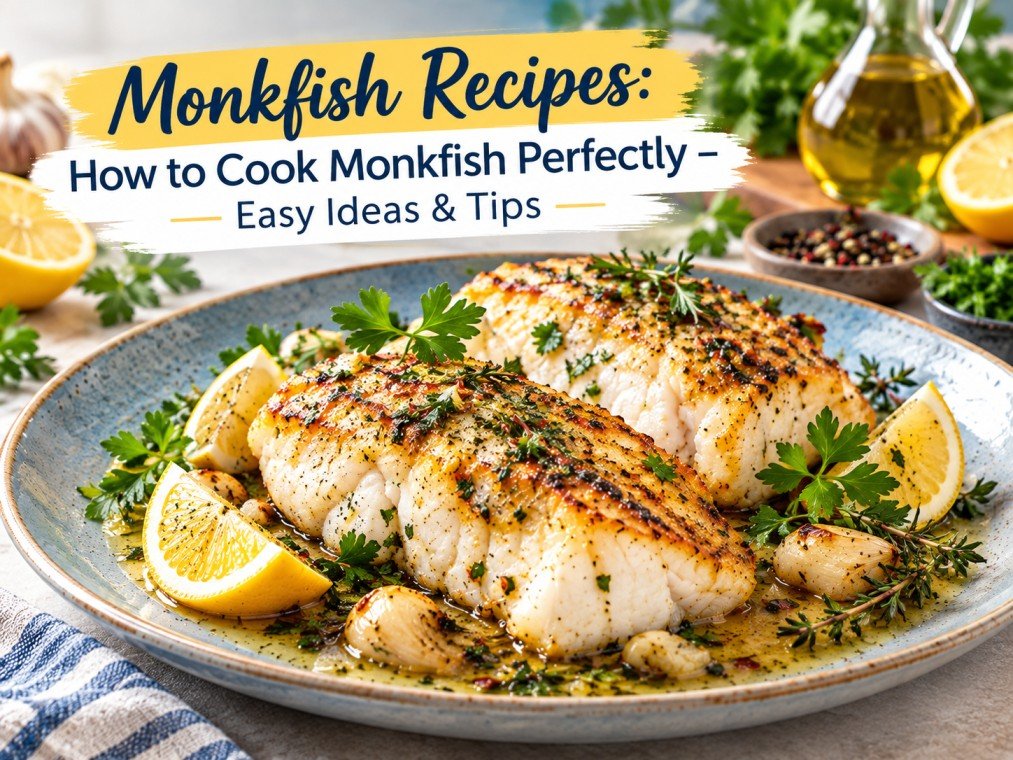
Monkfish recipes are a great choice when you want a seafood meal that feels special but is surprisingly simple to prepare. Monkfish has firm, meaty flesh that holds its shape well during cooking, making it suitable for pan-searing, baking, roasting, grilling, and simmering in flavorful sauces.
Unlike delicate fish that can fall apart easily, monkfish has a dense texture that is often compared with lobster. Its mild flavor also works well with ingredients such as garlic, butter, lemon, herbs, tomatoes, chili, and olive oil.
In this guide, you’ll learn how to prepare monkfish at home, the easiest ways to cook it, seasoning ideas, common mistakes to avoid, and simple monkfish recipes for lunch or dinner.
What Is Monkfish?
Monkfish is a bottom-dwelling marine fish known for its large head and thick, firm tail meat. The tail is the part most commonly used in cooking.
Monkfish has a mild, slightly sweet flavor and a firm texture. Because the flesh is dense, it works particularly well with high-heat cooking methods such as pan-searing and grilling.
It can also be baked or roasted with vegetables, herbs, lemon, garlic, or a flavorful sauce.
What Does Monkfish Taste Like?
Monkfish has a mild, slightly sweet seafood flavor with a firm, meaty texture. It is less delicate than many white fish varieties.
When cooked properly, monkfish should be moist and tender rather than rubbery or dry.
Its neutral flavor makes it easy to pair with:
- Garlic and butter
- Lemon and herbs
- Olive oil
- Tomatoes
- Chili and paprika
- White wine
- Cream-based sauces
- Mediterranean vegetables
How to Prepare Monkfish Before Cooking
Proper preparation can make a noticeable difference in the final texture.
1. Remove the Tough Membrane
Monkfish may have a tough outer membrane around the meat. If it has not already been removed by your fishmonger, carefully remove it with a sharp knife.
Leaving the membrane on can cause the fish to become tough or curl while cooking.
2. Trim the Monkfish
Remove any unwanted connective tissue and trim the fillet into evenly sized portions. Similar-sized pieces cook more evenly.
3. Pat It Dry
Use paper towels to thoroughly dry the monkfish before seasoning. A dry surface helps the fish develop better browning when pan-seared or roasted.
4. Season Just Before Cooking
Keep the seasoning simple if you want the natural flavor of monkfish to stand out. Salt, black pepper, garlic, lemon, and herbs are excellent starting points.
Best Ways to Cook Monkfish
There are several easy ways to cook monkfish at home. The best method depends on the texture and flavor you want.
Pan-Seared Monkfish
Pan-searing is one of the easiest ways to create a flavorful crust while keeping the inside tender.
Heat a little olive oil or butter in a skillet over medium-high heat. Season the monkfish with salt and pepper, then place it in the hot pan.
Sear the fish until browned on one side, then turn it and continue cooking until the center is cooked through.
For extra flavor, add garlic, butter, lemon juice, and fresh herbs near the end of cooking. Spoon the melted butter over the monkfish as it finishes.
Oven-Baked Monkfish
Baking is a simple hands-off method that works well for weeknight dinners.
Place seasoned monkfish in a baking dish and add lemon slices, garlic, herbs, and a drizzle of olive oil. Bake until the fish is opaque and cooked through.
You can also add cherry tomatoes, onions, peppers, or zucchini for a complete one-pan meal.
Roasted Monkfish
Roasting monkfish at a relatively high temperature helps develop a lightly browned exterior while cooking the thick flesh evenly.
Season the fish with olive oil, garlic, paprika, black pepper, and herbs. Place it on a baking sheet and roast until the center is cooked through.
Grilled Monkfish
Monkfish is firm enough to work well on a grill. Cut the fish into large pieces or use thick fillets.
Brush the monkfish with olive oil and season with salt, pepper, garlic, lemon, and herbs. Grill until browned on the outside and fully cooked inside.
Because monkfish is dense, avoid leaving it on the grill for too long, as overcooking can make the texture chewy.
Monkfish in Tomato Sauce
Monkfish pairs particularly well with tomato-based sauces.
Sauté garlic and onions in olive oil, then add chopped tomatoes, herbs, and seasonings. Place monkfish pieces into the sauce and simmer gently until the fish is cooked.
This method creates a flavorful meal that works well with crusty bread, rice, or pasta.
Easy Monkfish Recipes to Try
Garlic Butter Monkfish
This is one of the simplest monkfish recipes for beginners.
Season monkfish with salt and pepper and sear it in olive oil. Add butter and minced garlic toward the end of cooking. Finish with lemon juice and chopped parsley.
The combination of garlic, butter, and lemon complements the mild flavor of monkfish without overpowering it.
Lemon Herb Monkfish
For a lighter option, combine monkfish with lemon, parsley, thyme, garlic, and olive oil.
Bake or pan-sear the fish, then finish with fresh lemon juice. Serve with roasted vegetables or a simple salad.
Mediterranean Monkfish
Create a Mediterranean-style dish using monkfish, tomatoes, olives, garlic, olive oil, parsley, and lemon.
You can cook everything together in a skillet or baking dish for an easy dinner.
Spicy Monkfish
If you enjoy bold flavors, season monkfish with paprika, chili flakes, garlic, black pepper, and a little olive oil.
Pan-sear or roast the fish and serve it with rice, roasted vegetables, or a fresh salad.
Monkfish With Creamy Sauce
For a richer meal, cook monkfish and serve it with a light creamy sauce made with garlic, herbs, lemon, and a small amount of cream.
Keep the sauce balanced so the flavor of the fish remains noticeable.
Best Seasonings for Monkfish
Monkfish works with many different seasoning combinations.
Simple
- Salt
- Black pepper
- Olive oil
- Lemon
Garlic Butter
- Butter
- Garlic
- Parsley
- Lemon juice
Mediterranean
- Olive oil
- Garlic
- Tomatoes
- Oregano
- Parsley
- Olives
Spicy
- Paprika
- Chili flakes
- Garlic
- Black pepper
- Lemon
Experiment with seasonings, but avoid using too many strong ingredients at once.
How to Know When Monkfish Is Done
Monkfish should be cooked until the flesh is opaque and reaches a safe internal temperature. For fish, a commonly recommended target is 145°F (63°C).
A food thermometer is the most reliable way to check doneness.
Avoid relying only on cooking time because the thickness of the fish can vary considerably.
When properly cooked, monkfish should be firm and moist. If it becomes very tough or rubbery, it may have been overcooked.
Tips for Cooking Perfect Monkfish
Don’t Skip Drying
Pat the fish dry before cooking. Excess moisture can prevent proper browning.
Don’t Overcook It
Monkfish has dense flesh, but overcooking can make it chewy.
Use a Thermometer
A food thermometer makes it easier to check the internal temperature without repeatedly cutting into the fish.
Let the Fish Rest Briefly
Allow cooked monkfish to rest for a couple of minutes before serving. This gives the juices a chance to settle.
Add Lemon at the End
Fresh lemon juice added after cooking can brighten the flavor without becoming bitter from prolonged cooking.
What to Serve With Monkfish
Monkfish works with many side dishes, including:
- Roasted potatoes
- Mashed potatoes
- Rice
- Couscous
- Pasta
- Steamed vegetables
- Roasted asparagus
- Green beans
- Fresh salad
- Crusty bread
For a lighter meal, pair monkfish with vegetables and a simple lemon-herb dressing.
Common Mistakes When Cooking Monkfish
Leaving the Membrane On
The tough membrane can negatively affect the texture, so remove it before cooking if it is still attached.
Cooking Wet Fish
Moisture on the surface can interfere with browning, especially when pan-searing.
Using Too Much Heat for Too Long
High heat can create a nice crust, but prolonged cooking can dry out the fish.
Cutting the Fish Too Often
Repeatedly cutting into the monkfish during cooking allows juices to escape and makes it harder to judge doneness.
Overloading the Pan
Give each piece enough space in the skillet. Crowding can cause steaming instead of proper searing.
Can You Marinate Monkfish?
Yes. Monkfish can be marinated before cooking, but a simple marinade is usually enough.
Try olive oil, lemon juice, garlic, parsley, black pepper, and a small amount of paprika.
For acidic marinades, avoid leaving the fish for too long because the acid can affect the texture.
Can You Cook Frozen Monkfish?
Frozen monkfish should ideally be thawed safely in the refrigerator before cooking. Once thawed, pat it dry before seasoning.
Cooking from frozen may require different timing, so follow the package instructions when available and check the internal temperature for doneness.
How to Store Cooked Monkfish
Place leftover cooked monkfish in an airtight container and refrigerate it promptly.
When reheating, use gentle heat to reduce the chance of drying out the fish. A covered skillet with a small amount of sauce or moisture can help.
Frequently Asked Questions
Is monkfish easy to cook?
Yes. Monkfish has firm flesh that makes it suitable for beginners. Pan-searing, baking, roasting, and grilling are all straightforward methods.
What is the best way to cook monkfish?
There is no single method that works for everyone. Pan-searing is useful when you want a browned exterior, while baking and roasting are convenient for simple meals.
Why does monkfish become rubbery?
Overcooking is a common reason monkfish becomes tough or rubbery. Monitoring the internal temperature can help prevent this.
Should you remove the skin from monkfish?
Monkfish tail meat is often sold trimmed, but any tough outer membrane should be removed before cooking.
What flavors go well with monkfish?
Garlic, butter, lemon, parsley, olive oil, tomatoes, paprika, chili, and Mediterranean herbs all pair well with monkfish.
Can you grill monkfish?
Yes. Its firm texture makes monkfish suitable for grilling. Use moderate-to-high heat and avoid overcooking.
Is monkfish good for dinner?
Yes. Monkfish can be prepared as a simple weeknight meal or used in more elaborate seafood dishes with sauces, vegetables, rice, or pasta.
Final Thoughts
Monkfish recipes don’t need to be complicated. Because monkfish has firm, meaty flesh and a mild flavor, it can be prepared using several simple cooking methods.
For an easy starting point, try pan-seared monkfish with garlic butter and lemon. If you prefer a hands-off option, bake or roast it with herbs and vegetables. For bold flavors, try a Mediterranean tomato sauce or a spicy seasoning blend.
The key to great monkfish is simple preparation, balanced seasoning, and careful cooking. Keep an eye on the internal temperature, avoid overcooking, and let the natural flavor of the fish shine.