






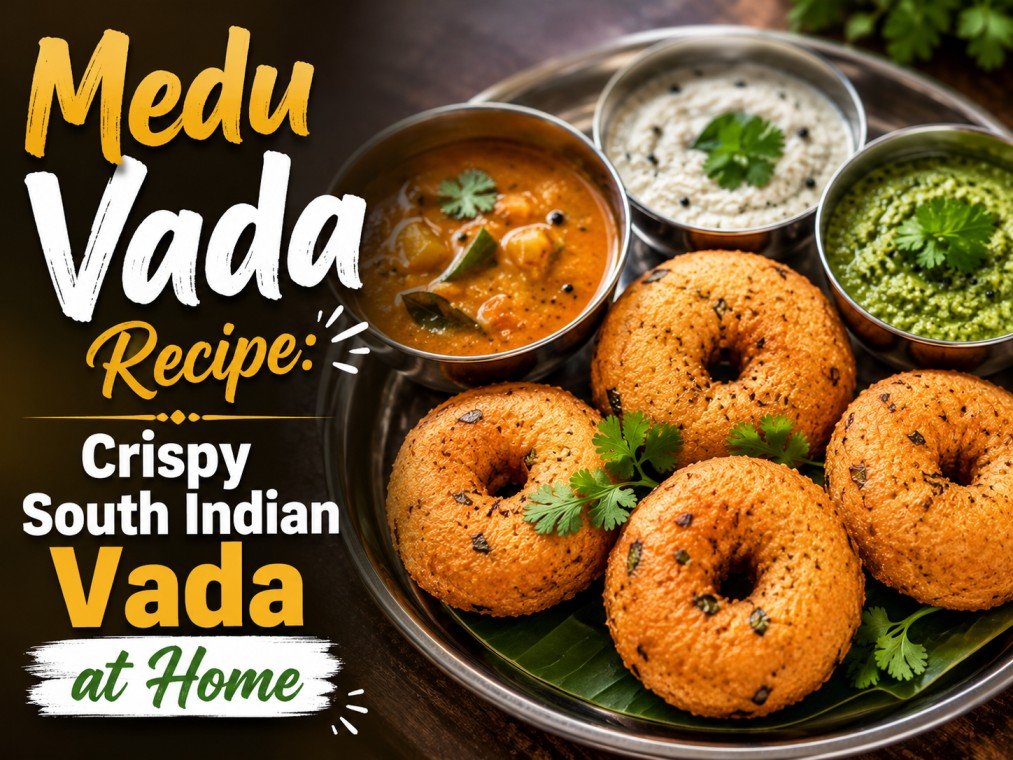
Medu vada is a classic South Indian savory snack and breakfast dish made primarily with urad dal. It has a distinctive doughnut-like shape, a crispy golden exterior and a soft, fluffy center.
It is traditionally served with sambar and coconut chutney, making it a popular choice for breakfast, brunch and festive meals.
Making restaurant-style medu vada at home may seem difficult at first, but the process becomes simple once you understand how to prepare the urad dal batter and maintain the correct frying temperature.
This medu vada recipe explains everything from soaking and grinding the dal to shaping and frying perfectly crispy vadas.
What Is Medu Vada?
Medu vada is a deep-fried South Indian dish prepared from soaked and ground urad dal.
The batter is seasoned with ingredients such as green chilli, ginger, curry leaves and black pepper before being shaped into rings and fried.
A properly prepared medu vada should be:
- Crispy outside
- Soft inside
- Light and fluffy
- Golden brown
- Flavorful and aromatic
Ingredients
For Medu Vada
- 1 cup urad dal
- 1–2 green chillies, finely chopped
- 1 teaspoon grated ginger
- 1 tablespoon chopped curry leaves
- 1 tablespoon fresh coriander
- ½ teaspoon black pepper
- ½ teaspoon cumin seeds
- A pinch of asafoetida
- Salt to taste
- Water as required
For Frying
- Oil for deep frying
How to Make Medu Vada Batter
Step 1: Soak the Urad Dal
Wash the urad dal thoroughly.
Soak it in plenty of water for approximately 4–6 hours.
Proper soaking makes the dal easier to grind and helps create a lighter batter.
Step 2: Drain the Dal
Drain the soaked urad dal completely.
Excess water can make the batter loose and difficult to shape.
Step 3: Grind the Dal
Add the dal to a blender or wet grinder.
Grind it into a smooth and fluffy batter.
Add water gradually rather than all at once.
The batter should be thick enough to hold its shape.
Step 4: Whip the Batter
Transfer the batter to a bowl.
Whisk it for a few minutes using your hand or a spoon.
This can help incorporate air and produce lighter vadas.
Step 5: Add the Seasoning
Add:
- Green chilli
- Ginger
- Curry leaves
- Coriander
- Black pepper
- Cumin
- Asafoetida
- Salt
Mix everything well.
How to Shape Medu Vada
There are several ways to shape medu vada.
Using Your Hand
Wet your hand lightly with water.
Take a small portion of batter.
Make a ball and create a hole in the center using your thumb.
Using a Plastic Sheet
Place a small piece of food-safe plastic or parchment on your work surface.
Wet it lightly.
Shape the vada on the surface and carefully slide it into the hot oil.
Using a Vada Mould
A dedicated vada maker can also be used if you want consistent shapes.
How to Fry Medu Vada
Step 1: Heat the Oil
Heat oil in a deep, heavy-bottomed pan.
The oil should be hot enough to cook the vada properly without burning the outside.
Step 2: Add the Vada
Carefully place the shaped vada into the oil.
Avoid overcrowding the pan.
Step 3: Fry Until Golden
Fry over medium heat until the vada becomes golden brown and crisp.
Turn it occasionally so that it cooks evenly.
Step 4: Drain
Remove the vada with a slotted spoon.
Place it on a plate lined with paper towels to absorb excess oil.
Serve hot.
How to Make Crispy Medu Vada
Use Fresh Urad Dal
Fresh dal generally produces better batter and texture.
Don’t Add Too Much Water
Loose batter is one of the biggest reasons vadas become difficult to shape.
Whip the Batter
Whisking helps create a lighter texture.
Maintain Medium Heat
If the oil is too hot, the outside can brown quickly while the center remains undercooked.
If the oil is too cool, the vada can absorb excess oil.
Don’t Overcrowd the Pan
Fry a few vadas at a time to maintain a stable oil temperature.
Why Is My Medu Vada Not Crispy?
Several things can affect the texture.
Batter Is Too Thin
Excess water can produce soft, oily vadas.
Oil Is Too Cold
The vada may absorb too much oil.
Oil Is Too Hot
The outside may brown before the center cooks.
Batter Wasn’t Ground Properly
Coarse or uneven batter can affect the final texture.
Vada Is Too Thick
Very thick vadas may take longer to cook through.
How to Make Fluffy Medu Vada
A light vada starts with good batter.
After grinding the soaked urad dal, beat the batter until it becomes noticeably lighter.
You can perform a simple water test by placing a tiny amount of batter in water. If it floats, the batter has incorporated enough air.
Don’t add excessive water just to make the batter lighter.
What to Serve With Medu Vada
Sambar
Hot sambar is one of the most traditional accompaniments.
Coconut Chutney
Creamy coconut chutney balances the crispy vada perfectly.
Tomato Chutney
Tangy tomato chutney adds another layer of flavor.
Green Chutney
Coriander and mint chutney provides freshness and spice.
Sambar Vada
One of the most popular variations is sambar vada.
Freshly fried medu vadas are placed in hot sambar and allowed to absorb the flavorful broth.
The result is a soft, juicy vada packed with sambar flavor.
For the best texture, serve sambar vada soon after soaking.
Dahi Vada Variation
Medu vada can also be transformed into a North Indian-style dahi vada.
The fried vadas are soaked until soft and then served with:
- Whisked yogurt
- Tamarind chutney
- Green chutney
- Roasted cumin
- Chilli powder
- Chaat masala
This creates a completely different flavor profile from traditional South Indian medu vada.
Medu Vada vs Dahi Vada
| Feature | Medu Vada | Dahi Vada |
|---|---|---|
| Main ingredient | Urad dal | Usually urad dal |
| Texture | Crispy outside | Soft and soaked |
| Served with | Sambar & chutney | Yogurt & chutneys |
| Cuisine association | South Indian | North Indian / Indian chaat |
| Serving | Hot | Usually chilled or cool |
Frequently Asked Questions
What is medu vada made of?
Medu vada is primarily made from soaked and ground urad dal seasoned with spices, herbs and aromatics.
How long should urad dal be soaked for vada?
Urad dal is generally soaked for around 4–6 hours before grinding.
Why is my vada absorbing too much oil?
The oil may not be hot enough, or the batter may contain too much water.
How do I make medu vada crispy?
Use thick, well-ground batter and fry the vadas at the appropriate medium temperature.
Why does my vada break while shaping?
The batter may be too wet. Drain the soaked dal properly and use very little water while grinding.
Can I make medu vada without a vada mould?
Yes. You can shape the vada using your wet hand or a food-safe sheet.
Can I prepare medu vada batter in advance?
Yes. The batter can be refrigerated after preparation. Bring it to a workable consistency before frying.
Can medu vada be made without onion?
Yes. Traditional medu vada can easily be prepared without onion.
What is the best chutney for medu vada?
Coconut chutney is a classic pairing, while tomato and green chutneys are also excellent.
What is sambar vada?
Sambar vada is medu vada served soaked in flavorful hot sambar.
Recipe Card
Recipe: Medu Vada
Cuisine: South Indian
Prep Time: 20 minutes
Soaking Time: 4–6 hours
Cooking Time: 25 minutes
Total Time: Approximately 5 hours
Servings: 4
Difficulty: Medium
Best Served With: Sambar and coconut chutney