






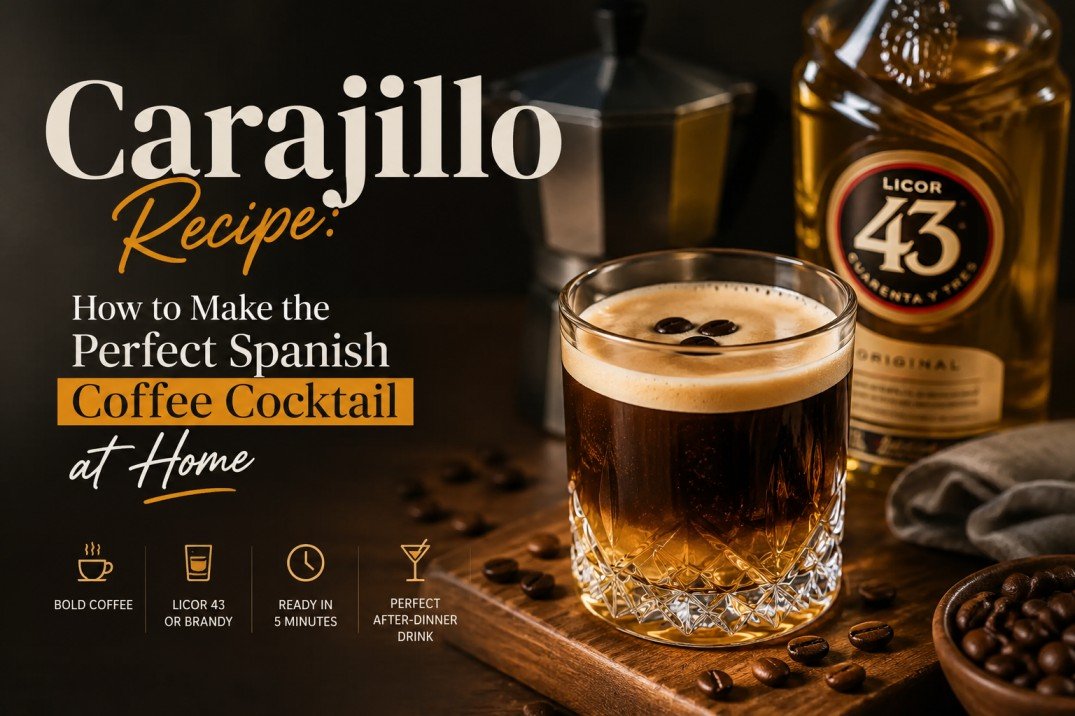
If you love coffee and you love cocktails, the carajillo might just become your new favorite drink. This simple yet bold Spanish coffee cocktail combines the rich intensity of espresso with the sweet, herbal warmth of Licor 43, creating a drink that’s equal parts energizing and indulgent. Whether you’re winding down after dinner or looking for a caffeinated twist on happy hour, this carajillo recipe will show you exactly how to make it at home — no bartending experience required.
What Is a Carajillo?
A carajillo is a coffee cocktail traditionally made by combining hot espresso with a sweet liqueur, most commonly Licor 43, and serving it over ice. The result is a layered, aromatic drink with a beautiful contrast between the bitterness of the coffee and the vanilla-citrus sweetness of the liqueur. It’s typically served in a rocks glass and enjoyed after a meal, though its growing popularity has made it a staple on cocktail menus around the world.
The History and Origin of Carajillo
The carajillo’s roots trace back to Spain, though its exact origin story is debated. One popular legend claims that Spanish soldiers stationed in Cuba during the 19th century would add a splash of rum or brandy to their coffee for “coraje” — courage — before heading into battle. Over time, “coraje” is said to have evolved into “carajillo.” While this story is charming, historians note it may be more folklore than fact.
What is clear is that the drink has long been part of Spanish coffee culture, traditionally made with brandy or rum. The modern version featuring Licor 43 became especially popular in the 20th century, and today it’s considered the definitive way to make a carajillo in most of Spain.
Why Is Carajillo So Popular?
The carajillo has exploded in popularity over the last few years, largely thanks to social media, where bartenders show off the dramatic flaming or shaking techniques used to prepare it. But beyond the visual appeal, the drink’s popularity comes down to its balance: it’s sweet but not cloying, bitter but not harsh, and strong enough to feel like a proper cocktail while still delivering a caffeine boost. It also works beautifully as either a dessert drink or a pick-me-up, which gives it broad appeal.
Carajillo Recipe at a Glance
- Prep Time: 5 minutes
- Total Time: 5 minutes
- Servings: 1
- Difficulty Level: Easy
Carajillo Ingredients
The beauty of a classic carajillo recipe lies in its simplicity. You only need a few ingredients to make an authentic Spanish coffee cocktail at home.
Espresso or Strong Coffee
Freshly brewed espresso is the heart of a carajillo. If you don’t own an espresso machine, a strong stovetop moka pot coffee or a concentrated pour-over will work as a substitute, though true espresso gives the best crema and flavor.
Licor 43
Licor 43 is a Spanish liqueur made from 43 different ingredients, including citrus, vanilla, and various herbs and spices. Its smooth, sweet flavor is what defines the classic carajillo, balancing out the bitterness of the espresso.
Ice
Ice is essential for the modern shaken-style carajillo, which has become the preferred method in most bars today. It chills the drink quickly and creates a lovely frothy texture when shaken with espresso and liqueur.
Optional Garnishes
While not required, a garnish adds a nice finishing touch. Popular options include:
- Orange peel or orange zest
- A few coffee beans
- A light dusting of cinnamon
How to Make a Carajillo
This carajillo recipe uses the popular shaken method, which is quick, easy, and produces a beautifully frothy drink with a rich crema-like top layer.
Step 1: Prepare the Espresso
Brew a fresh shot (or double shot) of espresso. It should be hot and freshly pulled for the best flavor and aroma.
Step 2: Fill a Glass With Ice
Fill a rocks glass with ice cubes. Using plenty of ice helps chill the drink quickly and dilutes it just enough to soften the intensity of the liqueur and coffee.
Step 3: Add Licor 43
Pour your measured amount of Licor 43 into a cocktail shaker.
Step 4: Pour in the Espresso
Add the freshly brewed hot espresso directly into the shaker with the Licor 43. Add a handful of ice to the shaker as well, then shake vigorously for about 10-15 seconds. This step is what creates the signature frothy top layer.
Step 5: Stir and Serve
Strain the shaken mixture into your ice-filled glass. Give it a gentle stir, garnish if desired, and serve immediately while the froth is still fresh.
The Best Carajillo Recipe Ratio
How Much Espresso and Licor 43 Should You Use?
The classic carajillo ratio is roughly 1:1 — equal parts espresso and Licor 43. A standard recipe calls for:
- 1 oz (30 ml) espresso
- 1 oz (30 ml) Licor 43
Some bartenders prefer a slightly stronger coffee presence, using a 1.5:1 ratio of espresso to Licor 43 for a less sweet, more coffee-forward drink. Feel free to adjust based on your personal taste — if you prefer a sweeter cocktail, lean more toward the liqueur; if you want a bolder coffee kick, increase the espresso.
Should You Use Hot or Chilled Espresso?
Traditionally, hot espresso is used, especially in the shaken method, since the heat helps release the aromatic oils in the coffee and blends better with the liqueur before hitting the ice. Using chilled espresso is possible but tends to produce a less aromatic, slightly flatter drink. For the best carajillo, always start with freshly brewed, hot espresso.
Carajillo With Tequila: A Popular Mexican Variation
While the classic carajillo recipe comes from Spain, a distinct variation has become hugely popular in Mexico, especially in trendy bars and restaurants. This Mexican-style carajillo swaps out Licor 43 for tequila, often paired with a touch of simple syrup or agave to balance the coffee’s bitterness.
Ingredients for a Tequila Carajillo
- 1 oz espresso
- 1.5 oz tequila (blanco or reposado)
- 0.5 oz agave syrup or simple syrup
- Ice
How to Make a Tequila Carajillo
- Brew a fresh shot of hot espresso.
- Add the espresso, tequila, and agave syrup to a cocktail shaker with ice.
- Shake vigorously until well chilled and frothy.
- Strain into a rocks glass filled with fresh ice.
- Garnish with an orange twist or a few espresso beans, if desired.
This tequila carajillo has become something of a viral sensation, particularly in Mexico City, where late-night restaurants and bars serve it as a post-dinner ritual.
Spanish Carajillo vs. Mexican Carajillo
What Is the Difference?
The main difference between the Spanish carajillo and the Mexican carajillo comes down to the spirit used and the overall flavor profile.
- Spanish Carajillo: Made with Licor 43, offering notes of vanilla, citrus, and warm spice. It’s sweeter and more liqueur-forward.
- Mexican Carajillo: Typically made with tequila and a sweetener like agave syrup, giving it a slightly earthier, more herbal edge with a noticeable tequila kick.
Both versions share the same foundation — hot espresso shaken with a spirit and served over ice — but the flavor experience is quite different.
Which Carajillo Recipe Should You Try?
If you enjoy sweeter, dessert-like cocktails, the classic Spanish carajillo with Licor 43 is the way to go. If you prefer something a bit more spirited and slightly less sweet, the tequila carajillo offers a fun, modern twist worth trying. Honestly, the best way to decide is to make both and compare.
Best Coffee to Use for a Carajillo
Espresso vs. Strong Brewed Coffee
Espresso is the gold standard for a carajillo because of its concentrated flavor and natural crema, which adds body and texture to the shaken drink. That said, if you don’t have an espresso machine, a very strong brewed coffee — like one made with a moka pot, AeroPress, or French press using a higher coffee-to-water ratio — can work as a substitute.
How to Choose the Right Coffee
For the best carajillo, choose a medium to dark roast coffee with bold, slightly bitter notes. Beans with chocolate, nutty, or caramel undertones tend to pair especially well with the sweetness of Licor 43 or the earthiness of tequila. Avoid light, overly fruity roasts, as their acidity can clash with the liqueur.
Tips for Making the Perfect Carajillo
Use Freshly Brewed Espresso
Freshly brewed espresso makes a noticeable difference in both flavor and aroma. Avoid using old, reheated coffee, as it will taste flat and stale.
Balance the Coffee and Liqueur
Start with a 1:1 ratio and adjust to your taste from there. If your first carajillo tastes too sweet, add a bit more espresso next time. If it tastes too bitter, add a touch more Licor 43.
Serve Over Plenty of Ice
Don’t skimp on the ice. A generous amount keeps the drink cold and dilutes it just enough to make it smooth and sippable rather than overly strong.
Shake or Stir Your Carajillo?
Shaking is the preferred modern method because it creates a lovely frothy, almost creamy texture on top of the drink, similar to an espresso martini. Stirring, on the other hand, is more traditional and results in a smoother, less textured drink. Both are valid — it really comes down to personal preference.
Carajillo Variations You Can Try
Classic Carajillo With Licor 43
The original and most popular version, made with equal parts espresso and Licor 43.
Carajillo With Tequila
The Mexican-style variation, using tequila and agave syrup instead of Licor 43.
Carajillo With Rum
A nod to the drink’s possible origin story, using dark or spiced rum for a warmer, more molasses-driven flavor.
Carajillo With Brandy
A more traditional, old-school version using Spanish brandy for a rich, oaky depth.
Creamy Carajillo
Some modern variations add a splash of cream or a dairy-free alternative for a richer, dessert-like finish, similar to an Irish coffee.
What Does a Carajillo Taste Like?
A carajillo tastes like a perfectly balanced blend of bold, slightly bitter espresso and sweet, aromatic liqueur. With Licor 43, expect notes of vanilla, citrus, and warm spice layered over the deep roastiness of coffee. With tequila, expect a more herbal, earthy profile with a subtle kick of agave sweetness. Either way, it’s rich, smooth, and satisfying — not too strong, not too sweet, just right.
When to Serve a Carajillo
Carajillo as an After-Dinner Drink
Traditionally, a carajillo is enjoyed after a meal, much like a digestif. The combination of caffeine and alcohol makes it a great way to keep the evening going without feeling too heavy.
Carajillo as a Coffee Cocktail
Beyond its after-dinner role, the carajillo has become popular as a stand-alone coffee cocktail for happy hour, brunch, or late-night gatherings. Its versatility makes it suitable for almost any occasion where you want something a little more exciting than a regular cup of coffee.
What to Serve With a Carajillo
Desserts That Pair Well With Carajillo
Since a carajillo has natural dessert-like qualities, it pairs beautifully with:
- Chocolate cake or brownies
- Churros
- Tiramisu
- Flan
Snacks and Small Bites
If you’re serving carajillo earlier in the evening, consider pairing it with:
- Spanish tapas like manchego cheese and jamón
- Marcona almonds
- Olives
- Light charcuterie
Frequently Asked Questions About Carajillo
What Is a Carajillo Made Of?
A classic carajillo is made of espresso and a sweet liqueur — traditionally Licor 43 — shaken or stirred with ice.
Is Carajillo Spanish or Mexican?
The carajillo originated in Spain, but it has become extremely popular in Mexico, where a tequila-based variation is now a beloved regional favorite.
What Alcohol Is Used in a Carajillo?
The most common alcohol used is Licor 43, though variations use tequila, rum, or brandy depending on the region and personal preference.
Is Licor 43 the Same as Carajillo?
No. Licor 43 is a specific Spanish liqueur, while a carajillo is the cocktail made by combining that liqueur (or another spirit) with espresso.
Can I Make a Carajillo Without Espresso?
Yes, though espresso is recommended for the best flavor and crema. A very strong brewed coffee can be used as a substitute in a pinch.
Can I Make a Carajillo Without Licor 43?
Absolutely. You can substitute tequila, rum, or brandy, adjusting the sweetness with a bit of simple syrup if needed.
Is Carajillo Served Hot or Cold?
A carajillo is typically served cold, over ice, even though the espresso used to make it is hot. The shaking or stirring process chills the drink quickly.
What Is the Difference Between a Carajillo and an Espresso Martini?
While both are espresso-based cocktails, an espresso martini is typically made with vodka and coffee liqueur, served in a martini glass without ice. A carajillo, on the other hand, is made with Licor 43 (or another spirit) and served over ice in a rocks glass.
Can I Make a Carajillo Ahead of Time?
It’s best enjoyed fresh, as the shaken froth and hot espresso aroma are part of the experience. However, you can prepare the espresso in advance and combine it with the liqueur just before serving.
How Strong Is a Carajillo?
A carajillo is moderately strong, generally comparable to other classic cocktails, though the caffeine from the espresso can make it feel more energizing than a typical after-dinner drink.
Final Thoughts: Make Your Own Carajillo at Home
The carajillo is proof that a great cocktail doesn’t need to be complicated. With just a few quality ingredients — hot espresso, a good liqueur, and plenty of ice — you can recreate this beloved Spanish coffee cocktail right in your own kitchen. Whether you stick with the classic Licor 43 version or try the increasingly popular tequila-based Mexican variation, the carajillo is a versatile, crowd-pleasing drink perfect for any occasion. So grab your shaker, brew a fresh shot of espresso, and give this easy carajillo recipe a try tonight.