






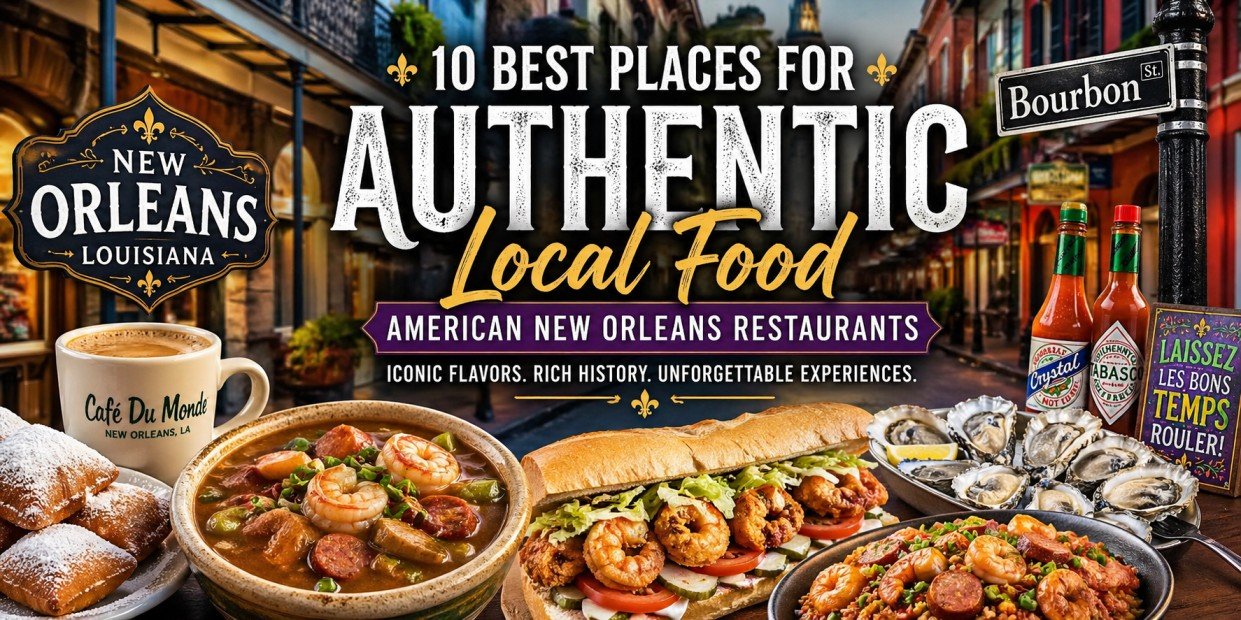
New Orleans is one of the most vibrant culinary destinations in the United States. Known for its rich cultural heritage, bold flavors, and unique fusion of French, Spanish, African, and Creole influences, the city offers an unforgettable food experience. Whether you’re craving gumbo, jambalaya, po’boys, or beignets, exploring American New Orleans restaurants is a journey into the heart of Louisiana cuisine.
In this guide, we’ll explore the 10 best places for authentic local food in New Orleans, along with insights into what makes each restaurant special. If you’re searching for traditional Southern flavors or iconic dishes, this list has you covered.
Why New Orleans Is a Food Lover’s Paradise
New Orleans isn’t just a city—it’s a culinary identity. The food here tells stories of history, resilience, and cultural blending. From Creole cuisine (city-based, refined cooking) to Cajun food (rustic, country-style dishes), every bite reflects a deep-rooted tradition.
Key Features of New Orleans Cuisine
- Rich, bold spices and seasonings
- Heavy use of seafood like shrimp, crawfish, and oysters
- Signature dishes like gumbo, étouffée, and jambalaya
- French and Spanish culinary techniques
- Soulful comfort food with a Southern twist
10 Best American New Orleans Restaurants for Authentic Local Food
1. Commander’s Palace
Commander’s Palace is one of the most iconic American New Orleans restaurants. Located in the Garden District, it’s famous for its upscale Creole cuisine and elegant dining experience.
What to Try
- Turtle soup
- Pecan-crusted Gulf fish
- Bread pudding soufflé
Why Visit
This restaurant combines tradition with innovation, offering a refined take on classic New Orleans dishes.
2. Dooky Chase’s Restaurant
Dooky Chase’s is a historic landmark and a cornerstone of Creole cuisine. It has played a major role in both culinary and civil rights history.
What to Try
- Fried chicken
- Red beans and rice
- Gumbo z’herbes
Why Visit
This restaurant offers authentic home-style cooking that reflects the soul of New Orleans.
3. Coop’s Place
If you’re looking for a casual spot with bold flavors, Coop’s Place is a must-visit. It’s known for hearty Cajun dishes served in a laid-back atmosphere.
What to Try
- Rabbit and sausage jambalaya
- Cajun fried chicken
- Seafood gumbo
Why Visit
Affordable prices and authentic flavors make it a favorite among locals.
4. Café du Monde
No list of American New Orleans restaurants is complete without Café du Monde. This legendary café is famous for its beignets and café au lait.
What to Try
- Beignets (powdered sugar donuts)
- Chicory coffee
Why Visit
It’s a quintessential New Orleans experience, especially for breakfast or late-night cravings.
5. Willie Mae’s Scotch House
Known for serving one of the best fried chicken dishes in America, Willie Mae’s Scotch House is a must-visit for comfort food lovers.
What to Try
- Fried chicken
- Butter beans
- Cornbread
Why Visit
Crispy, juicy, and full of flavor—this is Southern cooking at its finest.
6. Galatoire’s
Located in the French Quarter, Galatoire’s offers a classic Creole dining experience with a strong emphasis on tradition.
What to Try
- Shrimp remoulade
- Crabmeat maison
- Trout meunière
Why Visit
The restaurant maintains a timeless atmosphere and serves dishes that have remained unchanged for generations.
7. Parkway Bakery & Tavern
Parkway is famous for its po’boys—one of the most iconic sandwiches in New Orleans.
What to Try
- Roast beef po’boy
- Fried shrimp po’boy
Why Visit
If you want to taste an authentic New Orleans sandwich, this is the place.
8. Brennan’s
Brennan’s is synonymous with Creole fine dining and is best known for inventing Bananas Foster.
What to Try
- Eggs Hussarde
- Bananas Foster
- Turtle soup
Why Visit
Perfect for brunch lovers seeking a luxurious New Orleans dining experience.
9. Acme Oyster House
Seafood lovers will feel right at home at Acme Oyster House. It’s one of the best places to enjoy fresh Gulf oysters.
What to Try
- Chargrilled oysters
- Oyster po’boy
- Seafood gumbo
Why Visit
A lively atmosphere and top-quality seafood make it a standout choice.
10. Jacques-Imo’s Café
Jacques-Imo’s offers a quirky and creative take on Creole and Cajun cuisine.
What to Try
- Shrimp and alligator sausage cheesecake
- Fried green tomatoes with shrimp remoulade
Why Visit
Unique dishes and bold flavors set this restaurant apart from the rest.
Must-Try Dishes in New Orleans
When visiting these American New Orleans restaurants, make sure you don’t miss these iconic dishes:
Gumbo
A rich stew made with meat or seafood, vegetables, and a dark roux.
Jambalaya
A rice dish packed with spices, meats, and seafood.
Po’boys
Classic sandwiches filled with fried seafood or roast beef.
Beignets
Deep-fried pastries covered in powdered sugar.
Étouffée
A flavorful dish typically made with crawfish or shrimp.
Tips for Dining in New Orleans
1. Make Reservations
Popular restaurants fill up quickly, especially during festivals and weekends.
2. Explore Beyond the French Quarter
While the French Quarter is iconic, many hidden gems are located in other neighborhoods.
3. Embrace Local Culture
Dining in New Orleans is about more than food—it’s about music, atmosphere, and hospitality.
4. Try Something New
Don’t hesitate to try unique ingredients like alligator or crawfish.
Best Time to Visit New Orleans for Food
The best time to explore American New Orleans restaurants is during:
- Mardi Gras season (for festive dining experiences)
- Spring (February to May) for pleasant weather
- Fall (September to November) for fewer crowds
Food festivals like the New Orleans Jazz & Heritage Festival also offer incredible culinary experiences.
Final Thoughts
New Orleans is a city where food is more than just nourishment—it’s a celebration of culture, history, and community. From upscale dining at Commander’s Palace to casual bites at Parkway Bakery, the variety of American New Orleans restaurants ensures that every visitor finds something unforgettable.
Whether you’re a first-time visitor or a seasoned traveler, exploring these 10 best places for authentic local food will give you a true taste of New Orleans. Each restaurant tells its own story, and together they create a culinary landscape unlike anywhere else in the world.
So come hungry, bring your curiosity, and get ready to experience one of the greatest food cities on the planet.
Frequently Asked Questions About American New Orleans Restaurants
1. What makes New Orleans restaurants unique?
New Orleans restaurants stand out for their blend of Creole and Cajun influences, combining French, Spanish, and African flavors. The cuisine emphasizes bold spices, slow cooking, and rich sauces. Many dishes are rooted in history and culture, making dining here more than just a meal—it’s an immersive cultural experience that reflects the city’s heritage.
2. What is the difference between Creole and Cajun food?
Creole cuisine is city-based and often more refined, using tomatoes, butter, and complex sauces. Cajun food, on the other hand, is rustic and rooted in rural traditions, focusing on hearty, one-pot meals. Both styles share similar ingredients but differ in preparation, presentation, and cultural origins within Louisiana’s diverse culinary landscape.
3. What are must-try dishes in New Orleans?
Must-try dishes include gumbo, jambalaya, po’boys, crawfish étouffée, and beignets. These iconic foods showcase the region’s unique flavors and cooking techniques. Each dish tells a story of local culture and tradition, making them essential experiences for anyone wanting to truly understand New Orleans cuisine and its culinary identity.
4. Are New Orleans restaurants expensive?
New Orleans offers a wide range of dining options, from budget-friendly eateries to upscale fine dining restaurants. While places like Commander’s Palace can be pricey, many local spots serve authentic, delicious food at affordable prices. Travelers can enjoy world-class cuisine without overspending by exploring casual dining options across the city.
5. When is the best time to visit New Orleans for food?
The best time to visit is during spring (February to May) and fall (September to November), when the weather is pleasant and food festivals are in full swing. Events like Mardi Gras and the Jazz & Heritage Festival offer incredible culinary experiences, allowing visitors to explore a wide variety of authentic local dishes.
6. Do I need reservations at popular restaurants?
Yes, reservations are highly recommended for popular New Orleans restaurants, especially during weekends and festivals. Iconic spots often fill up quickly due to high demand. Booking in advance ensures you don’t miss out on top dining experiences and helps avoid long wait times at some of the city’s most प्रसिद्ध eateries.
7. Is seafood safe to eat in New Orleans?
Seafood in New Orleans is generally fresh and safe, as it often comes directly from the Gulf of Mexico. Restaurants take pride in serving high-quality ingredients. However, it’s always wise to choose reputable establishments and ensure dishes are properly cooked, especially if you’re trying raw oysters or other fresh seafood items.
8. Are there vegetarian options in New Orleans?
While New Orleans cuisine is traditionally meat and seafood-heavy, many restaurants now offer vegetarian-friendly dishes. Options include vegetable gumbo, red beans and rice, and creative plant-based meals. Modern chefs are adapting classic recipes to cater to diverse dietary preferences while maintaining authentic flavors and culinary traditions.
9. What is a po’boy sandwich?
A po’boy is a traditional New Orleans sandwich served on French bread and filled with ingredients like fried shrimp, oysters, or roast beef. It’s known for its crispy texture and flavorful fillings. This iconic street food is a must-try and represents the city’s love for hearty, satisfying meals.
10. Can tourists find authentic local food easily?
Yes, authentic local food is widely available throughout New Orleans. From famous restaurants to neighborhood eateries, the city offers countless options for experiencing true local flavors. Exploring beyond tourist-heavy areas can lead to hidden gems where visitors can enjoy genuine dishes prepared using traditional methods and recipes.