







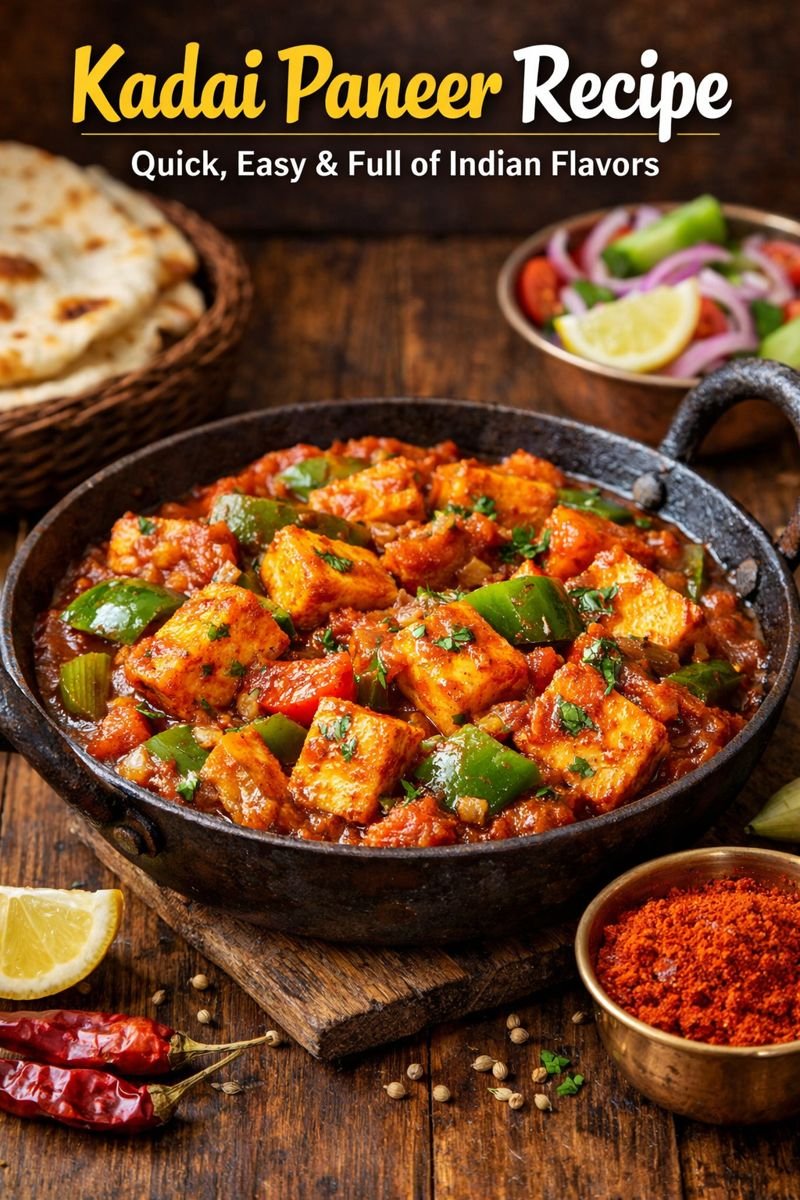
Kadai Paneer is one of the most loved North Indian paneer dishes, known for its bold spices, chunky vegetables, and rich, slightly smoky flavor. Prepared in a traditional kadai (Indian wok), this recipe brings together soft paneer cubes, capsicum, onions, tomatoes, and freshly ground spices to create a dish that is comforting yet restaurant-style.
Whether you’re cooking for a family dinner, a festive occasion, or simply craving a dhaba-style paneer curry, Kadai Paneer is always a winning choice. The best part? You can easily make it at home with simple ingredients and achieve that authentic taste without complicated steps.
In this detailed guide, you’ll learn everything about making Kadai Paneer—from its origins and spice blend to step-by-step cooking instructions, tips for perfect texture, variations, serving ideas, FAQs, and a disclaimer.
What Is Kadai Paneer?
Kadai Paneer is a semi-dry or gravy-based paneer dish originating from North India, especially popular in Punjabi cuisine. The name comes from the kadai, a thick-bottomed Indian cooking vessel traditionally used to prepare this dish.
What makes Kadai Paneer special is:
-
Freshly ground spices, especially coriander seeds and dried red chilies
-
Chunky vegetables like capsicum and onions
-
Minimal cream, making it lighter than paneer butter masala
-
A slightly smoky, spicy, tangy flavor
This dish pairs beautifully with naan, tandoori roti, chapati, or even jeera rice.
Why You’ll Love This Kadai Paneer Recipe
-
Quick and easy to make
-
Authentic restaurant-style taste
-
No heavy cream required
-
Customizable spice level
-
Perfect for lunch or dinner
Ingredients for Kadai Paneer
For Kadai Masala (Fresh Spice Blend)
-
2 tablespoons coriander seeds
-
4–5 dried red chilies (adjust to taste)
-
1 teaspoon fennel seeds (optional)
Freshly ground kadai masala is the heart of this recipe. Avoid ready-made powders for best flavor.
For the Gravy
-
250 grams paneer (cubed)
-
2 tablespoons oil
-
1 tablespoon butter (optional, for richness)
-
1 teaspoon cumin seeds
-
1 medium onion (thickly sliced)
-
1 medium capsicum (cubed)
-
3 medium tomatoes (pureed)
-
1 tablespoon ginger-garlic paste
-
1 teaspoon red chili powder
-
½ teaspoon turmeric powder
-
1 teaspoon garam masala
-
Salt to taste
-
1 teaspoon kasuri methi (dried fenugreek leaves)
-
Fresh coriander leaves (for garnish)
Preparation Before Cooking
-
Paneer Prep:
If your paneer is hard, soak the cubes in warm salted water for 10 minutes. This keeps them soft. -
Kadai Masala:
Dry roast coriander seeds, dried red chilies, and fennel seeds on low flame until aromatic. Cool and grind into a coarse powder. -
Vegetables:
Cut onions and capsicum into large chunks, not thin slices. This gives the dish its signature texture.
Step-by-Step Kadai Paneer Recipe
Step 1: Roast the Kadai Masala
Heat a pan on low flame and dry roast coriander seeds and dried red chilies until fragrant. Do not burn them. Let cool and grind coarsely.
Step 2: Sauté Onions and Capsicum
Heat 1 tablespoon oil in a kadai.
Add sliced onions and capsicum.
Sauté on high flame for 2–3 minutes until slightly cooked but still crunchy.
Remove and set aside.
Step 3: Prepare the Base Gravy
In the same kadai, heat remaining oil and butter.
Add cumin seeds and let them crackle.
Add ginger-garlic paste and sauté until the raw smell disappears.
Now add tomato puree and cook on medium flame until oil starts separating. This step is crucial for a rich flavor.
Step 4: Add Spices
Add turmeric powder, red chili powder, salt, and freshly ground kadai masala.
Mix well and cook for another 1–2 minutes.
Step 5: Combine Everything
Add paneer cubes, sautéed onions, and capsicum to the gravy.
Mix gently to avoid breaking the paneer.
Add ¼ cup water if you prefer slight gravy. For semi-dry, skip water.
Step 6: Final Touch
Add garam masala and crushed kasuri methi.
Cook for 2–3 minutes on low flame.
Turn off the heat and garnish with fresh coriander leaves.
Tips for Perfect Kadai Paneer
-
Always use freshly ground kadai masala
-
Butter is optional but enhances flavor
-
Adjust chilies according to spice preference
-
Do not overcook paneer; it turns rubbery
-
Cook tomatoes thoroughly to remove raw taste
Variations of Kadai Paneer
Dry Kadai Paneer
Skip adding water and cook until the masala coats paneer perfectly.
Restaurant-Style Gravy
Add 2 tablespoons fresh cream at the end for a richer texture.
Vegan Kadai Paneer
Replace paneer with tofu and butter with oil.
Smoky Dhaba Style
Give a dhungar (coal smoke) effect using hot charcoal and ghee.
Serving Suggestions
Kadai Paneer tastes best with:
-
Butter naan
-
Tandoori roti
-
Laccha paratha
-
Jeera rice
-
Plain steamed rice
Serve hot with sliced onions, lemon wedges, and green chutney.
Storage & Reheating
-
Store leftovers in an airtight container for up to 2 days in the refrigerator.
-
Reheat on low flame, adding a little water if needed.
-
Avoid reheating multiple times to maintain paneer texture.
Nutritional Information (Approximate)
Per serving:
-
Calories: 300–350 kcal
-
Protein: High (from paneer)
-
Rich in calcium
-
Moderate fat content
Frequently Asked Questions (FAQs)
Q1. Can I make Kadai Paneer without a kadai?
Yes, you can use any heavy-bottomed pan, but a kadai gives the best authentic taste.
Q2. Is Kadai Paneer very spicy?
Traditionally, it is mildly spicy. You can adjust red chilies and chili powder as per taste.
Q3. Can I use store-bought kadai masala?
You can, but freshly ground spices provide a much better aroma and flavor.
Q4. Why does my paneer become hard?
Overcooking or reheating paneer makes it rubbery. Always cook on low flame after adding paneer.
Q5. Can I add other vegetables?
Yes, mushrooms, baby corn, or bell peppers of different colors work well.
Q6. Is Kadai Paneer healthy?
Yes, when made with less oil and no cream, it is a nutritious, protein-rich dish.
Disclaimer
This Kadai Paneer recipe is intended for general cooking guidance only. Ingredient quantities, spice levels, and cooking times may vary based on personal taste, ingredient quality, and kitchen equipment. Nutritional values are approximate and should not be considered medical or dietary advice. Always adjust ingredients according to your dietary needs and preferences