






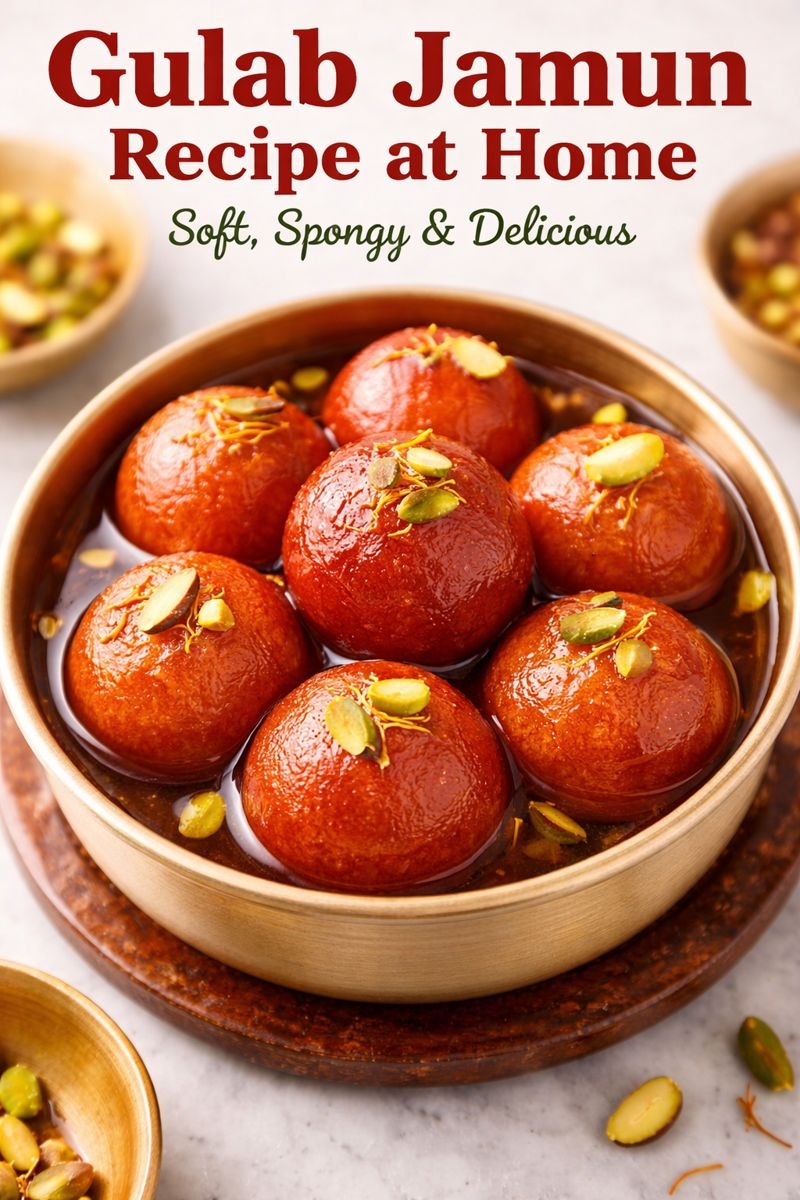
Gulab Jamun is one of the most loved Indian desserts, enjoyed across festivals, weddings, celebrations, and family gatherings. These soft, spongy, deep-fried milk-solid balls soaked in fragrant sugar syrup are a symbol of sweetness and joy. While Gulab Jamun is easily available at sweet shops, nothing matches the taste, freshness, and satisfaction of making Gulab Jamun at home.
In this detailed guide, you’ll learn how to make soft, spongy, and perfectly soaked Gulab Jamun at home using simple ingredients and foolproof tips. This 1500+ word recipe covers everything—from ingredient selection and dough preparation to frying techniques, syrup consistency, common mistakes, variations, and serving ideas.
Whether you are a beginner or an experienced home cook, this step-by-step recipe will help you achieve halwai-style Gulab Jamun every time.
What Is Gulab Jamun?
Gulab Jamun is a traditional Indian sweet made from khoya (mawa) or milk solids, shaped into smooth balls, deep-fried on low heat until golden brown, and soaked in warm sugar syrup flavored with rose water, cardamom, and saffron.
-
“Gulab” refers to rose-scented syrup
-
“Jamun” refers to a fruit similar in size and shape to the dessert
The key to perfect Gulab Jamun lies in:
-
Soft dough (not tight, not sticky)
-
Slow frying on low heat
-
Correct sugar syrup consistency
-
Proper soaking time
Ingredients for Gulab Jamun
For Gulab Jamun Balls
-
Khoya (mawa) – 1 cup (grated, fresh or store-bought)
-
Maida (all-purpose flour) – 2 tablespoons
-
Baking soda – 1 pinch (very important: do not overuse)
-
Milk – 2 to 4 tablespoons (for kneading)
-
Ghee or oil – for deep frying
For Sugar Syrup
-
Sugar – 1½ cups
-
Water – 1½ cups
-
Cardamom powder – ½ teaspoon
-
Rose water – 1 teaspoon (optional)
-
Saffron strands – few (optional)
-
Lemon juice – 1 teaspoon (prevents crystallization)
Step-by-Step Gulab Jamun Recipe at Home
Step 1: Prepare the Sugar Syrup
-
In a deep pan, add sugar and water.
-
Heat on medium flame, stirring until sugar dissolves completely.
-
Bring it to a gentle boil.
-
Add cardamom powder, saffron strands, rose water, and lemon juice.
-
Let it simmer for 5–7 minutes until the syrup becomes slightly sticky, not thick.
-
Turn off the heat and keep the syrup warm.
Tip: Sugar syrup should be warm when adding fried Gulab Jamuns, not hot or cold.
Step 2: Prepare the Dough
-
Grate the khoya finely and ensure it is lump-free.
-
Add maida and a pinch of baking soda.
-
Mix gently using your fingers.
-
Add milk little by little and knead softly.
-
The dough should be soft, smooth, and crack-free, not sticky or tight.
Important: Do not over-knead the dough, or the Gulab Jamuns will turn hard.
Step 3: Shape the Gulab Jamuns
-
Divide the dough into equal small portions.
-
Roll gently between your palms to make smooth balls.
-
Ensure there are no cracks, as cracks cause breakage while frying.
-
Keep them covered with a cloth to prevent drying.
Step 4: Fry the Gulab Jamuns
-
Heat ghee or oil on low flame in a deep kadai.
-
Oil should be moderately hot—not smoking.
-
Add Gulab Jamun balls gently in batches.
-
Fry on low heat, stirring slowly and continuously.
-
Fry until they turn even golden brown from all sides.
Key Tip: Slow frying is crucial for soft, evenly cooked Gulab Jamuns.
Step 5: Soak in Sugar Syrup
-
Remove the fried Gulab Jamuns and let them rest for 1–2 minutes.
-
Add them directly to warm sugar syrup.
-
Let them soak for at least 2 hours.
-
Gulab Jamuns will double in size and absorb syrup beautifully.
Serving Suggestions
-
Serve warm or chilled, as per preference.
-
Garnish with chopped pistachios or almonds.
-
Pair with vanilla ice cream for a fusion dessert.
-
Ideal for festivals like Diwali, Holi, Eid, Raksha Bandhan, and weddings.
Tips for Soft & Spongy Gulab Jamun
-
Always use fresh khoya
-
Do not add excess baking soda
-
Fry on low flame only
-
Sugar syrup should be one-string or slightly sticky
-
Never overcrowd the frying pan
-
Let Gulab Jamuns soak properly before serving
Common Mistakes to Avoid
-
Over-kneading the dough
-
Frying on high flame
-
Thick sugar syrup
-
Adding hot Gulab Jamuns to cold syrup
-
Using dry or grainy khoya
-
Variations of Gulab Jamun
-
Bread Gulab Jamun – Made using bread crumbs
-
Kala Jamun – Darker version with khoya stuffing
-
Stuffed Gulab Jamun – Filled with dry fruits
-
Instant Gulab Jamun – Using milk powder
-
Sugar-Free Gulab Jamun – Using sugar substitutes
Storage Instructions
-
Store Gulab Jamun in syrup in the refrigerator for up to 3–4 days
-
Reheat gently before serving
-
Avoid freezing, as texture may change
Frequently Asked Questions (FAQs)
Q1. Why are my Gulab Jamuns hard?
Hard Gulab Jamuns result from over-kneading, high frying temperature, or too much flour.
Q2. Why did my Gulab Jamuns break while frying?
Cracks in dough or low-quality khoya can cause breakage.
Q3. Can I use milk powder instead of khoya?
Yes, milk powder can be used, but khoya gives authentic taste and texture.
Q4. How long should Gulab Jamuns soak in syrup?
At least 2 hours for best softness and sweetness.
Q5. Can I make Gulab Jamun without baking soda?
Yes, but baking soda helps make them lighter and spongier.
Q6. Why did my Gulab Jamuns not absorb syrup?
Sugar syrup may be too thick, or Gulab Jamuns may have cooled completely before soaking.
Q7. Can I fry Gulab Jamuns in oil instead of ghee?
Yes, but ghee gives richer flavor and aroma.
Disclaimer
This Gulab Jamun recipe is intended for general home cooking purposes only. Results may vary depending on ingredient quality, cooking temperature, and individual technique. Nutritional values are approximate and may differ based on portion size and ingredients used. Always ensure food safety and ingredient freshness. If you have dietary restrictions or health concerns, consult a qualified professional before consumption.