






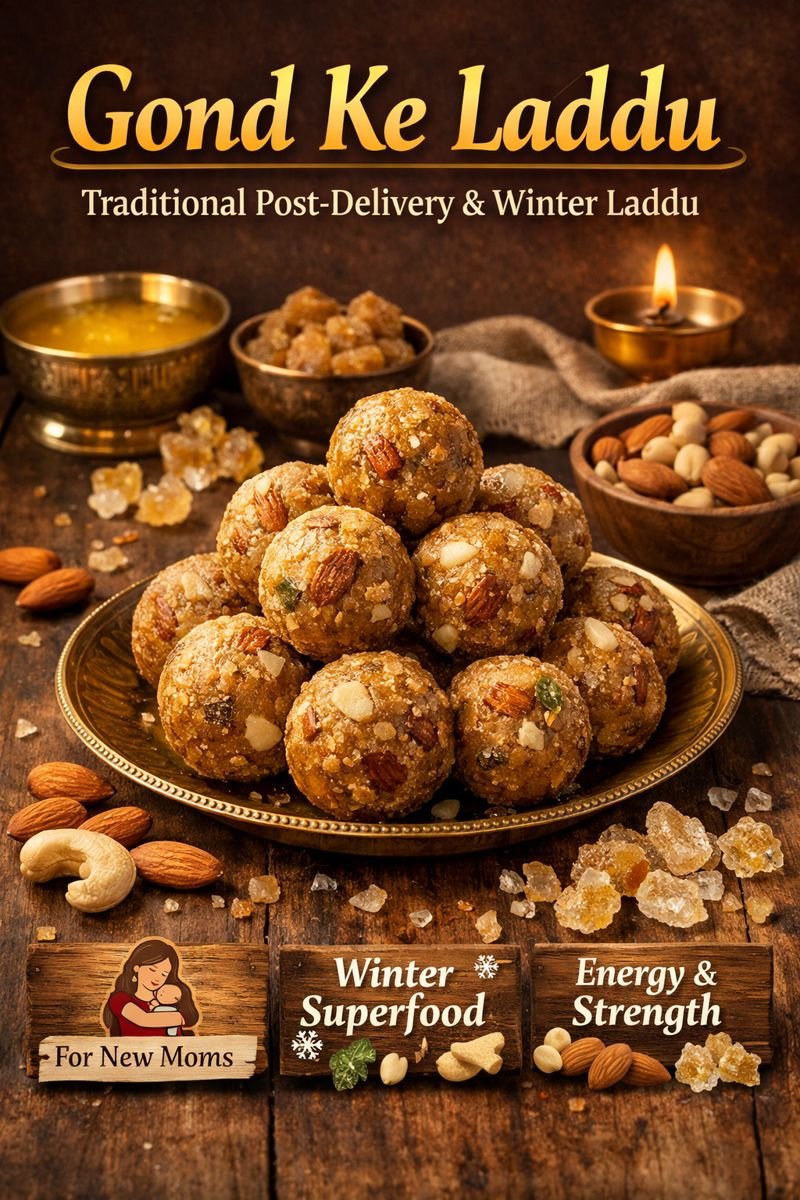
Indian kitchens are full of time-tested recipes that are not just delicious but also deeply connected to health and tradition. Gond Ke Laddu is one such classic recipe, especially popular during winters and post-delivery care. Made with edible gum (gond), desi ghee, dry fruits, and warming spices, these laddus are considered a natural energy booster and strength-enhancing sweet.
This article will guide you through everything you need to know about Gond Ke Laddu – from its history and health benefits to a detailed traditional recipe, variations, FAQs, and an important disclaimer.
What Are Gond Ke Laddu?
Gond Ke Laddu are traditional Indian laddus prepared using edible gum (gond), whole wheat flour, ghee, nuts, and natural sweeteners like jaggery or sugar. Gond is a natural resin obtained from trees and is widely used in Indian households for its warming and strengthening properties.
These laddus are:
-
Commonly prepared in North and Central India
-
Specially given to new mothers after delivery
-
Consumed during cold weather to keep the body warm
Why Gond Ke Laddu Are Special for Post-Delivery
In Indian tradition, new mothers are given foods that help:
-
Restore strength
-
Improve digestion
-
Support lactation
-
Warm the body
Gond ke laddus tick all these boxes. The combination of gond + ghee + dry fruits helps in muscle recovery and provides long-lasting energy.
Note: Post-delivery diets should always be followed as per doctor or elder guidance.
Why Gond Ke Laddu Are Perfect for Winters
According to Ayurveda, gond has a warming effect on the body. During winters, digestion slows down and immunity may weaken. Gond laddus help by:
-
Generating internal heat
-
Boosting immunity
-
Preventing joint pain and weakness
-
Providing energy during cold days
That’s why they are known as Winter Special Laddus.
Health Benefits of Gond Ke Laddu
1. Boosts Energy
Rich in healthy fats and carbohydrates, these laddus provide instant and sustained energy.
2. Strengthens Bones & Joints
Gond is believed to support joint health, especially helpful for elders and postpartum women.
3. Improves Digestion
When prepared correctly, gond helps improve digestion and prevents constipation.
4. Keeps the Body Warm
Ideal for cold weather due to its natural warming properties.
5. Supports Post-Delivery Recovery
Helps in regaining strength and nourishing the body after childbirth.
Ingredients for Traditional Gond Ke Laddu
Main Ingredients:
-
Edible gum (Gond) – 100 grams
-
Whole wheat flour – 1 cup
-
Desi ghee – ¾ cup
-
Jaggery (or sugar) – ¾ cup (adjust to taste)
Dry Fruits:
-
Almonds – ¼ cup (chopped)
-
Cashews – ¼ cup (chopped)
-
Raisins – 2 tablespoons
Spices (Optional but Recommended):
-
Dry ginger powder (saunth) – 1 teaspoon
-
Cardamom powder – ½ teaspoon
-
Nutmeg powder – a pinch
Step-by-Step Traditional Gond Ke Laddu Recipe
Step 1: Prepare the Gond
-
Heat 2 tablespoons of ghee in a heavy pan.
-
Add small pieces of gond.
-
Gond will puff up immediately; fry on low flame until crisp.
-
Remove and crush lightly once cooled.
Step 2: Roast Dry Fruits
-
In the same pan, add a little ghee if needed.
-
Lightly roast almonds, cashews, and raisins.
-
Set aside.
Step 3: Roast the Flour
-
Add remaining ghee to the pan.
-
Add whole wheat flour.
-
Roast on low flame, stirring continuously until golden brown and aromatic.
Step 4: Add Gond & Spices
-
Add crushed gond to the roasted flour.
-
Mix in dry ginger powder, cardamom, and nutmeg.
Step 5: Sweeten the Mixture
-
Add grated jaggery or powdered sugar.
-
Mix well and cook for 1–2 minutes on very low flame.
Step 6: Add Dry Fruits
-
Add roasted dry fruits.
-
Mix everything thoroughly.
Step 7: Shape the Laddus
-
Turn off the heat and let the mixture cool slightly.
-
While warm, grease your palms with ghee and shape into laddus.
Storage & Shelf Life
-
Store Gond ke laddus in an airtight container
-
Keep at room temperature in winters
-
Shelf life: 2–3 weeks
-
Refrigeration is not recommended as laddus may harden
Variations of Gond Ke Laddu
1. Gond Panjiri Laddu
Add edible seeds like fox nuts (makhana) and melon seeds for extra nutrition.
2. Sugar-Free Gond Laddu
Use dates powder instead of sugar or jaggery (consume in moderation).
3. Gluten-Free Gond Laddu
Replace wheat flour with roasted rice flour or makhana powder.
How Many Gond Ke Laddu to Eat?
-
General consumption: 1 laddu per day
-
Winters: 1–2 laddus per day
-
Post-delivery: Only as advised by elders or doctor
Moderation is key as they are high in calories.
Frequently Asked Questions (FAQs)
Q1. Are Gond ke laddus good for new mothers?
Yes, traditionally they are given post-delivery for strength and recovery. However, portion size should be guided by a healthcare professional.
Q2. Can gond laddus be eaten in summers?
They are best for winters. In summers, excess consumption may cause body heat.
Q3. What is edible gond?
Edible gond is a natural gum resin obtained from trees and used in Indian cooking and Ayurvedic preparations.
Q4. Are gond laddus healthy?
Yes, when eaten in moderation, they are nutritious and beneficial, especially in cold weather.
Q5. Can diabetics eat Gond ke laddus?
People with diabetes should avoid or consume only after consulting a doctor due to sugar/jaggery content.
Q6. Can I give gond laddus to children?
Yes, in small quantities during winters, but avoid overconsumption.
Disclaimer
This article is for informational purposes only. Gond Ke Laddu are a traditional food and not a medical treatment. Post-delivery diets, diabetic consumption, or any special dietary needs should always be followed after consulting a doctor, nutritionist, or qualified healthcare professional. Individual body types and health conditions may vary.