






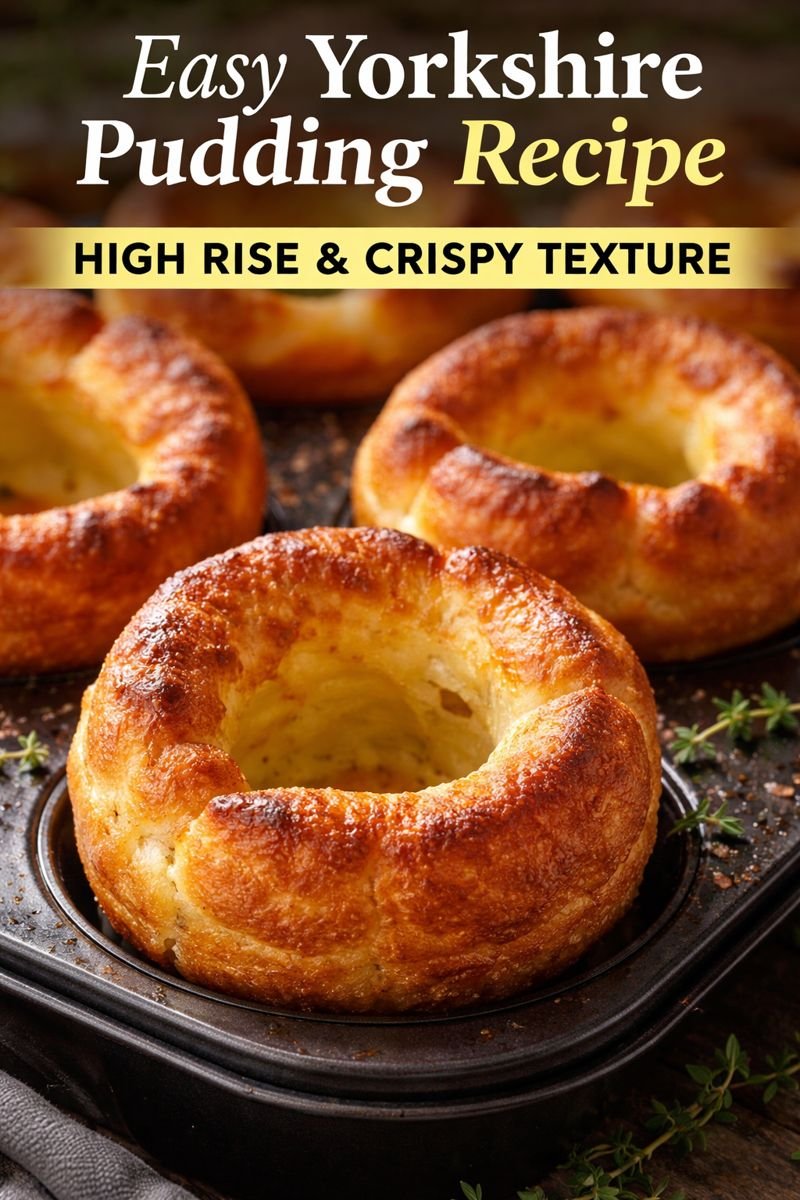
Yorkshire pudding is one of the most iconic dishes of British cuisine—simple, comforting, and incredibly satisfying. With its dramatic rise, golden-brown crust, and soft, airy center, a well-made Yorkshire pudding can transform an ordinary meal into something truly special. Traditionally served alongside roast beef and gravy, this humble batter-based dish has earned worldwide popularity for its texture, versatility, and ease of preparation.
In this easy Yorkshire pudding recipe, you’ll learn how to achieve maximum rise, crisp edges, and a light, hollow center using basic pantry ingredients. Whether you’re a beginner or an experienced home cook, this step-by-step guide, expert tips, and FAQs will help you master Yorkshire pudding every single time.
What Is Yorkshire Pudding?
Yorkshire pudding originated in England, particularly in the county of Yorkshire, during the 18th century. It was originally known as “dripping pudding” and was cooked beneath roasting meat so the fat dripped into the batter, creating a rich and flavorful dish. Over time, it evolved into the Yorkshire pudding we know today—baked in hot fat in individual molds or muffin tins.
Despite the name, Yorkshire pudding is not a dessert. It’s a savory dish similar to a popover, made from a thin batter of flour, eggs, and milk. When baked in extremely hot oil, the batter puffs up dramatically, forming crisp sides and a soft interior.
Why This Easy Yorkshire Pudding Recipe Works
This recipe is designed to be:
-
Beginner-friendly – Simple steps and common ingredients
-
Fail-proof – Precise ratios ensure a perfect rise
-
Crispy & light – High heat and hot fat guarantee the right texture
-
Flexible – Works with muffin tins, popover pans, or traditional trays
The secret lies in very hot oil, room-temperature batter, and not opening the oven door while baking.
Ingredients for Easy Yorkshire Pudding
You only need four basic ingredients, plus fat for baking:
Main Ingredients
-
1 cup (125 g) all-purpose flour
-
3 large eggs (room temperature)
-
1 cup (240 ml) milk (room temperature)
-
½ teaspoon salt
For the Tin
-
3–4 tablespoons oil, beef drippings, or vegetable fat
(Traditional choice: beef drippings; modern choice: vegetable or sunflower oil)
Essential Equipment
-
12-cup muffin tin or popover pan
-
Mixing bowl
-
Whisk or blender
-
Measuring cups
-
Oven (very important: must reach high temperature)
Step-by-Step Easy Yorkshire Pudding Recipe
Step 1: Prepare the Batter
In a large bowl, add the flour and salt. Make a small well in the center and crack in the eggs. Begin whisking gently while slowly pouring in the milk. Whisk until the batter is smooth, lump-free, and thin, similar to heavy cream.
Tip: For ultra-smooth batter, you can blend everything in a blender for 20–30 seconds.
Step 2: Rest the Batter
Cover the batter and let it rest at room temperature for 30–60 minutes. This resting period allows the gluten to relax and the starches to absorb liquid, resulting in better rise and texture.
(If short on time, resting is optional—but highly recommended for best results.)
Step 3: Preheat the Oven and Tin
Preheat your oven to 220°C (425°F).
Add about ½ teaspoon of oil into each cup of the muffin tin. Place the empty tin in the oven while it heats. The oil must become smoking hot—this is crucial for the pudding to rise.
Step 4: Pour the Batter
Carefully remove the hot tin from the oven. Quickly and confidently pour the batter into each cup, filling them ½ to ⅔ full.
You should hear a sizzle—this means the oil is hot enough.
Step 5: Bake Without Disturbing
Immediately return the tin to the oven. Bake for 20–25 minutes, or until the Yorkshire puddings are:
-
Tall and dramatically risen
-
Deep golden brown
-
Crisp around the edges
Important: Do not open the oven door during baking. Sudden temperature drops can cause the puddings to collapse.
Step 6: Serve Immediately
Remove from the oven and serve right away. Yorkshire puddings are best enjoyed hot and fresh, when they’re crisp on the outside and airy inside.
How to Serve Yorkshire Pudding
Traditional and creative serving ideas:
-
With roast beef, gravy, and vegetables
-
As a side for roast chicken or lamb
-
Filled with sausages (Toad in the Hole style)
-
Stuffed with mushrooms, cheese, or caramelized onions
-
Served sweet with jam, honey, or fruit compote
Expert Tips for High Rise & Crispy Texture
-
Use Room-Temperature Ingredients
Cold eggs or milk can prevent proper rise. -
Hot Oil Is Non-Negotiable
If the oil isn’t hot enough, the batter won’t puff up. -
Thin Batter = Better Rise
Yorkshire pudding batter should be pourable, not thick. -
Rest the Batter
This improves structure and helps create a hollow center. -
Do Not Open the Oven
Steam is essential for lift—keep it trapped inside. -
Use the Right Fat
Beef drippings provide authentic flavor, but vegetable oil works perfectly too. -
Bake on the Middle Rack
Ensures even heat circulation for consistent rise.
Common Mistakes to Avoid
-
Underheating the oven
-
Skipping the oil preheating step
-
Overfilling the tin
-
Opening the oven door mid-bake
-
Using self-raising flour instead of all-purpose flour
Frequently Asked Questions (FAQs)
1. Why didn’t my Yorkshire pudding rise?
Common reasons include cold batter, oil that wasn’t hot enough, or opening the oven door too early.
2. Can I make Yorkshire pudding batter in advance?
Yes. You can prepare the batter up to 24 hours ahead and store it covered in the refrigerator. Bring it back to room temperature before baking.
3. Can Yorkshire puddings be frozen?
Yes. Bake them fully, let them cool, and freeze in an airtight container. Reheat in a hot oven (200°C/400°F) for 5–8 minutes until crisp.
4. Can I make them without eggs?
Eggs are essential for structure and rise. Egg-free versions exist but won’t give the traditional texture.
5. Can I use non-dairy milk?
Yes, unsweetened soy or oat milk works well, though the rise may be slightly less than with dairy milk.
6. Are Yorkshire puddings the same as popovers?
They are very similar. The main difference is that Yorkshire puddings are traditionally baked in hot fat, while popovers often are not.
7. Can I bake Yorkshire pudding in one large dish?
Yes, but individual puddings rise better. A large version will still be delicious but less dramatic.
Nutritional Overview (Approximate Per Serving)
-
Calories: 110–130
-
Carbohydrates: 15 g
-
Protein: 4 g
-
Fat: 4–6 g
(Values vary depending on oil used.)
Final Thoughts
This Easy Yorkshire Pudding Recipe | High Rise & Crispy Texture proves that you don’t need complicated techniques or fancy ingredients to achieve bakery- and pub-quality results at home. With the right heat, a well-rested batter, and a bit of confidence, you’ll enjoy beautifully puffed Yorkshire puddings that are crisp, golden, and irresistibly light.
Perfect for Sunday roasts, festive dinners, or even creative weekday meals, Yorkshire pudding is a timeless classic worth mastering.
Disclaimer
This recipe is provided for general informational and cooking purposes only. Results may vary depending on ingredients, oven type, and individual cooking conditions. Nutritional information is approximate and should not be considered medical or dietary advice. Always check ingredient suitability for allergies or dietary needs before preparing.