






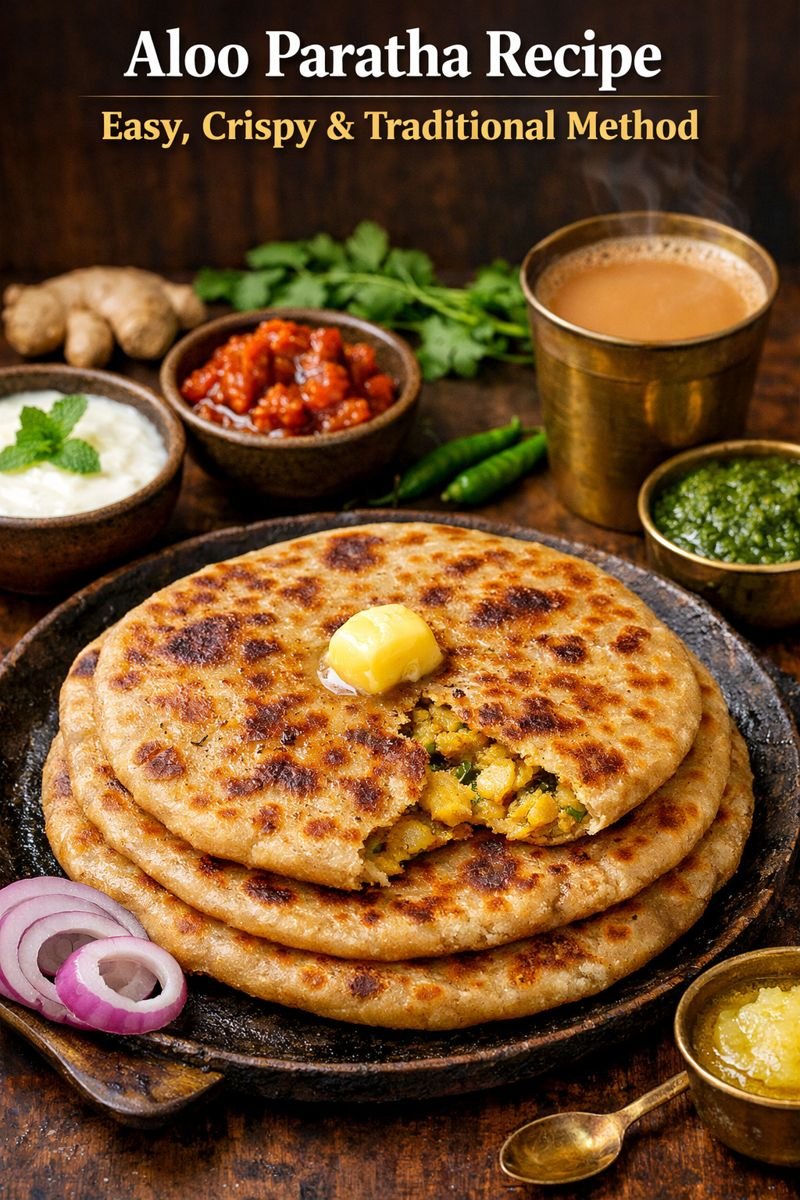
Aloo Paratha is one of the most loved Indian breakfast dishes, especially in North India. This stuffed flatbread made with whole wheat flour and a spiced potato filling is crispy on the outside, soft on the inside, and full of comforting flavors. Traditionally served with butter, curd, pickle, or white butter (makhan), Aloo Paratha is not just food—it’s an emotion in many Indian households.
In this detailed guide, you’ll learn the traditional, easy, and foolproof method to make perfect Aloo Parathas at home, just like Punjabi homes and dhabas.
What Is Aloo Paratha?
Aloo Paratha is a stuffed paratha where boiled and mashed potatoes are mixed with spices and herbs, stuffed inside wheat dough, rolled, and cooked on a hot tawa with ghee or oil. It is usually eaten for breakfast but is filling enough for lunch or dinner.
Ingredients
For Dough
-
2 cups whole wheat flour (atta)
-
½ teaspoon salt
-
Water (as needed)
-
1 teaspoon oil (optional)
For Aloo Filling
-
3–4 medium potatoes (boiled & peeled)
-
1 green chili (finely chopped)
-
1 teaspoon grated ginger
-
½ teaspoon red chili powder
-
½ teaspoon garam masala
-
½ teaspoon coriander powder
-
½ teaspoon cumin powder
-
½ teaspoon amchur (dry mango powder)
-
Salt to taste
-
2 tablespoons finely chopped coriander leaves
For Cooking
-
Ghee or oil (as required)
Step-by-Step Traditional Method
Step 1: Prepare the Dough
In a large bowl, add whole wheat flour and salt. Mix well. Slowly add water and knead into a soft, smooth dough. Add a little oil if desired for softness. Cover and rest the dough for 15–20 minutes.
Tip: Resting the dough helps in rolling soft parathas.
Step 2: Prepare the Potato Filling
Mash the boiled potatoes completely. Make sure there are no lumps, as they can tear the paratha while rolling.
Add green chili, ginger, all spices, salt, and chopped coriander. Mix everything well. Taste and adjust seasoning if needed.
Important: Potatoes should be cool and dry. Watery filling makes parathas soggy.
Step 3: Stuff the Paratha
Divide dough into equal-sized balls. Take one dough ball and roll it slightly into a small circle.
Place a generous portion of aloo filling in the center. Bring the edges together and seal properly, removing excess dough if any.
Gently flatten it with your hand.
Step 4: Roll the Paratha
Dust the stuffed dough with dry flour and roll gently into a medium-thick circle using light pressure.
Tip: Always roll from the center outward to avoid filling coming out.
Step 5: Cook on Tawa
Heat a tawa on medium flame. Place the rolled paratha on the hot tawa.
-
Cook until bubbles appear, then flip.
-
Apply ghee or oil on both sides.
-
Cook until golden brown spots appear and the paratha becomes crisp.
Repeat with remaining dough balls.
Serving Suggestions
Serve hot Aloo Paratha with:
-
Fresh curd (dahi)
-
Butter or white makhan
-
Mango pickle or green chutney
-
A cup of hot chai ☕
Tips for Perfect Crispy Aloo Paratha
-
Use starchy potatoes for best texture
-
Mash potatoes very finely
-
Don’t overstuff
-
Cook on medium heat for even cooking
-
Use ghee for authentic Punjabi flavor
Variations
-
Onion Aloo Paratha: Add finely chopped onions
-
Cheese Aloo Paratha: Add grated cheese for kids
-
No Onion No Garlic Version: Perfect for fasting or satvik meals
FAQs – Aloo Paratha Recipe
Q1. Why does my Aloo Paratha break while rolling?
Because the potato filling has lumps or moisture. Mash potatoes well and let them cool completely.
Q2. Can I make Aloo Paratha without ghee?
Yes, you can use oil or dry roast it, but ghee gives authentic taste and crispiness.
Q3. Can I store the filling?
Yes, you can refrigerate the filling for up to 24 hours in an airtight container.
Q4. Is Aloo Paratha healthy?
Aloo Paratha is wholesome but calorie-dense. Use less oil and pair with curd for balance.
Q5. Can I freeze Aloo Paratha?
Yes. Half-cook them, cool completely, and freeze. Reheat on tawa before serving.
Q6. Which potatoes are best for Aloo Paratha?
Indian varieties like Pahadi or Jyoti potatoes work best due to low moisture.
Common Mistakes to Avoid
-
Using hot potatoes
-
Overfilling
-
Rolling with too much pressure
-
Cooking on high flame
Disclaimer
This recipe is for general informational purposes only. Ingredients, methods, and nutritional values may vary based on personal preferences, dietary needs, and regional variations. Always adjust spices and cooking methods according to your health requirements and taste. The author is not responsible for individual results.