






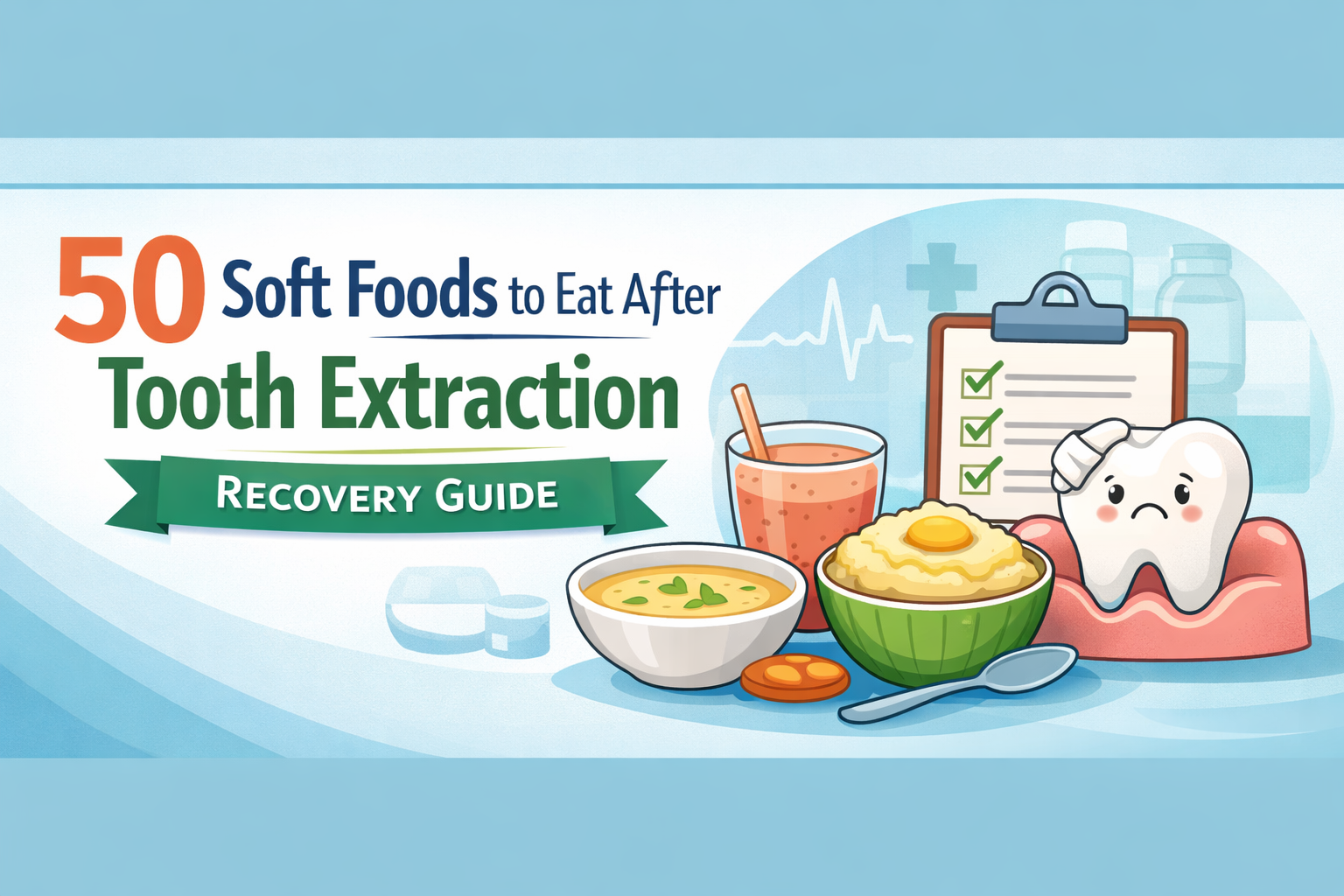
Tooth extraction is a common dental procedure, but proper aftercare is essential for a smooth and pain-free recovery. One of the most important aspects of healing is choosing the right foods. Eating the wrong foods too soon can lead to pain, irritation, infection, or a painful condition known as dry socket. That’s why dentists strongly recommend sticking to soft foods during the recovery period.
This in-depth guide covers 50 soft foods to eat after tooth extraction, explains why diet matters, offers expert recovery tips, and answers frequently asked questions to help you heal safely and comfortably.
Why Diet Matters After Tooth Extraction
After a tooth is removed, your body forms a blood clot at the extraction site. This clot protects the exposed bone and nerves and plays a crucial role in healing. Hard, crunchy, sticky, spicy, or hot foods can disturb this clot, causing pain and delaying recovery.
Soft foods are recommended because they:
-
Require little to no chewing
-
Reduce pressure on the gums
-
Lower the risk of food getting trapped in the socket
-
Help prevent bleeding and inflammation
-
Provide essential nutrients without irritation
For most patients, a soft-food diet is necessary for 3 to 7 days, although complex extractions—such as wisdom teeth removal—may require longer care.
50 Soft Foods to Eat After Tooth Extraction
Below is a carefully categorized list of soft foods that are easy to eat, nutritious, and gentle on healing gums.
Dairy and Protein-Rich Soft Foods
-
Plain yogurt
-
Greek yogurt
-
Cottage cheese
-
Ricotta cheese
-
Cream cheese
-
Scrambled eggs
-
Soft omelets
-
Egg salad (finely mashed)
-
Tofu (soft or silken)
-
Pudding
Protein is essential for tissue repair, making these foods especially helpful during recovery.
Soft Grains and Starches
-
Mashed potatoes
-
Sweet potato mash
-
Oatmeal (fully cooked)
-
Cream of wheat
-
Grits
-
Soft pancakes
-
Well-cooked pasta
-
Macaroni and cheese
-
Risotto
-
Polenta
Make sure these foods are lukewarm, not hot, to avoid irritating the extraction site.
Soft Fruits (Mashed or Pureed)
-
Applesauce
-
Mashed bananas
-
Mashed avocado
-
Smooth fruit smoothies (no seeds, no straw)
-
Mango puree
-
Peach puree
-
Pear puree
-
Soft canned fruits (no chunks)
-
Mashed melon
-
Fruit yogurt blends
Avoid fruits with seeds or high acidity in the first few days.
Soft Vegetables (Cooked and Mashed)
-
Mashed carrots
-
Mashed squash
-
Mashed pumpkin
-
Mashed peas
-
Mashed cauliflower
-
Pureed spinach
-
Soft-cooked zucchini
-
Creamed vegetables
-
Vegetable purees
-
Lentil puree
Vegetables provide vitamins and fiber essential for healing and digestion.
Soups, Liquids, and Comfort Foods
-
Bone broth (lukewarm)
-
Clear vegetable broth
-
Cream of tomato soup
-
Cream of chicken soup (blended)
-
Cream of mushroom soup
-
Pureed vegetable soup
-
Soft stews (blended)
-
Smooth hummus
-
Protein shakes
-
Milkshakes (without straws)
Soups are excellent, but avoid chunks, spice, and excessive heat.
Foods to Avoid After Tooth Extraction
While soft foods are encouraged, some foods should be avoided until healing is complete:
-
Crunchy foods (chips, nuts, popcorn)
-
Sticky foods (caramel, gum)
-
Spicy foods
-
Acidic foods (citrus fruits, vinegar)
-
Hot foods and drinks
-
Alcohol
-
Carbonated beverages
These foods can irritate the wound, dislodge the clot, and increase pain.
Tips for Eating Safely During Recovery
-
Eat slowly and take small bites
-
Chew on the opposite side of your mouth
-
Avoid using a straw for at least 7 days
-
Rinse gently with salt water after 24 hours
-
Stay hydrated but sip carefully
-
Follow your dentist’s specific instructions
Maintaining good oral hygiene—without disturbing the extraction site—is just as important as diet.
When Can You Return to Normal Foods?
Most patients can gradually reintroduce firmer foods after 7 to 10 days, depending on pain levels and healing progress. If chewing causes discomfort, return to soft foods and try again after a few days.
Always consult your dentist before resuming hard or crunchy foods.
Frequently Asked Questions (FAQ)
How long should I eat soft foods after a tooth extraction?
Most people should eat soft foods for at least 3–7 days. Wisdom tooth extractions may require up to two weeks of dietary caution.
Can I eat rice after tooth extraction?
Yes, but only soft, well-cooked rice. Avoid dry or sticky rice that could get lodged in the socket.
Are smoothies safe after tooth extraction?
Yes, smoothies are safe if they contain no seeds and are consumed without a straw.
Can I eat eggs after tooth extraction?
Yes. Scrambled eggs and soft omelets are excellent sources of protein and easy to chew.
Is ice cream good after tooth extraction?
Plain ice cream without nuts or crunchy toppings is acceptable in moderation, but avoid excessive sugar.
When can I drink coffee after tooth extraction?
You should wait at least 24–48 hours, and drink it lukewarm—not hot.
What happens if food gets stuck in the socket?
Gently rinse with salt water. Do not poke the area with fingers or utensils. Contact your dentist if discomfort persists.
Final Thoughts
Recovering from a tooth extraction doesn’t have to be stressful. By choosing the right soft foods, avoiding harmful eating habits, and following professional dental advice, you can reduce pain, promote healing, and return to normal eating sooner.
Planning your meals ahead of time ensures comfort and proper nutrition while your mouth heals. When in doubt, always consult your dentist for personalized guidance.
Disclaimer
This article is for informational purposes only and does not constitute medical or dental advice. Individual recovery times and dietary needs may vary. Always follow the instructions provided by your dentist or oral surgeon. If you experience severe pain, excessive bleeding, swelling, or signs of infection, seek professional medical care immediately.